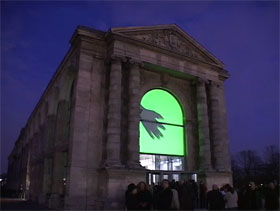
Dispositifs at Jeu De Paume (2005, 15 MB, 1:39 min.)
Documentation from Tony Oursler‘s retrospective exhibition ‘Dispositifs’
at the Jeu de Paume in Paris in 2005.
Dispositifs at Jeu De Paume (2005, 15 MB, 1:39 min.)
Documentation from Tony Oursler‘s retrospective exhibition ‘Dispositifs’
at the Jeu de Paume in Paris in 2005.

LCDblossom_Phospherescent Polyp (2009, 8 MB, 25 sec.)
9″ LCD screen, hand-blown glass, fiber optics, plastics, resin,
enamel, acrylic, phospherescent silicon,12v led’s, custom audio/video dvd
Video sculpture by disney NASA borg.
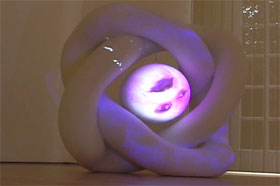
Spaced (2006, 28 MB, 3:31 min.)
Documentation from Tony Oursler‘s exhibition at the Margo Leavin Gallery.
The works mixrs video and cialis professional physical objects, poetic texts and actual music
gleaned from the recordings of deep space by NASA.
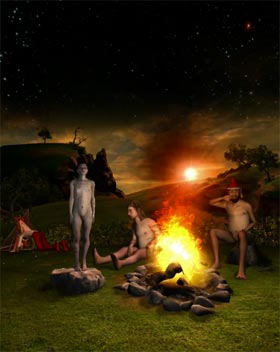
Resurrection (after Bouts) (2007, 3.2 MB, 30 sec.)
“A non-interactive, animated recreation of the Resurrection scene
by Dieric Bouts from 1455 made using current game development
technology and visual styles.”
By Brody Condon.
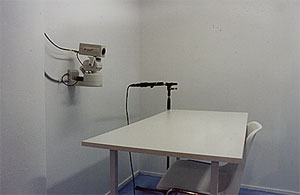
Trailer for ADN/ARN (2003, 8 MB, 4:04 min.)
“ADN/ARN was an interactive installation addressed to one person at the time,
filmed with 8 surveillance cameras, in which each visitor was invited to confide
and then contractually sell a personal secret. The initial system took place in
Lausanne at the Centre d’Arts sc
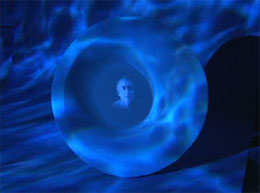
Bell Deep (2005, 3 MB, 22 sec.)
Excerpt from Tony Oursler work from the group exhibition – “Fairy Tales Forever”
at the Aarhus Kunstmuseum museum in Denmark in 2005.
The exhibition was a tribute to Hans Christian Andersen
on the occasion of his 200th birthday.
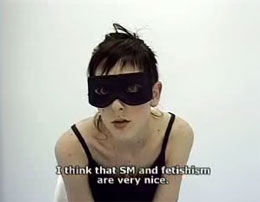
Secret 050 (2007, 2 MB, 1:03 min.)
And one more.
See original post for details.
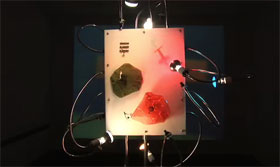
Double Fantasy (2006, 3 MB, 1:27 min.)
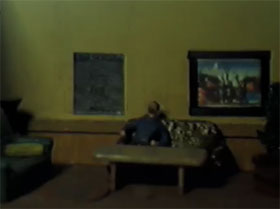
Double Fantasy (2006, 4 MB, 2 min.)
“Installation view and detail images of Double Fantasy 3 (Career) which was shown at the Armory Show in New York, March 2006. Each side of the sculpture has a model of a childhood career fantasy for each of us. Cameras project large scale images of it onto the wall, accompanied by a soundtrack.”
by Jennifer and Kevin McCoy.
Deep Storage (2002, 10 MB, 2:03 min.)
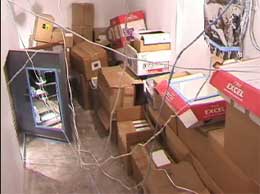
Transfer (2001, 7 MB, 1:28 min.)
A couple of documentaries of site specific installations by
“boundlessness” artist – Julianne Swartz.
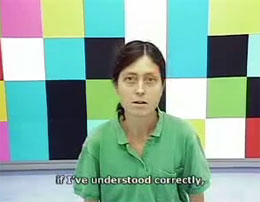
Secret 048 (2007, 27 MB, 10:57 min.)
And another…
See original post for details.
“Tony Oursler is known for his fractured-narrative handmade video tapes including
The Loner, 1980 and EVOL 1984. These works involve elaborate sound tracks,
painted sets, stop-action animation and optical special effects created by the artist.
The early videotapes have been exhibited extensively in alternative spaces and museums..
His early installation works are immersive dark-room environments with video, sound,
and language mixed with colorful constructed sculptural elements. In these projects,
Oursler experimented with methods of removing the moving image from the video monitor
using reflections in water, mirrors, glass and other devices..” – from wikipedia
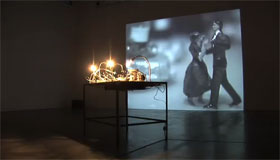
Eternal Return (2006, 4 MB, 1:54 min.)
“Eternal Return” installed at the exhibition Stop Motion at the Edith Russ Haus,
is a remake of a scene from the musical movie The Gay Divorcee.
The piece was reworked to allow a large video projection for the exhibition.”
by – Jennifer and Kevin McCoy.
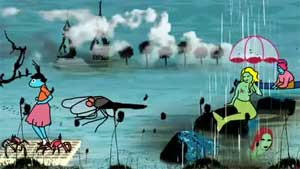
Slurb (excerpt) (2009, 24 MB, 3:43 min.)
“Slurb” was originally commissioned for a 2009 Tampa, Fla., arts festival.
The 18 min. continuous loop with an ambient electronic pop-inspired soundtrack
paints a picture of a post-apocalyptic future world that’s been destroyed by some
sort of alluvial pollution-triggered catastrophe.
By Marina Zurkow.
Music by Lem Jay Ignacio. Additional animation: Jen Kelly
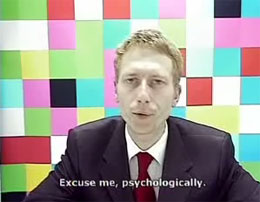
Secret 044 (2007, 10 MB, 4:27 min.)
Another secret.
See original post for details.
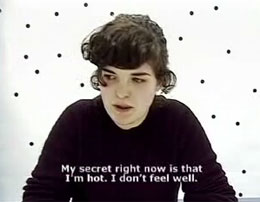
Secret 040 (2006, 3 MB, 1:16 min.)
Secret from “Secrets For Sale”, a film which reveals the radical
ADN/ARN experience, an interactive installation addressed to one
person at the time, in which each visitor was invited to confide and
then contractually sell a personal secret.
Project by Elodie Pong.
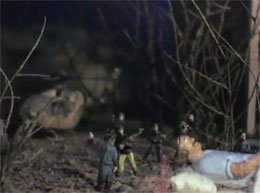
Dream Sequence (2006, 5 MB, 2:31 min.)

Dream Sequence (2006, 7 MB, 3:20 min.)
“Installation view and detail images of Dream Sequence from the solo exhibition
‘Directed Dreaming’ at Postmasters, New York, March 2006.
Two parallel discs feature images from dreams that rotate slowly while the camera
remains fixed. Our sleeping selves are superimposed by way of a mirror, and the
resulting dream sequences are projected onto the wall.”
by – Jennifer and Kevin McCoy.
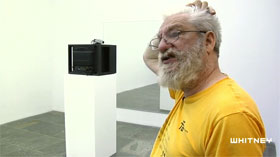
Dan Graham – Beyond (2009, 40 MB, 3:02 min)
Narrated by Anne and Joel Ehrenkranz and Curator Chrissie Iles, artist
Dan Graham discusses Heart Pavilion (1991), Public Space,
Two Audiences (1976), and Opposing Mirror and Video Monitors (1974).
All were on view in Dan Graham: Beyond at the Whitney Museum in 2009.
Produced by the Whitney Museum.
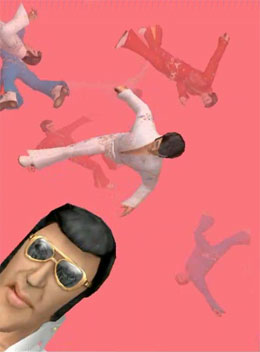
DeResFX.Kill(KarmaPhysics < Elvis); (2004, 6.8 MB, 1:54 min.)
“A modification of the bloody science fiction first person
shooter computer game Unreal 2003.”
By Brody Condon.
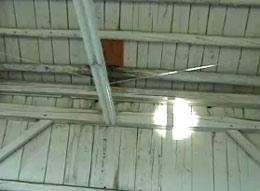
Sun Capture (1999, 9.6 MB, 1:23 min.)
Transferring the reflection of a natural occurrence (the movement of the sun)
from outdoors to indoors, Brooklyn-based artist Julianne Swartz creates
her site-specific installation “Sun Capture” with existing architecture, metal pole,
mirror, sun, and wind.
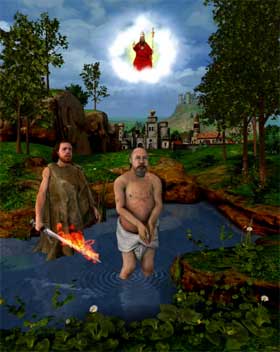
DefaultProperties() (2006, 6 MB, 30 sec.)
“The first in a series of re-interpretations of Late Medieval Northern
European religious paintings, DefaultPropeties(); is a non-interactive,
animated recreation of the baptism scene from the Triptych of
Jean des Trompes by Gerard David from 1505 using current game
development technology and visual styles.”
By Brody Condon.
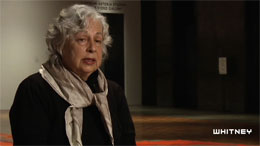
Lynda Benglis – Contraband (2008, 26 MB, 2:20 min)
Artist Lynda Benglis discusses the process of creating Contraband
by pigmenting rubber latex and pouring it on the floor of her studio.
First recognized for
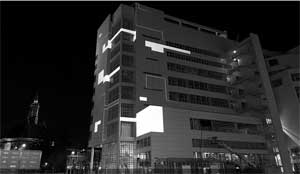
Interview with Pablo Valbuena (2009, 43 MB, 3:46 min)
Studio Banana TV interviews visual artist and architect Pablo Valbuena.
After working in digital media designing virtual architectures for videogames,
he currently looks for new ways of using light to introduce the dimensions of
time and movement in urban spaces, altering the perception of physical space
through projected virtual realities.
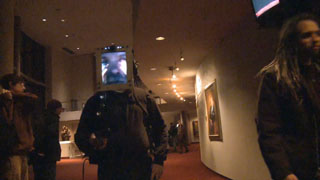
Monster/Identity Prosthetic (2009, 54 MB, 1:13 min)
Documentation from last years Spark Festival of a rather splendid
installation by Todd Polenberg.
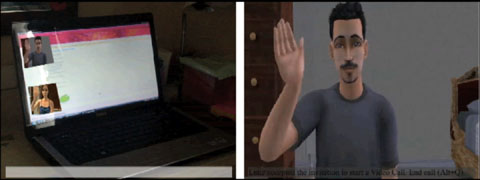
Ashleigh Smith – Impossible Conversations (2010, 75 MB, 2:30 min)
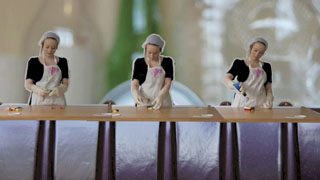
Emma Haggis – Out of Sight, Out of Mind (2010, 118 MB, 2:18 min)

Lucy Mills – Response (2010, 108 MB, 2:02 min, silent)
So, first, I should say, Writtle is where I taught this year, but it cuts both ways:
I wouldn’t post these pieces by graduating students here on DVblog unless I
thought they were all great, which I do.
They’re also diverse, in a fascinating way.
There’s Ashleigh Smith’s haunting – stays with you long afterwards – game/real life hybrid,
Lucy Mills beauty industry critique – half mash-up, half rather brave performance,
(It’s interesting the way that all three pieces incorporate, to
some degree, elements of self performance) and Emma Haggis’s superbly made
and utterly captivating stop motion environmental piece.
In each case one can see a personal language well into its development.
(All these pieces or variants/derivatives thereof formed part of larger
installations; I’m impressed by the naturalness & lack of self consciousness
with with these three move between modes of working/presentation)
I hope they’re all still making work in ten years – given this
starting point then that would be a treat in store.
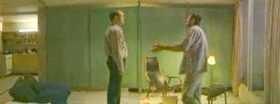
Win, Place or Show (clip) (1998, 1.6 MB, 47 sec.)
Two men are having a discussion in a small apartment. The scene,
lasting only six minutes, is filmed from twenty camera positions.
A computer program then produces some 200,000 possible combinations
of images and sounds, so the viewer always sees a different version of the story.
Win, Place or Show questions our conditioned viewing behaviour.
video installation by Stan Douglas.
from ZKM Videosammlung.
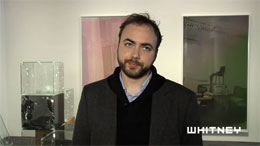
Walead Beshty – Whitney Focus (2008, 25 MB, 2:18 min)
2008 Whitney Biennial artist Walead Beshty discusses his photographs
of the former Iraqi embassy to the former East Germany (two nations that no longer exist)
and the complex ideas behind them. He also explains why his glass sculptures
have acquired multiple cracks and fissures.
Produced by the Whitney Museum.
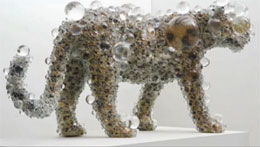
Interview with Kohei Nawa (2010, 50 MB, 4:32 min)
Studio Banana TV interviews Japanese artist Kohei Nawa
best known for his ideas of
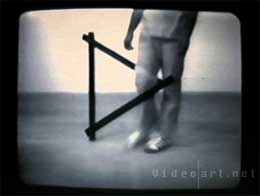
videoconstructions2 (1978, 5MB, 1:16 min.)
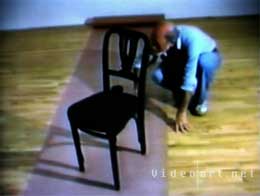
The Chair (1980, 36MB, 9:54 min.)
Buky Schwartz (1932-2009), an Israeli sculptor and video artist
who passed away last year, was known for his deceptive videos
that interplay between illusory appearance and the actual ‘reality’.
The 2 vids here were exhibited at the Whitney Biennial in New York in 1981.
From the splendid Videoart.net
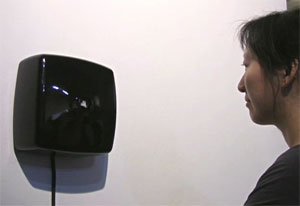
Opto-Isolator (2007, 6MB, 46 sec.)
“Opto-Isolator inverts the condition of spectatorship by exploring the questions:
“What if artworks could know how we were looking at them? And, given this
knowledge, how might they respond to us?” The sculpture presents a solitary
mechatronic blinking eye, at human scale, which responds to the gaze of visitors
with a variety of psychosocial eye-contact behaviors that are at once familiar and
unnerving. Among other forms of feedback, Opto-Isolator looks its viewer directly
in the eye; appears to intently study its viewer’s face; looks away coyly if it is stared
at for too long; and blinks precisely one second after its visitor blinks.”
By Golan Levin and Greg Baltus.
“Eyecode is an interactive installation whose display is wholly constructed
from its own history of being viewed. By means of a hidden camera, the system
records and replays brief video clips of its viewers’ eyes. Each clip is articulated
by the duration between two of the viewer’s blinks. The unnerving result is a
typographic tapestry of recursive observation.”
By Golan Levin.