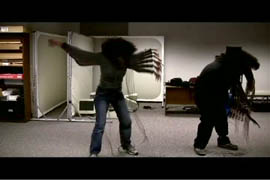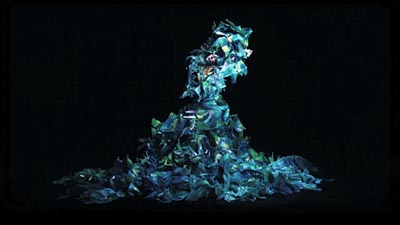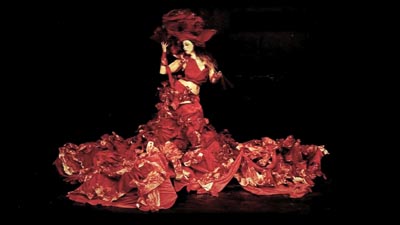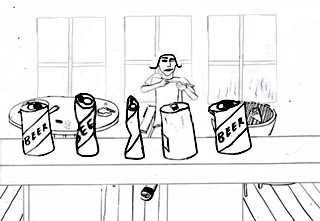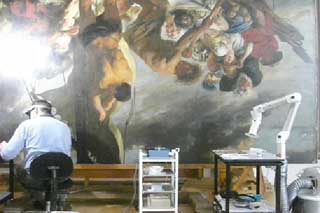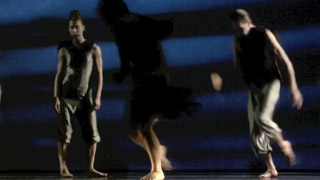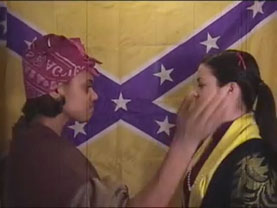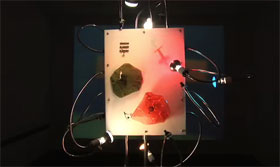
‘running to catch a train’ – a performance by Paula Musgrove


running to catch a train (2016, 103MB, 9:07 min)

I’m gently waking DVblog up to post this extraordinary piece of work from Paula Musgrove, with videography from Yasmin Cox (both year two Art & Design students at WSD where – transparency! – I currently teach.)
The performance took place at the private view of the end of year show and the video was then inserted as is,replacing the original performance soundtrack and joining the various physical outputs of the performance to form the substantive exhibition piece ( As you can see in the poster image.)
I think it is marvellous, subtle and profoundly moving work and I hope we will all hear a good deal more from Paula over the coming years.

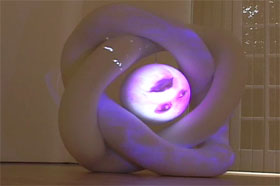
‘Want’ by MTAA & RSG

want
Want (clip) (2008, 74 MB, 2 min.)

‘Want was a new multiple channel algorithmic video installation as part of the exhibition
‘Live’ at the Beall Center for Art & Technology.
The life-sized six-screen video display uses custom software to monitor real time
Internet searches. When the software finds a programmed keyword, it triggers a
video clip of one of several actors/avatars who translates the virtual request to reality.

A soccer mom says,’I want French.’
A rocker dude says, ‘I want Star Trek Enterprise.’
A nondescript middle-aged guy says, ‘I want Little Girl.’
A girl says, ‘I want Forever.’

The six video screens are triggered almost concurrently, causing the voiced requests
to overlap. The result is an audio-visual cacophony of desire; an online echo chamber
of warped reality.
‘

By MTAA and RSG.

Sondheim – Prisoners

Prisoners
prisoners (2008, 25.4MB, 2:36 min)

Nearest thing to a Picasso we yet have, in my view.
Whatever history decides, there’s no denying one point
of Sondheim/Picasso commonality – an almost compulsive
productivity.
I’d push it further -they both constantly transform lead into
gold. Picasso & his seat & handlebars, Sondheim, for example,
these bits of video.
The music, a kind of hallucinogenic, shredded-up
slow funk/blues, is also particularly noteworthy.
Here, for good measure, is Alan’s accompanying rubric:

prisoners of motion capture, prisoners of west virginia

prisoners of caloric, froid, prisoners of gravitation
prisoners of art, mayhem, vandal, prisoners of desecration

o to be a prisoner of life again (above the clouds
o to be a prisoner of love again (within the waters
o to be a prisoner of truth again (beyond the earths
o to be a prisoner of dance again (before the fires

prisoners of fires, froid, prisoners of aerostat and transport
transport of prisoners, clouds, waters, earths, fluids

yes, prisoners of fluids, prisoners of fluids and places
prisoners of west virginia, of fluids, places, life, love,
truth and dance again

Anastasya Koshkin – Reliving and All Falling

Reliving and All Falling (2012, 206 MB, 4:42 min)

Lyric moving image poetry that keeps on giving, in proportion to time
spent with. I particularly admire the carefully structured and evocative
soundtrack – there’s a moment towards the end where a deep rumble starts
to suggest the rhythm of the waves we have been watching but never quite
completely coheres and this specific ambiguity typifies the richness of
the use of sound in general.
Visually, the angled image makes us more carefully examine and really see,
drink in, the casual beauties – in delicious high contrast B&W – placed before us.
Lovely.

Anastasya Koshkin on Vimeo

Can I get an Amen? – Nate Harrison

Can I Get An Amen
Can I Get An Amen? (2004, 106 MB, 18:08 min.)

from Nate Harrison.
This documentation of an installation by Nate Harrison,
includes an in depth lecture on the history of a single breakbeat.
It follows this small fragment of a song from its origin in a 60’s soul
recording through the invention of house and contemporary hip-hop.
It also speaks very eloquently on the important issues of copyright in
remix culture. This is fascinating to listen to. By Mica

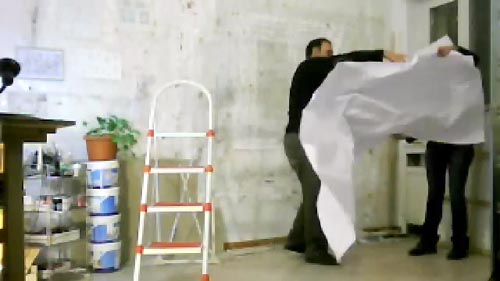
Osvaldo Cibils – 2 Humans, 1 Paper


2 Humans, 1 Paper (2013, 10MB, 3:38 min)

I first stumbled across Osvaldo Cibils and his marvellously eclectic and well..simply marvellous work.
So simple but so, so telling. Kind of Buster Keaton meets Bruce Nauman meets something hard to pin down but lyrical, grotesque and smart all at once.
My kind of artist.
+++
2 humans 1 paper
video art/soundart.
performance with plotter paper 200 x 107 centimeters.
performers: fiorella alberti architect and osvaldo cibils artist.
place: artist’s studio. Via della Cervara, 55 – 38121 – Trento (TN) Italia
22 march 2013, 20 hours

Curt Cloninger – Pop Mantra #4 (Rain Down On Me)

rain down - 10:00 am
Rain Down On Me: 10:00 am (2012, 22MB, 1:27 min)

rain down - 3:43pm
Rain Down On Me: 3:43pm (2012, 20MB, 1:01 min)

rain down - 6:00pm
Rain Down On Me: 6:00pm (2012, 110MB, 6:32 min)

Black Mountain College Museum + Arts Center, 14 September 2012, 10am – 6pm:
Curt Cloninger repeatedly performs a short excerpt from the
Radiohead song “Paranoid Android” for eight hours blindfolded.
The performance is the fourth in an ongoing series.
Video documentation by Alice Sebrell

Full documentation

Robb Bradely/Randy Newman – I’m Dreaming of a White President

 I
I’m Dreaming of a White President (2012, 15MB, 3:16 min)

Great bit of film-making to match a genius song.
But…but…
Of course you want Obama to win just
to wrongfoot the racists et. al. but you
can’t help wishing he’d actually done something
to merit the mad hostility of the rich, the bigots
and the terminally gullible.

Morrisa Maltz – Character 2/3 – Inverted Rose

character_2_3
Character 2/3 – Inverted Rose (2012, 43MB, 55 secs)

2nd in the series of 3, the first of which we posted last week.
I think these are lovely and haunting and I’m impressed by Morrisa
Maltz’s diligence and imagination.
(I love what she does with sound, too)
Is it just me or do these slightly conjure Isadora Duncan for anyone else?
Last one on Friday.

Morrisa Maltz – Character 1/3 (Infinite Loop)

character_1_1
Character 1/3 [Infinite Loop] (2012, 130MB, 1:07 min)

I love Morrisa Maltz’s work. I particularly relish the way
she doesn’t rest on her laurels but pushes herself ever on to new
and (over-used word in the arts but, I think, apposite here)
fearless ways of thinking about and making things.
This is the first of three pieces best described, literally,
as moving pictures.
Tremendous!

2 from Patrick Lichty

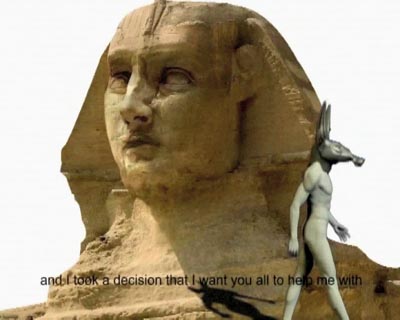
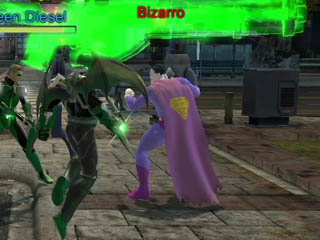
Explaining Conceptual Art to Bizarro
Explaining Conceptual Art to Bizarro (2012, 89MB, 1:36 min)

Danger Music #17
Danger Music #17 by Dick Higgins (2012, 19MB, 45 secs)

And to celebrate our resurrection (for which heartfelt thanks go to James Morris), two newish pieces from the redoubtable (I write so many of these things a nagging doubt enters my mind as to whether I’ve perhaps called Patrick redoubtable before, once, twice…more? But leave it – redoubtable he is) Patrick Lichty.

Both pieces take place in DC Universe Online, about which I know nothing so I won’t even begin to show myself up by attempting to expand, and both reference recent art history – one Beuys explaining pictures to a dead hare and the other Dick Higgins’s Danger Music.
Both are utterly splendid.

New Media in the Marketplace – Listen to the Podcast

emerging_fields_in_Marketplace
New Media in the Marketplace (2011, 37 MB, 52 min)

“Over the years, we’ve found that a number of the artists we support in our Emerging Fields category have questions about how they can better market and exhibit their work. They have questions about pricing and editioning; changing formats; what it is that they are actually selling when they offer a work for sale; what their obligations to representatives and collectors are after a sale; and whether or not they should even participate in an art market that is, in their eyes, more sympathetic and better able to represent works in more conventional or established media.

On November 2, Creative Capital hosted a webinar for grantees to explore some of these issues and answer specific questions from artists working in new media. The panelists were Jason Salavon (2000 Visual Arts), Karolina Sobecka (2009 Emerging Fields), Stephen Vitiello (2006 Emerging Fields) and Marina Zurkow (2001 Visual Arts). Sean Elwood, Creative Capital’s Director of Programs & Initiatives, served as the facilitator.”

LISTEN TO THE PODCAST FROM THIS DISCUSSION

Podcast from Creative Capital.

Annie Abrahams –Training for a Better World

angry women left
Angry Women (Left Panel/Clip) (2011, 188MB, 6:23 min)
angry women left
Angry Women (Right Panel/Clip) (2011, 142MB, 6:33 min)

Here are a couple of extracts by Annie Abrahams, whose work we love here at DVblog, from her show Training For a Better World which is currently running at the Centre Régional d’Art Contemporain, Languedoc-Roussillon in Sète until the first of January 2012.
I’d seriously suggest that anyone physically able to do so should visit it – I travelled down from London in a day, stayed a night and then trekked back, all by train. Very pleasant it was too.

Abraham’s exhibition runs in tandem with another, of the works of French artist Catherine Gfeller; Gfeller on the ground floor and Abrahams on the first, and the formal similarities (though I think these are largely superficial, for reasons I’ll enlarge upon soon) – the use of both moving and still images, text, an intervention at some level in the mechanics , the whys and wherefores, of how one presents these as art in a gallery setting – make it a stimulating pairing.

Abraham’s selection includes four pieces which are essentially (with some qualifications) video. They are constructed out of the telematics performance territory that she has so signally staked out in the last few years but, she insists, are not documentations of those performances. I think she’s right to emphasise this distinction – although in one sense the pieces clearly do document things that happened in performance they are ultimately video pieces made performatively .

The show doesn’t consist of moving image work only. There are some prints, drawings and a minimalist installation consisting of a single photograph of a pair of married fire-fighters and a sound track of them reading (in an extraordinarily graceful and musical edit [and this is where in this piece any surface similarities to, say, Nauman find their limit. Grace. Grace and elegance throughout.]) a collaborative text on fear.

The moving image and the other pieces occupy different ends of what is mostly a long thin exhibition space and are connected –“tied” together by a “ribbon”- a very long, three or four inch high, strip, of black highlighted, collaboratively generated white text –on the theme of madness – running at floor level for some considerable distance.

It’s important to both acknowledge this distinctly bi-partite character and then to immediately forget about it, so intimate is the connection between the two halves.
Despite the disparate and apparently laissez-faire methodologies used in the generation of all the work and the huge level of trust in the participants evinced by Abrahams, one’s main impression is of a body of work which forms a tight unity both stylistically and in its preoccupations. (And I’d argue that the principal pre-occupation is the question of what it means, physically, socially, psychically, to be a human being. And, further, that this high seriousness –allied to a playfulness which veers from the childishly innocent to the Rabelaisian – is what ultimately gives this work its huge authority and significance and distinguishes it in kind from the technically well executed and often engaging work on the floor below.)

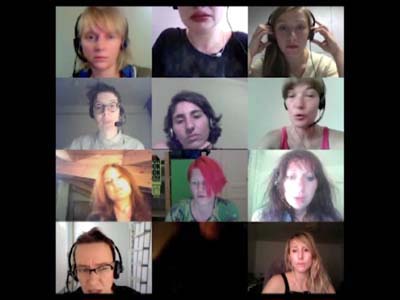
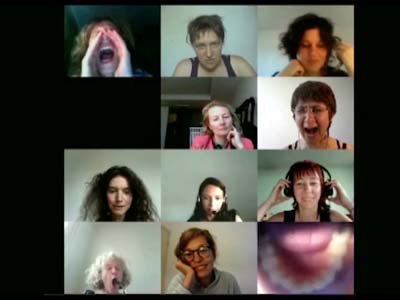
The jewel in the crown of the show is the video installation ‘Angry Women’, created by Abrahams and 22 other women of many nationalities (3 more , in fact, in total, 2 “backstage” assistants, and a performer who opted for silence throughout) speaking about, acting out, demonstrating, reflecting upon, their anger and its causes and triggers, on webcams at their different individual locations and in their native tongues, with the images being sent to a 3X4 grid, in a format that Abrahams has made her own. Because of the limits of even current streaming technology it was necessary to conduct two distinct performances, separated, in fact, by an interval of two months. The length of each was determined by a protocol where a minute’s silence by all participants signalled the end. This resulted in pieces of differing lengths the lack of synchronisation of which adds another layer of fragile grace to the final projections, projected large on adjacent walls around their common corner, with sound from the left image grid fed to the right speaker and vice versa.

The piece occupies most of a large rectangular space at the CRAC (with the video ‘Double Blind (love)’, a collaboration with Curt Cloninger we’ve savoured here before, in its performance incarnation, in the opposite corner and in its full and majestic 264 minute duration).

The impact is visceral – we face what feels like a wave of humanity, not so much in numbers, although 23 women is impressive, at least to this man, but in the infinite malleability of face and hand, of gesture and expression and of how these things might occupy a frame. Sometimes that frame will resemble a Giacometti portrait, with the subject appearing to recede into what seems to be endlessly deep space. At others red lips or an open mouth, sensual and terrifying by turns, occupy the whole of the space – and furthermore each cell is constantly in flux (because these are living, breathing, unpredictable, human beings). There’s something both of portraiture and of the dance at work here, and a kind of found poetry too (which the moving image work has in common with the collaborative texts at the other end of the exhibition). The combination of iron control, planning, foresight (the grid, the protocols) with the letting go and trust evident elsewhere – the phased lengths, the blank space for the person who didn’t turn up, the open performative structure – makes for something of great richness.
Additionally it’s clear that those performers who had previous experience of the format were consciously playing with and against their fellows – gestures are mirrored, sounds echoed, the fiction of looking elsewhere – to the side, or above – of making contact in and across the grid itself, is impressively sustained.

The angry women turn out to be at one and the same time very particular – unique – women and women in general too; the women in general turn out to be human beings in general (and general en masse because each so particular) and the human beings in general turn out to live here, or there, now, in this, one, our only, very particular, world – that mysterious, frightening and wonderful place.

Book your train/plane ticket now!

***

Voici quelques extraits par Annie Abrahams, dont nous aimons le travail ici à DVblog, de son exposition Training For a Better World qui se déroule actuellement au Centre Régional d’Art Contemporain, Languedoc-Roussillon à Sète jusqu’au premier janvier 2012.
Je suggère sérieusement de la visiter à quiconque qui est effectivement en mesure d’y aller – j’ai voyagé depuis Londres en une seule journée, je suis resté une nuit et j’ai fait le retour le lendemain, le tout par train. C’était très agréable.

L’exposition d’Abrahams fonctionne en tandem avec une autre, des œuvres de l’artiste française Catherine Gfeller; Gfeller au rez de chaussée et Abrahams au premier étage, et les similitudes formelles (bien que je pense qu’elles soient essentiellement superficiels, pour des raisons sur lesquelles je vais m’étendre bientôt) – l’utilisation à la fois de l’image fixe et de l’image en mouvement, du texte, l’intervention à un certain niveau dans la mécanique, les tenants et aboutissants, de la façon dont on présente celles ci en tant que de l’art dans le contexte d’une galerie – en font un jumelage stimulant.

La sélection d’Abrahams comprend quatre pièces qui sont essentiellement (avec certaines réserves) vidéo. Elles sont construites à partir du territoire de la performance télématique qu’elle a jalonné si singulièrement les dernières années, mais, elle insiste, ce ne sont pas des documentations de ces performances. Je pense qu’elle a raison de souligner cette distinction – bien que dans un sens les pièces documentent bel et bien ce qui est arrivé dans la performance, elles sont finalement des pièces vidéo réalisées performativement.

L’exposition ne consiste pas seulement d’images en mouvement. Il y a quelques imprimées, des dessins et une installation minimaliste composé d’une seule photo d’un couple de pompiers mariés et une piste sonore d’eux lisant (dans un montage extrêmement gracieuse et musicale [et c’est là que dans cette pièce toute similitude de surface à, disons, Nauman trouve son limite. Grace. Grâce et de l’élégance tout au long.]) un texte collaborative sur la peur.

L’image en mouvement et les autres pièces occupent des extrémités différents de ce qui est surtout un espace d’exposition longue et mince et sont reliés – “liées” par un “ruban” – une très longue, trois ou quatre pouces de haut, bande, de texte blanc, généré en collaboration, souligné en noir – sur le thème de la folie – se déroulant au niveau du sol sur une distance considérable.

Il est important de reconnaître ce caractère nettement bi-partite et ensuite de l’oublier immédiatement, tellement intime est la connexion entre les deux moitiés.
Malgré les méthodologies disparates et apparemment laissez-faire utilisées dans la production de tout le travail et l’énorme niveau de confiance aux participants manifesté par Abrahams, la principale impression est celle d’un corps de travail qui forme une unité serrée à la fois stylistique et dans ses préoccupations. (Et je dirais que la principale préoccupation est la question de ce qu’il signifie, physiquement, socialement, psychologiquement, d’être un être humain. Et, puis, que cette haute degré de sérieux, allié à un enjouement qui vire de l’innocence enfantine au rabelaisien – est, ce qui donne finalement ce travail son énorme autorité et importance et le distingue de sa nature du travail techniquement bien exécuté et souvent engageant de l’étage en dessous).

Le joyau de la couronne de l’exposition est l’installation vidéo «Angry Women», créé par Abrahams et 22 autres femmes de plusieurs nationalités, (en fait, 3 de plus au total, 2 assistantes de “secours”, et une performeuse qui a choisi de rester silencieuse jusqu’à la fin), parlant, actant, démontrant, réfléchissant à, leur colère et ses causes et déclencheurs, devant des webcams dans leurs locations individuellement différentes et dans leur langue maternelle, avec les images envoyées à une grille de 3X4, dans un format que Abrahams a fait le sien. En raison des limites des technologies de streaming, mêmes actuelles, il était nécessaire d’effectuer deux performances distinctes, en fait séparées par une période de deux mois. La longueur de chaque performance a été déterminé par un protocole où une minute de silence par toutes les participantes marquait la fin. Il en résulte des pièces de longueurs différentes dont le manque de synchronisation ajoute une autre couche de grâce fragile aux projections finales, projetées en grand sur des murs adjacents autour de leur coin commun, avec le son de l’ image grillée de gauche envoyé au haut-parleur droit et vice versa.

La pièce occupe la majeure partie d’un grand espace rectangulaire au CRAC (avec la vidéo «Double Blind (love)», une collaboration avec Curt Cloninger que nous avons savouré ici avant dans son incarnation performative, dans le coin opposé, dans sa durée totale et majestueuse de 264 minutes).

L’effet est viscérale – nous faisons face à ce qui ressemble à une vague de humanité, non pas tant en nombre, bien que 23 femmes est impressionnant, au moins à cet homme, mais dans l’incessante malléabilité du visage et des mains, du geste et de l’expression et de la façon dont ces choses peuvent occuper un cadre. Parfois, ce cadre ressemble à un portrait de Giacometti, avec le sujet apparaissant reculer dans ce qui semble être un espace profond infini. À d’autres moments, des lèvres rouges ou une bouche ouverte, sensuel et terrifiant à tour de rôle, occupent la totalité de l’espace – et en plus chaque cellule est constamment en mouvement (parce que ce sont des êtres humains vivantes, respirantes, imprévisibles). Il y a quelque chose à la fois du portrait et de la danse à l’œuvre ici, et aussi une sorte de poésie trouvée (ce que le travail d’image en mouvement a en commun avec les textes collaboratives à l’autre bout de l’exposition). La combinaison du contrôle de fer, de la planification, de la prévision (la grille, les protocoles) avec le laisser-aller et la confiance manifeste ailleurs – les longueurs phasées, l’espace noir pour la personne qui ne se présente pas, la structure performative ouverte – produit quelque chose d’une grande richesse.
En outre, il est clair que ces artistes qui ont eu une expérience antérieure du format ont joué sciemment avec et contre leurs partenaires – les gestes sont mises en miroir, des sons font écho, la fiction de regarder ailleurs – sur le côté ou au-dessus – la prise de contact dans et à travers la grille lui-même, est impressionnant et soutenue.

Les femmes en colère se révèlent être tout à la fois des femmes très particulier – unique – et des femmes en général aussi ; les femmes en général se révèlent être des êtres humains en général (et en général en masse parce que chacune si particulière) et les êtres humains en général s’avèrent vivre ici, ou là, maintenant, dans ce, un, notre seul, très particulier monde – cet endroit mystérieux, effrayant et merveilleux.
Réservez votre train / avion billet dès maintenant!

One Minute Movies and MIRAJ

indian_movie.jpg
Indian Movie [Declan Kilfeather] (2007, 3MB, 55 sec)

punch.jpg
Punch [Kerry Baldry] (1994, 30MB, 1:14 min)

landgauge.jpg
Land Gauge [Steven Ball] (1981/2008, 44MB, 1:21 min)

upside_down_world.jpg
Upside Down World [Marty St.James] (2008, 19MB, 1:25 min)

I wrote a review of Vols. 1 to 4 of Kerry Baldry’s excellent One Minutes
project for a new journal, the Moving Image Review and Journal, and I thought it would be nice to post the pieces I discuss in it here.

Delpha Hudson – Out With Mother

out_with_mother.jpg
Out With Mother (2011, 73MB, 1:32 min)

I’m oscillating between finding this piece by Delpha Hudson really rather
beautiful and rather chilling (or both).
It’s perhaps the ambguity which makes it so effective, difficult to get a
precise fix on.
There’s no doubting that it’s a smart piece of work. I love the dual tempo thing
with the scene in the background unfolding slowly behind the more anxious and
busier foreground.
I’m assuming the speech like sound *is* sampled from an actual child -again the ambiguity
arising from, on the one hand its near musicality and on the other the
inevitable and immediate visceral response (certainly from anyone who’s ever had kids)
it provokes is a point adding to the richness of the thing.
Great. More from Delpha soon.

Estella Cumberford – Friendsource14

Friendsource14.jpg
Friendsource14 (2011, 21MB, 1:18 min)

This piece, by Estella Cumberford, is great on a whole number of fronts.
Firstly it’s really nicely made.
The images walk that difficult line between
telling us too much and too little, and the audio
(processed, apparently, in GarageBand) is well judged,
well executed and more than a little engaging.
You wouldn’t guess from the piece’s surface simplicity
(first impressions only of course, anyway. Examine it closely
and see how hand-made and un-algorithmic it is)
the layers of structuring and processing that went into
it but I can’t help feeling these do manifest in the sense of
its coherence, richness and general success as a work of art.
The text was sourced & assembled from status updates on F******* of
14 of the artist’s friends. This then read by her & processed as noted.
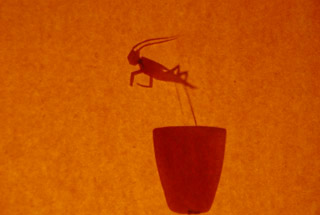
The images were then grown (organic metaphors seem somehow
particularly apposite) out of this text and rendered by a kind of
shadow screen technique.
It’s an exquisite piece of work.
Transparency dictates I tell you that I teach Estella
at Writtle. (I use the word teach loosely -as with most of
the students we have an absorbing and on-going dialogue.)
It’s work like this that makes that part of my life so rewarding.

Rick Silva – recap

Recap -trailer
Recap (trailer) (2006, 7.18MB, 1:12 min)

Says Rick Silva:
‘Recap is a remix of the cult classic graffiti movie
Wild Style (1982) where every piece of graffiti in
the original film has been digitally crossed out and tagged over
with the Recap tag.’

The full piece is available on DVD as an 82 minute video loop.

I find this piece intriguing. I’m pretty friendly to formalism –
it’s amazing what beauty & interest a good algorithm
(in the broadest sense) can deliver.
But here Rick Silva seems to have taken steps to eliminate
…perhaps too strong…rather…to render difficult…
the emergence (partly because the original looks so great,
haven’t seen it, so even the trailer is, for me, quite irritating,
because by definition it covers up
[and maybe this
is the point – I think the setting & hence the mode of viewing
probably make a huge difference – I could see this working
brilliantly in a gallery where one takes in some of it & moves
on, digesting, but I think I would rather have extensive dental
work than sit & watch it as movie
] what
I long to see
.) of casual beauty.

Good though!
I don’t mean to be negative!
Better than bland of course, anytime!

Iban M. Selles – De Noche

de_noche.jpg
De Noche (2010, 71MB, 3:09 min)

I like the boldness of this, constructed by Iban M. Selles entirely
(and deftly) from stills taken on the set of , as I understand it,
a different film on which Iban Selles was working.
The sound, collaged from a number of movie soundtracks, is tremendous.
The piece as a whole has a slightly provisional feel to it -a study rather
than something definitive -but dull it’s not and I look forward to seeing
more work by Selles.

Toby Tatum – The Sealed World

TobyTatumTheSealedWorld.jpg
The Sealed World (2009, 217MB, 5:59 min)

Very nicely executed short film from UK film-maker Toby Tatum,
who is clearly both gifted and imaginative.
It brings to mind an attempt to conjure in a distilled way the atmosphere of
pieces like Lucile Hadzihalilovic’s Innocence.
(and nothing wrong with this; I’m using Innocence as a point of comparison
rather than asserting influence)
I’m not sure it entirely succeeds – the act of distillation, of reduction to
suggestion, to atmosphere (ironically the very richness of the prize-winning music by Abi Fry
contributes to this) means it ends up feeling laid on a tad thickly.
Nonetheless it’s work that demands & deserves attention and I’ll be interested to see where
Tatum heads next.

Two Short Movies from Nick Fox-Gieg

Nick Fox-Gieg
Disarmed (2002, 15.8 MB, 2:42 min.)

Nick Fox-Gieg1
Mother of All Bombs (2003, 9.5 MB, 1:45 min.)

Nick Fox-Gieg is an animator and theatrical designer.
His short films have been shown at the Rotterdam and Ottawa film festivals,
at the Centre Pompidou in Paris, and on Canada’s CBC TV.

Ran Slavin – Organic Urbanic

organicurbanic
Organic Urbanic (2002, 14 MB, clip, 1:17 min)
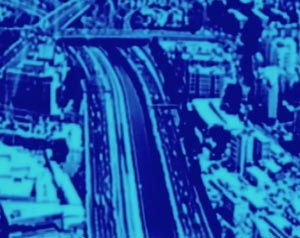
“Organic Urbanic is a reality-fiction video based on an ambient
micro/macro cosmos of the urban-organic tapestry of the city.
The local and familiar transgresses into a dense textured
urban scape. The city is featured and filtered as a distorted
blue print image of itself.
The streets cars and buildings reveal an organic living machine-symbiotica.
Organic Urbanic amplifies what is already there. Among others, a complex
inner connectivity of city factors amplified and relocated.”

By Ran Slavin
Full duration: 9:00 min.

Ran Slavin – omni1.9

omni1.9
omni1.9 (2002-97, 18 MB, 1:28 min, excerpt)
“The idea behind this loop is to show the 360 degrees of choice. The mad culmination of wanting
to go to all directions at once. Inspired by the ceiling of the Geneva airport while in transit.
Shown also as a video installation of varying loop durations on a transparent two way screen.

Like a small vignette of digital nature, the small figures are continuously looping in a busy circular
motion with the urge to span in all directions at once.This stasis, a static dance, the body like a
scanner unable to decide, caught between indecision. A seemingly digital nature. The bodies
which are silhouettes of the artist, become small digital scanner probes.”

Video and audio: Ran Slavin
Original: 6:33min/variable/2002-97

Garrett Lynch performs Trav-erse

trav-erse_short
Trav-erse short (2011, 96 MB, 1:58 min)

This is shaping up to be Furtherfield fortnight & whyever not?
Here’s some footage I took there last Friday night, at the very entertaining
launch of the Art is Open Source/REFF – Roma Europa Fake Factory publication
& exhibition, (GO, if you’re in London) of a splendid performance by
Garrett Lynch of his Trav-erse, where he uses custom Max/MSP created software to
grab audio from an analogue world band receiver, manipulate and remix it.
I was struck both by the simplicity of the idea and the effectiveness of
its execution – a neat concept but also an excellent ear at work.
The sound from my stills cam video was unusable (shame, it sounded great
there) so in the latter section I’ve dubbed on sound from
an earlier performance of the piece in Cardiff, Wales in 2008.

Omer Golan – Religion

omer_golan_religion
Religion (2010, 8 MB, 1:28 min.)

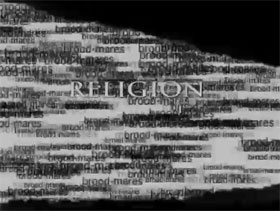
“‘Religion’ is based on a language text corpus containing about 140,000 words.
With Cycling74’s Max/Msp/Jitter, I created a virtual canvas for my video that is
covered with random text from the corpus. Then used this canvas to mask a clip
of animation that I’ve prepared for that purpose, allowing only text to appear where
pixels in the original animation were moving. My goal was to give the entire clip
random text textures that are aesthetic, recognizable and unreadable.”
By Omer Golan. Sound collage: Itamar Kav Tal.

Diez – Architectural Mapping Preview – Metz Station

architectual_mapping
Architecturale Mapping Preview Station Metz (2010, 53 MB, 4:14 min.)

Cette preview a

Chris Caines – Mathematics

mathematics
Mathematics (2010, 163MB, 10:40 min)

There’s a wonderful deadpan quality to this piece from Chris Caines,
which captures dream logic perfectly (and satisfyingly –
I was worried about bathos and I needn’t have.)
It looks and sounds rather sumptuous too.
I do wonder if it couldn’t have moved just a tad quicker…

Ethernet Orchestra Networked Improvisation Live on FBi Radio, Sydney

mathematics
Ethernet Orchestra on FBi Radio (2010, 92MB, 11:48 min)

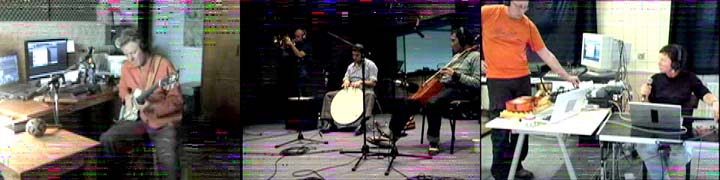
More from the splendid Ethernet Orchestra with:
in Sydney, Australia – Roger Mills (Processed Trumpets), Bukhchuluun Ganburged (Mongolian Horse fiddle and throat singing) and Yavuz Uydu (Turkish Oud and Bendir)

in Londrina, Brazil – Chris Vine (Guitar)

and in Braunschweig, Germany – Martin Slawig (Laptop Electronics and Max/MSP processing).

All of it great, though I’m particularly a sucker for the throat singing.

Nuit blanches 2010 Metz, France with DIEZ and paradigme

328074091
Nuit blanches 2010 – DIEZ and paradigme (2010, 41 MB, 1:55 min.)

Collaboration of Video mapping, light and sound installation, done for
Nuit blanches 2010 Metz.
Audio Visual design by paradigme.
Scenography and video mapping by DIEZ.

Mapping Festival – Motomichi and Otto

motomichi1
Mapping Festival – Motomichi and Otto (2010, 100 MB, 5:25 min.)

Mapping Festival is organized by Modul8, the most popular VJ software in the
market and the venue “Usine / le Zo” is their primary space.
Here is a great collaboration at the event. Video mixing by Motomichi and
music performance by Otto von Schirach.

The Smith Family

#1
#1 (2007, 1MB, 56 secs)

#2
#1 (2007, 1MB, 57 secs)

In 2007 I ran a little competition on my site centred aound
a musical setting I had made of a tiny poem by my friends and
collaborators Robert Roth & Carletta Joy Walker for
their magazine “And Then”.

I invited remixes, either musical or visual, of the song and
these two pieces, both utterly barking & delicately poetic at one
and the same time, came winging their way from the Smith Family
in Germany.
Wonderful!

Tony Oursler – "Spaced" at Margo Leavin Gallery

margo_leavin_06
Spaced (2006, 28 MB, 3:31 min.)

Documentation from Tony Oursler‘s exhibition at the Margo Leavin Gallery.
The works mixrs video and physical objects, poetic texts and actual music
gleaned from the recordings of deep space by NASA.

Lumière et Son Bow Out

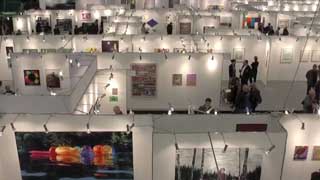
checkout art fairs
Checkout Art Fairs (2010, 8MB, 1:07 min.)

Blotting Paper
Blotting Paper (2010, 13MB, 1:06 min.)

I hadn’t realized that the splendid Lumière et Son project, which
we’ve raved about here before, was a time limited thing
but, sadly, yes & they’ve posted their last, which we repost here
above.
We’ve grabbed a few more, which we’ll post in the near future, but
do yourselves a favour and go & wallow in their site now…

Patrick Lichty #4

Blown Away
Blown Away(2003, 3MB, 52 secs)

Mental Profiling
Mental Profiling (2003, 7MB, 2:15min)

 the new saint of louisiana
The New Saint of Louisiana (2003, 4MB, 41 secs)

Three more from Patrick Lichty.
Again- hard to believe these were made seven long digital years* ago.
Not a lot to add, except I approve his taste for Tuvan throat singing.

*Digital years a bit like dog years, of course.

Tony Oursler – “Bell Deep” from “Fairy Tales Forever”

belldeep
Bell Deep (2005, 3 MB, 22 sec.)

Excerpt from Tony Oursler work from the group exhibition – “Fairy Tales Forever”
at the Aarhus Kunstmuseum museum in Denmark in 2005.
The exhibition was a tribute to Hans Christian Andersen
on the occasion of his 200th birthday.

Readings

readings
Readings (2008, 43 MB, 9:53 min.)

I must admit I’d never really heard of fashion video as a genre
until someone I teach showed me an astonishing piece by
Ruth Hogben & Gareth Pugh last week, which sent me off in search of more.
This piece comes from site called ShowStudio:

‘an award-winning fashion website, founded and directed by Nick Knight,
that has consistently pushed the boundaries of communicating fashion online.’

according to its ‘show studio’ page.

The piece we’re posting here is directed by Knight together with the designer
Hussein Chalayan, with editing by Ruth Hogben and music by Anthony, of Johnsons
fame.
It’s a tour de force, fizzing with ideas, a mesmerising watch,
and a fund of stealable ideas, so we’ll definitely be returning
for more, though I have to say I only see a dark void where
a living heart might have beat – there’s no speck of warmth
or humanity to it.

“Double Fantasy” by Jennifer and Kevin McCoy

double_fantasy1
Double Fantasy (2006, 3 MB, 1:27 min.)

double_fantasy2
Double Fantasy (2006, 4 MB, 2 min.)

“Installation view and detail images of Double Fantasy 3 (Career) which was shown at the Armory Show in New York, March 2006. Each side of the sculpture has a model of a childhood career fantasy for each of us. Cameras project large scale images of it onto the wall, accompanied by a soundtrack.”
by Jennifer and Kevin McCoy.

More Jon Rafman

You, the World and I
You, the World and I (2010, 67MB, 6:10 min)

Another piece from Jon Rafman, and whilst it’s made with the same dexterity,
wit and inventiveness as all his work this one doesn’t quite hit me in the
same place as the others we’ve posted.
(Don’t get me wrong – this piece would garner unstinting praise were
it from most other people – it’s just that Rafman sets the bar high for himself).
It’s something to do with the closure-as-a-story.
It’s a bit too neat. The found material seems deployed as an aid to
story-telling rather than dripping with the glorious uncertainty and
ambiguity that chartacterised some other earlier work.
(An analogy: the difference between a Rauschenberg Combine
and a picture in shells at a seaside gift shop. Not that extreme here, of course)
None of which is meant to imply that it isn’t worth at least 12:20 min of your time…

Jon Rafman – Woods of Arcady

woods of arcady
Woods Of Arcady (2010, 44MB, 3:56 min)

The Song of the Happy Shepherd

William Butler Yeats (1865-1939)

The woods of Arcady are dead,
And over is their antique joy;
Of old the world on dreaming fed;
Grey Truth is now her painted toy;
Yet still she turns her restless head:
But O, sick children of the world,
Of all the many changing things
In dreary dancing past us whirled,
To the cracked tune that Chronos sings,
Words alone are certain good.
Where are now the warring kings,
Word be-mockers? — By the Rood,
Where are now the warring kings?
An idle word is now their glory,
By the stammering schoolboy said,
Reading some entangled story:
The kings of the old time are dead;
The wandering earth herself may be
Only a sudden flaming word,
In clanging space a moment heard,
Troubling the endless reverie.

Then nowise worship dusty deeds,
Nor seek, for this is also sooth,
To hunger fiercely after truth,
Lest all thy toiling only breeds
New dreams, new dreams; there is no truth
Saving in thine own heart. Seek, then,
No learning from the starry men,
Who follow with the optic glass
The whirling ways of stars that pass–
Seek, then, for this is also sooth,
No word of theirs–the cold star-bane
Has cloven and rent their hearts in twain,
And dead is all their human truth.
Go gather by the humming sea
Some twisted, echo-harbouring shell,
And to its lips thy story tell,
And they thy comforters will be,
Rewording in melodious guile
Thy fretful words a little while,
Till they shall singing fade in ruth
And die a pearly brotherhood;
For words alone are certain good:
Sing, then, for this is also sooth.

I must be gone: there is a grave
Where daffodil and lily wave,
And I would please the hapless faun,
Buried under the sleepy ground,
With mirthful songs before the dawn.
His shouting days with mirth were crowned;
And still I dream he treads the lawn,
Walking ghostly in the dew,
Pierced by my glad singing through,
My songs of old earth’s dreamy youth:
But ah! she dreams not now; dream thou!
For fair are poppies on the brow:
Dream, dream, for this is also sooth.

*******************************************

Extraordinary piece from Jon Rafman
(and William Butler Yeats).
It’s stumbling across things like this
that makes it all more than worthwhile.

Ethernet Orchestra – Distant Presences

sam_r
Ethernet Orchestra -Distant Presences (2010, 43MB, 6:42 min)

Delicate but nonetheless ravishing beauty from the improvisation-across-the-net,
(Brazil/Sydney/Germany on this occasion) outfit Ethernet Orchestra
That our hats come off in the face of their technical achievement should go almost
without mention -this cannot have been easy to do; but to make something so devoid of
gimmickry and so entrancing too…well, I’m lost for wo

Konx-om-Pax –Twin Portal

shanno
Twin Portal (2010, 11MB, 2:00 min)

Biog:

Konx-om-Pax is 25 year old Glasgow based Director/Animator/Sound Designer
Tom Scholefield. In recent years worked with Warp Records, DFA Records,
No-Fun Productions, Universal Everything and Optimo Espacio.

Normally I find it an effort to care much for digitally constructed worlds
with a kind of sci-fi undercurrent; it all seems a bit easy (no matter, of course,
that it probably isn’t) and usually more than a bit banal.
However this guy does it with considerable style and I found myself
drawn in. It’s the level of detail, the care with which its put
together and the sheer verve and -yes- beauty of it.
The audio is great too & I like the bipartite stucture of the piece.

Herbert Wentscher – All For the Best

alles_bestens
All For the Best

Suzon Fuks – RINGS from #1 to #6

rings1to6
RINGS from #1 to #6 (2009, 24 MB, 6:35 min.)

An ongoing series (now numbering six) of one-minute unedited shots which
can each stands alone. Improvised choreography multi-reprojected on body parts,
with James Cunningham, Helen Varley Jamieson, Scotia Monkivitch and Suzon Fuks.
Text by Fernand Shirren.

By Suzon Fuks.

10-10-second Monologue

1010secondmonologue
10-10-second Monologue (2008, 7 MB, 1:41 min.)

“This is a 10×10 second excerpt/adaptation of a longer monologue
I did last fall. The theme is unrequited Love.

We have all been there… ”
By Lee Ann Harrington .

Sans Verre – Brad Tinmouth and Kaitlin Till-Landry

sacsverre
Sans Verre (2008, 7.3 MB, 1 min)

A documentation of a performance made with Lili Huston-Herterich.
By Brad Tinmouth and Kaitlin Till-Landry.