Jørgen Leth – 66 Scenes from America (1981, 9.9MB, 4:16)
Pretty self-explanatory: Andy eats a burger.
Scene from controversial Danish filmmaker
Jørgen Leth’s 1981 composite film, 66 Scenes from America.
Jørgen Leth – 66 Scenes from America (1981, 9.9MB, 4:16)
Pretty self-explanatory: Andy eats a burger.
Scene from controversial Danish filmmaker
Jørgen Leth’s 1981 composite film, 66 Scenes from America.
Margarida Paiva – Untitled Stories (2007, 15.6MB, 2:49)
Excerpt from Margarida Paiva’s 11 minute Untitled Stories,
a video from 2007 about everyday stories, told through a broken
female monologue about memories.
Expertly layered and totally gorgeous.
Kino Da! (1981, 5.6 MB,1:42 min )
Kino Da! , a wonderful portrait of the poet and communist Jack Hirschman
by the American experimental filmmaker Henry Hills is just one of the Hills films
that can be viewed at . More about Hills and his work see – henryhills.com
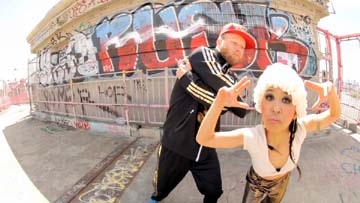
Tim and Puma Mimi: High Five Low Five (2012, 283MB, 4:22 min)
Slightly self-consciously kooky but, it must be said, splendidly
entertaining bit of both music and moving image, from -ahem –
Tim and Puma Mimi.
Curiously we were lobbied for this by a publicist type fellow.
We’re quite flattered here at DVblog that we’re thought of as having
any clout.
I should say we turned down the first couple of things he suggested
and he obviously then did his homework because this one we like, a lot.

Basement Jaxx – Red Alert (1999, 10.5MB, 3:42)

Fatboy Slim – Don’t Let The Man Get You Down (2003, 9MB, 3:08)

Lady Sovereign – Love Me or Hate Me (2006, 12.2MB, 2:43)
Three videos from Brian Beletic.
His work spans the last decade,
these posted in chronological order.
Basement Jaxx’s video is conceptual: what if
music was illegal? Love the idea and execution.
The track itself takes me back to my younger,
raving days.
Fatboy Slim and Lady Sovereign also should be
proud of their Beletic vids. Both garner at least
a few chuckles and some definite appreciation for
the editing.
Serial Metaphysics #1 (1984-86, clip, 6.4MB, 1:08 min)

Serial Metaphysics #2 (1984-86, clip, 5.9MB, 1:08 min)
Wheeler Winston Dixon is now a professor of film studies
at the University of Nebraska, Lincoln. Before he did that he made
a lot of (on the evidence of these clips & others) really great short movies.
In particular these two clips from Serial Metaphysics, apparently almost
entirely constructed from TV ads, whet the appetite for a viewing
of the whole twenty minutes.
Dixon conjures fever dream magic from commercial banality.
Check in particular the end sequence of clip one:
David Lynch eat your heart out.

Richard Jochum, Selfportrait as a Group #5 (2006, 14.5MB, 3:33)
Captured by Richard Jochum, proof that a photograph is much
more than we ever see: a collection, a collective process,
the self interconnected.

By brothers Marco and Saverio Lanza.
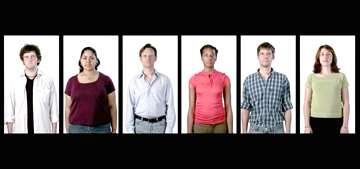
Want (clip) (2008, 74 MB, 2 min.)
‘Want was a new multiple channel algorithmic video installation as part of the exhibition
‘Live’ at the Beall Center for Art & Technology.
The life-sized six-screen video display uses custom software to monitor real time
Internet searches. When the software finds a programmed keyword, it triggers a
video clip of one of several actors/avatars who translates the virtual request to reality.
A soccer mom says,’I want French.’
A rocker dude says, ‘I want Star Trek Enterprise.’
A nondescript middle-aged guy says, ‘I want Little Girl.’
A girl says, ‘I want Forever.’
The six video screens are triggered almost concurrently, causing the voiced requests
to overlap. The result is an audio-visual cacophony of desire; an online echo chamber
of warped reality.‘
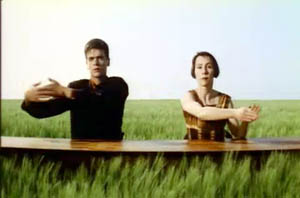
Le P’tit Bal (1994, 35MB, 3:48 min)
Total joy !!
Video: Philippe Decouflé.
Song: Le P’tit Bal Perdu by André Bourvil.
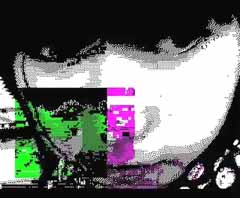
My Miwoo [Tai Chi Weekend Control] (2007, 24.6MB, 50 secs)
Aī-Hz, real name Michael Renassia,
is a French visual performer living and working in Tokyo.
His site contains possibly my favourite biographical nugget ever:
‘He is using compositing software in a diverted way, and real-time mixing
instruments with the aim to create a noisy/pop universe…’
Now, who could possibly object to that?
This piece is rather lovely – the thing that totally makes it for me
is the epiphanic moment at the end when the music/animation stops &
the person appears ..there’s a haunting sense of time suspended..
So, for me, 10/10 for visuals.
I am pretty bored ,though, with the by-the-yard avant-dance music
that accompanies so much work of this kind..it’s not bad
or anything, just pedestrian…

Donald Trump on Citizen Kane (2004, 40.2MB, 3:22 min.)
by Errol Morris.
‘The last thing one would imagine Donald Trump talking about is Citizen Kane,
what many believe to the greatest film ever made, but here he is talking about
in one of the aborted projects by Errol Morris — like he has lived it, like he is a
reincarnation of Charles Foster Kane. The beauty is not just in the Errol Morris
meditative style or even what Trump has to say about Citizen Kane but what we
want to see. Mainly, that Trump’s life mirrors that of Kane and that this real life
epic character sees his own tragedy.
Talking about wealth, he says ‘In real life, wealth does in fact isolate you from other
people…it is a protective mechanism’. That quote speaks volumes. The salesman is
poking holes into his much marketed life. Asked on what advice he would give
Charles Foster Kane, Trump says boldly: ‘Get yourself a different woman!’.

Abbie Making Gefilte Fish (1973, 140MB, 21:04)
Footage of Abbie Hoffman making gefilte fish with Laura Cavestani
(who made the video) in his kitchen, 1973.
Like Abbie, I think art is in the everyday, and it sure is a fun
(and rather informative) twenty minutes if you’ve got it to spare.
Art for Abbie was education, constant revolution, evolution, and living for free.
Art and freedom were one in the same, inextricable from each other.
We miss you man.
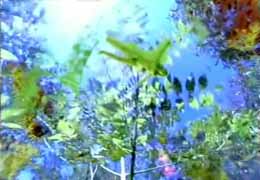
I Want To See How You See (2003, 55.2MB, 4:48 min)
Hallucinatory, luscious, with a hint of darkness: approaching the
formulaic but, if so, certainly a winning formula for Rist & as
always undoubtedly beautifully & imaginatively wrought,
a video portrait of the writer & curator Cornelia Providoli,
found on the consistently excellent Lumen Eclipse site.
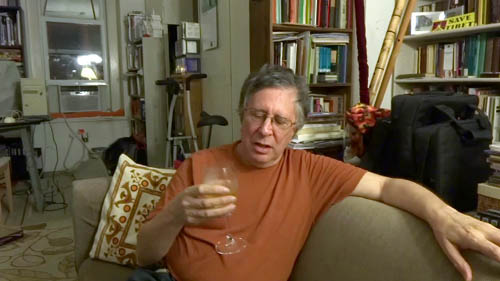
Last Wine (2013, 96MB, 2:50 min)
Anyone who has followed DVblog for any time at all will know how much we
admire & value the work of Alan Sondheim.
He commands a huge range of technique and tone in both his writing and moving
image work. At one point of his compass there is the fiercely cerebral; at
another a rich humour & at yet another a sense of fellow feeling with, a
striving to understand some of our most puzzling and yet everyday feelings
and states of mind.
Things we’ve all encountered in relationships with family, friends and strangers.
This is a particularly moving piece, the more so because of its uncertainty of tone
– its enactment of the sad awkwardnesses of human interaction.
Petit d’Homme (2001, 42MB, 2 min.)
E.Mor –
Improvisation dans le noir // Improvisation in the dark
Musique/Music: Meredith Monk, ‘Engine Steps’
Petit d’Homme –
Etude du comportement humain en milieu naturel, avec Lloÿs Drouhin // A study in human beahaviour in a natural setting, with Lloÿs Drouhin
me (2008, 12MB, 1:06 min loop)

slbarrier (2008, 33.1 MB, 4:32 min.)
elo1 (2008, 46.3 MB, 5:26 min.)
Three from 2008. As always, utterly watchable and quite unparallelled.
PS I’m going to post beneath a text piece by Sondheim from around the
time the movies were made, not because it has any direct
relevance to them (though of course it has relevance)
but because it’s great & a further demonstration, if such were required,
of his range of technique and vision…
she can MOVE FRUIT FROM ONE KIND OF TREE TO ANOTHER
she can MAKE OTHERS FALL ASLEEP OR WAKE AT WILL
she can MAKE FIRE BLAZE FROM WEAPONS
she can FLY THROUGH AIR
she can SEE THROUGH WALLS
she can TRANSFORM A CAVE INTO A PALACE AND SEAL THE EXITS
she can REMOVE THE TUSKS AND TRUNK FROM AN ELEPHANT AND RESTORE THEM
she can MAKE A KING SPEECHLESS AND RESTORE HIS SPEECH
she can GENERATE DEMONS AND COMPLETE DEMONS
she can END DROUGHT AND HEAL ILLNESS
she can SUBDUE LIONS AND TIGERS AND BRING THEM TO FAITH
she can REMOVE ARMS AND LEGS FROM SOLDIERS AND RESTORE THEM
she knows ALL LANGUAGES AND ALL DOCTRINES
she can EAT ENDLESSLY AND DRY UP WELL SPRINGS AND RESTORE THEM
she can CUT OFF HER HEAD AND FLY THROUGH THE AIR AND RESTORE IT
she can MOVE A BUFFALO AND HER CALF BACK TO THEIR HOME
she is SAFE FROM ONE HUNDRED THOUSAND BLOWS WITH CUDGEL AND ARROW
she can TURN AROUND ARROWS IN FULL FLIGHT
she can TURN INTO AN OLD WOMAN AND BACK AGAIN
she can SEE THINGS ANYWHERE IN THE WORLD
she knows ALL FUTURE AND ALL PAST EVENTS
she meditates FOR DAYS ON END WITHOUT SLEEP OR DRINK OR FOOD
she can HOLD SEVEN HUNDRED UMBRELLAS ABOVE HER WITHOUT TOUCHING THEM
she can RAISE THE DEAD AND RESTORE THEM TO DEATH
she can BE IN SEVERAL PLACES AT ONCE
she can TRAVEL INSTANTANEOUSLY FROM ONE PLACE TO ANOTHER
she can MAKE SMALL THINGS ENORMOUS AND ENORMOUS THINGS SMALL
she can MAKE DEVOTIONAL IMAGES CRUMBLE AND RESTORE THEM
she can CARRY A TEMPLE ON HER BACK
she can CLIMB ENDLESS STAIRS AND OTHERS CANNOT FOLLOW HER
she fits THOUSANDS OF PEOPLE INTO A TINY CORNER OF A CAVE OR HOUSE
she disappears AND APPEARS AT WILL
she conquers DEATH
she eats CORPSES URINE EXCREMENT SEMEN MENSTRUAL BLOOD
her slightest MOVEMENT TRANSFORMS WORLDS
her dance CREATES AND ANNIHILATES WORLD
she loosens BOUND ANIMALS AND RELEASES THEM
she can WALK ON WATER AND WALK THROUGH FLAMES
she can CAUSE THE EARTH TO QUAKE AND FLOWERS TO FALL LIKE RAIN
she can DISCOVER HIDDEN TREASURES
she can WALK THROUGH WALLS AND CLIFFS
she can SEAL CAVES AND CREATE GREAT HALLS WITHIN THEM
she can MAKE HERSELF INVISIBLE AND MAKE HERSELF VISIBLE AGAIN
she can CREATE OVERWHELMING TEMPESTS
she can SUBDUE SNAKES AND OTHER WILD ANIMALS
she can SING PERFECT SONGS OF HER OWN DEVISING
she can ALLEVIATE THE SUFFERINGS OF THE ELDERLY
she can ALLEVIATE THE SUFFERINGS OF THE POOR
she can SCORCH CLOTHES AND RESTORE THEM
she can READ MINDS CLOSE BY AND AT A DISTANCE
she can EAT ANY SORT OF IMPURITIES
she can LAUGH AN EIGHT FOLD LAUGHTER
she can DRAW STELES AND JEWELS FROM THE GROUND
she can ERECT VAST PALACES AT AN INSTANT
she extracts POISON FROM WATER AND WALKS THROUGH BLAZING FLAMES
she can CHOOSE THE DATE AND TIME OF HER DEATH
she can MAKE DRUMS AND MUSICAL INSTRUMENTS TO SOUND BY THEMSELVES
her steps MEASURE GREAT OR TINY DISTANCES AT HER WILL
her gaze CAN SHATTER AND RESTORE ANYTHING
she can TRANSFORM HERSELF INTO A SKELETON AND A RAINBOW BODY
her gaze CAN OPEN CAVES IN SOLID ROCK AND SEAL THEM AGAIN
she remembers HER PAST AND FUTURE BIRTHS
she can TARRY WITH CONSORTS WITH OR WITHOUT ELABORATION
she can SELF ILLUMINATE
she can WALK AIMLESSLY DAY AND NIGHT
she can SPREAD THE SCENT OF PERFUMES IN EVERY DIRECTION
she can SIT LIE OR WALK IN MID AIR
she can WEAR APRONS OF BONES
she is FLEET FOOTED
she changes THE COLOR OF HER BODY AT WILL

Impactist – Nebraska – in single frames (2004, 16.9MB, 3:29)
The simplicity of this piece resonates with me.
A 2004 piece from the enormously talented Impactist duo,
Kelly Meador & Daniel Elwing.
Baldessari Sings LeWitt (excerpt) (1972, 10MB, 3:38 min)
In which John Baldessari sings Sol LeWitt’s
sentences on conceptual art.
From the indispensible Ubuweb.

ninja tune (2006, 10.9MB, 5:06 min.)
distorted minds (2006, 6.9MB, 3:18 min.)
Brilliant, and in the case of the first piece, hilarious work from
Hexstatic out of London.
The second featuring Juice Aleem.
Now. Go practice.
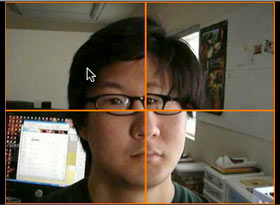
Asynchrony – Split (Head) (2006, 11 MB, 2:14 min)
“My latest project is Asynchrony. It’s a set of four interactive sketches for the
simultaneous visualization of multiple points in time within video. When combined
with time-lapse or looped video clips, each sketch generates a crudely synthesized
image of different time points in video, all within the shared space of the visual frame.
They divide the video frame into static or animated rectangular regions,
each of which can have its own time flow.”
by James Jung-Hoon Seo.

I Wasn’t always Dressed Like This [Trailer] (2013, 120MB, 1:42 min)
If the substantive piece (which I gather is about 33 minutes in length) is
anything like as good as this trailer promises it will be stunning.
This has all the hallmarks of the previous piece by Betty Martins – When the Souls Arrive – we posted here : beautifully made, scrupulously attentive to those being observed/interviewed but with its own quite particular gentle and steely authorial stamp.
(I usually hate anthropomorphising art – you know the thing, ‘this piece investigates’ &c. – except here
I am sorely tempted to say that Martin’s work ‘knows how to listen’. Of course what I mean is Martins knows how to listen, carefully and empathetically, and then to re-configure parts of that listening and looking and understanding too as moving image soaked with detail and feeling.)
In addition the subject matter could not be more timely: a broadside of delicate
beauty in the face of bigotry.
I Don’t Want Your Lasagne Furnace (2009, 41.4MB, 2:23 min)
Artists I really care for tend to fall into two distinct categories.
The first is the extensive or Picasso category – refusing to be
bound by stylistic limitations or boxes they constantly
reinvent themselves, often seeming like ten artists in one skin.
The other might be called the Giacometti or Morandi model, where
the best part of a lifetime is devoted to an intensive, deep,
exploration of a limited set of themes and content.
They have in common more than would at first appear to be the case.
They are both led by a kind of shamanistic passion, a surrender to
the unconscious, to whim, to a playfulness which can be either infantile
or deadly serious, and they reject the most common practice which is the
dull conformity of making work which attempts to guess the market,
or follow fashion or whatever.
If Sondheim is the net exemplar of the first way then Donna Kuhn
must typify the second.
Small miracles of freshness & originality mined and chiselled from
a tiny pallette! Wit and sadness both! Wonder! Delight!

Thanksgiving Prayer (1986, 7.6MB, 2:21 min.)
An astonishing rendition by William Burroughs of his
‘Thanksgiving Prayer’ in a short video directed by
Gus Van Sant.
modern life (2005, 3.6MB, 3:13 min)
grass spider (2005, 6.1MB, 2:55 min)
2005 work from Lewis LaCook.
He seems to have dropped out of sight.
A shame, he made startling and splendid work in a number of media.
Update: I looked – he’s here and .
Good.

LOMEG_ROM – Now Is Not 2009 (2009, 91.2MB, 26:28)
Absolutely stunning docu-voodle from 2010 by “b.k.” of Oslo’s
LOMEG_ROM (sadly, note the retrospectively rather
plaintive ‘we’ll soon be posting again’, dated 2010).
Just when you think fireworks are
overrated or that you’ve seen it all… I am endlessly
impressed with this duo’s ability to tease out the
nuances of space and time.
Short analog video by Portland based artist Erica Schreiner.
Music by by Prussia.
Says Albert Nanning:
‘I’m a writer (poems mostly) and photographer, living and working
in Amsterdam. My age is 41. See also. The last five years I’ve made
so many pictures due to the digital workflow that by accident
I discovered a way to give all those pictures that I don’t use
a kind of meaning by putting them in a clip that I made.
Most pictures are from Amsterdam. I made
the clip with iMovie.’
& nicely it works too…
Talkin’ Singularity Blues (2012, 186MB, 8:13 min)

Robert Loggia [trailer] (2012, 43MB, 1:39 min)
We’ve shown work -very individual and promising work –
from Tony Arnold before and we’re delighted to do so again.
There’s an energy and freshness to his work and a kind
of volcanic flow of creativity which is invigorating.
The first of these pieces is accompanied by music from
Arnold himself, which I like very much. The second is a trailer
for a full length piece which you can view in its entirety here.
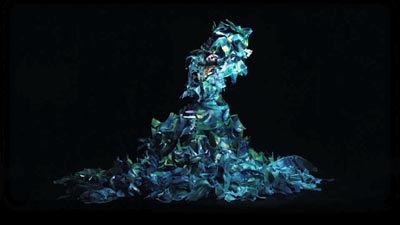
Character 3/3 – Iris (2012, 67MB, 1:20 min)
Last one of three and all a pleasure to post and to view.
Here’s to lots more work from Morrisa.
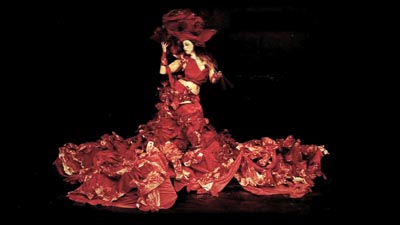
Character 2/3 – Inverted Rose (2012, 43MB, 55 secs)
2nd in the series of 3, the first of which we posted last week.
I think these are lovely and haunting and I’m impressed by Morrisa
Maltz’s diligence and imagination.
(I love what she does with sound, too)
Is it just me or do these slightly conjure Isadora Duncan for anyone else?
Last one on Friday.

Character 1/3 [Infinite Loop] (2012, 130MB, 1:07 min)
I love Morrisa Maltz’s work. I particularly relish the way
she doesn’t rest on her laurels but pushes herself ever on to new
and (over-used word in the arts but, I think, apposite here)
fearless ways of thinking about and making things.
This is the first of three pieces best described, literally,
as moving pictures.
Tremendous!

Adam Mufti – Garden Cities of the Future (2008, 53MB, 7:19)
Remarkable, hypnotic work from the incredibly talented Adam Mufti.
Part meditation on modern life, part perhaps futuristic foreboding,
this piece sort of leaves me speechless, though I fear a lack of
editorializing might portray lukewarm feelings.
It’s really just that I’d rather a viewer experience this on his/her own.
I thought I’d watched a 3 minute piece – only when posting this did
I discover the actual runtime is more than double what it seems.
In this case, that’s exceptional.
The video also features the voice of London actress Juliet Rylance.
The whole thing, the composition, the editing, all of it: truly stunning,
took my breath away. Find a quiet spot and enjoy.
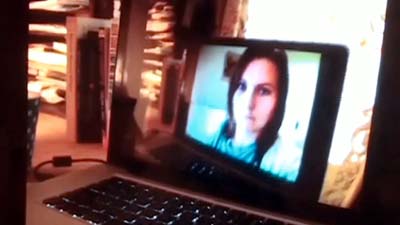
Sunday Afternoon Narcissism (2012, 190MB, 2:46 min)
Hypnotic and disorientating chunk of enchantment from London artist
Lucy Mills.
Only one cavil and that’s the title – the self-deprecation involved might
serve to camouflage the actual richness of this piece, at least from the
casual viewer*.
Let’s be optimistic and assume careful viewing, which work of
this quality certainly merits.
* Although, on reflection, the ‘Sunday Afternoon’ also suggests a certain
dreamy languor quite in keeping with just how gently ravishing it all is.
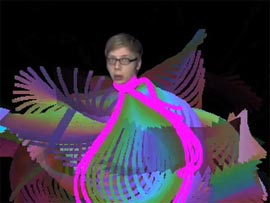
Transhuman Dance Recital #1 (2008, 56MB, 6:30 min.)
“If Jeff Koons had fallen for the Microsoft Help Paperclip rather than
vacuum cleaners or La Cicciolina, presumably the result would have
looked a lot like: ”The Jeremy Bailey Show”.
Says Jeremy Bailey: “From now on I dedicate myself to finding better
ways for humans to dance”
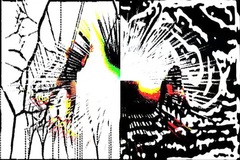
mailman, moron, superman (2008, 76.3MB, 3:27 min)
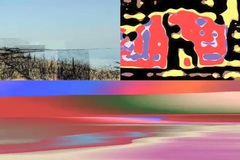
Spinning (2008, 47.2 MB, 2:00 min)
Two pieces from Donna Kuhn in 2008.
I wrote then:
We’ve shown a number of pieces by Donna Kuhn here previously.
I wondered to myself a couple of times, I must admit, whether the fact of
having developed such an intensely freighted and personal syntax and vocabulary might
not at some point become a block to further development, whether there was a limit to
the elaboration (and not of course simply the formal elaboration but of how much
in the way of new approaches to her subject matter this process could be made to yield) of this
admittedly extraordinarily beautiful and singular set of moves.
Well no sign of it yet – instead there is this remarkable process of intensification,
of continual, ever finer and more nuanced scrutiny, distillation and development.
It’s like watching an never ending succession of rabbits being pulled out of
hats and it’s quite, quite beautiful and moving.
All of it something of a masterclass, but the use of sound especially colors me
green with envy – wonderful!

Video Haiku – Four Frame Dance Project: Megan Mayer (2008, 22.4MB, 3:38)
Second in a series of four frame dance videos from
Video Haiku in 2008.
Lovely, inspiring, and fun.
Next week, some more recent work by Kevin Obsatz, the person behind this.

June Pak – double (2002, 892 KB, 0:30)
June Pak’s work is innovative and breathtaking.
In double, one character disrupts the other’s stability
by changing the television channel but is nevertheless
oblivious to this effect. Pak says, “This exchange
between the two suggests the disjunction within
oneself caused by technology and boredom.”
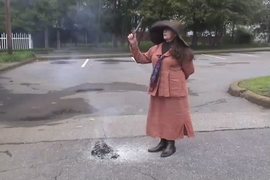
Behold the Light (at Night) (2008, 87MB, 6:27 min)
We initially posted this in 2008 when we encountered Dan Osborne’s work
for the first time.
Recently he seems to be actively rejecting some of his earlier work so I hope
he doesn’t mind us reposting this. In my view he’s a very talented artist
with a quite singular vision.
We said then:
There’s something pleasantly reminiscent of Linklater’s Slacker
in this piece from Dan Osborne.
I don’t mean to suggest it’s derivative; I don’t think it is, or only
in the completely unescapable way of coming-after. This piece
has it’s own identity, which at first I wasn’t sure whether it was
completely random, but then little bits of structuring begin to
assert themselves. In particular I like the fades which occur
immediately prior to anything substantive happening.
A lot of it looks very good too – there’s no doubt the man
has an eye – the 3-D glasses sequence, the fire women,
the musical instruments procession (although am I alone in
finding something slighty snotty about the shot of the bemused onlookers?).
That little cavil aside this is interesting stuff & I look forward to seeing
how Osborne’s work develops.

Amy Carpenter – Why Not? (2006, 8.4MB, 2:56)
In thinking back on the people that inspired me when
video online first began to really take hold of everyone,
I remembered Amy Carpenter’s Welcome to Amyville.
This little piece from a few years ago always stuck with me.
It felt so innovative at the time and still really outshines
many similar works to have come after it.
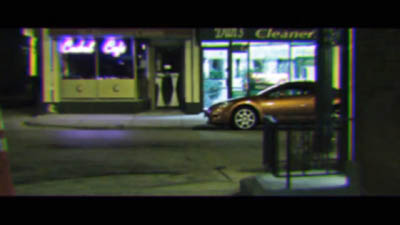
Fall into Light (2012, 209MB, 3:57 min)
For about the first twenty seconds I didn’t think I was going to like
this music video by Dawid Krępski & Jason Chiu, or at least that I
would remain easily indifferent and unmoved.
Then, ..well.. , it’s a slow burn but it gently explodes, if that’s not too
much of an oxymoron, into something fertile and strange that won’t let
go of you.
I don’t think there probably is a narrative but, as you watch, the piece
fools you into believing there is, one straight from a fever dream.
Great.
Credits:
Song: Beca – Fall into Light
Directed: Dawid Krępski & Jason Chiu
Actors: Kelsey Peterson, Fred Geyer
D.O.P: Dawid Krępski & Jason Chiu
Edit: Dawid Krępski
Special thanks: Magdalena Gaca, Michael McKeogh

Bob’s Big Date (2008, 7 MB, 50 sec.)
“These are the adventures of a psychopath named Bob. Bob is not
a nice man; not even a little bit. This show is the video equivalent
of a Sunday comic strip.
Here Bob goes out on a date with Betty, perhaps the first woman
other than his mother to truly understand and appreciate him.”
From The AV Club.
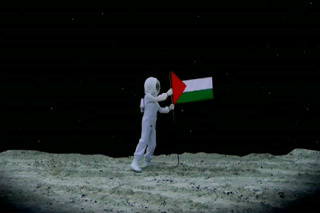
Larissa Sansour: A Space Exodus ( Clip) (2009, 7MB, 1:15 min)
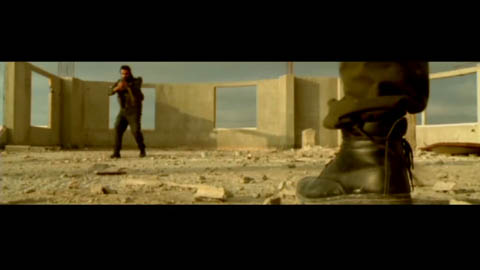
Tarzan and Arab: Colourful Journey (Trailer) (2010, 11MB, 1:38 min)
Here are two clips from videos featured in the excellent Subversion show,
featuring artists from the Arabic speaking world, currently on (to 5th June) at
Manchester’s “Cornerhouse”.
It is carefully, elegantly and thoughtfully curated by Omar Kholeif, who writes:
“Like many of the artists I was looking at, I felt that collectively
curators and writers associated with the politically unstable Arab world were
being asked to step up and perform to an identity that the world wanted us to play.
With Subversion my aim was to do just the opposite. I worked with artists who
referenced this very language but who wanted to dissent, poke fun, critique
and re-define themselves as artists of the imagination, and not of any specific
social or political condition.”
It has to be said that this bending of the stick is eminently successful – none
of the works included has any taint of tokenism, they are rich with a poetry,
humour and humanity that cuts entirely across any notional cultural divide.
Where they do focus upon political subject matter (and one should not form the
impression that this is a show with, in any sense whatsoever, its political teeth pulled)
what delights is the richness and the playfulness with which this is done.
Larrisa Sansour’s “A Space Exodus” is both gentle and devastating.
Gentle, the Sansour persona (and we’ll have another piece of hers next week)
presented in the work, with the rather stylish space suit, the wistful smile and wave
towards the far away earth, having planted the Palestinian flag on the moon:
–“That’s one small step for Palestinians, one giant leap for mankind”.
Devastating when one sets this gentleness by the side of what we know of the Apartheid
wall, the illegal settlements, punishment demolition of Palestinian homes &c.
(Anyone who doubts the piece’s political impact should take a look at the vile racism
of some of the comments on the YouTube posting of this clip
– “Send all the Palestinians to the moon” &c.)
The other piece featured here is from the Gazan twins Ahmed and Mohamed Abu Nasser,
known professionally as “Tarzan and Arab”.
Although (in a disarming interview in which they come across a bit like a smiley
and un-terminally-corroded-by-snotty-cynicism younger version of the Chapmans)
they assert the piece is in some sense about internecine Palestinian conflict,
to me it reads more like a balletic paean of love to the cinema, to the
moving image (including perhaps the video game too – what do you think?).
Until last year Tarzan and Arab had never been to a cinema and have largely
been unable to attend screenings of their own works abroad.
In fact their first works, also shown at Cornerhouse, were old style film posters
for non-existent movies, all given titles from the names of Israeli military
operations: Defensive Shield, Cast Lead &c.(as, indeed, their film has too).
There is a great deal more to this show, which covers diverse geographical slices
of the Arabic speaking world and where therefore the interaction between life
and art has a different tempo and character to the works by the Palestinian
artists discussed here.
And it’s all great – I don’t have space here to properly do the whole thing justice.
In particular, though, I do want to mention Akram Zaatari’s two luminously beautiful
films set in the milieu of gay life in Beirut – though again to outline them thus,
in one line, in terms of “topic”, is to oversimplify – we must distinguish between
ostensible topics and the dense, lyric and dazzling poetry which they engender.
Also Khaled Hafez’s wonderful short “On Presidents and Superheroes”
(yet another political context, that of a staggeringly prescient augury of a victorious
but still contested Egyptian revolution) but I simply am going to just mention it as I
hope to write something a little bit more extended about it when I post a clip here (soon!).
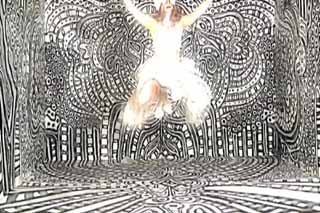
I Don’t Know That Would You Like to Search the Web for it? (2012, 96MB, 38 secs)
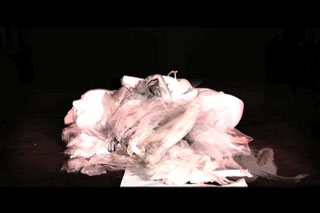
Image White/Red (2012, 12MB, 35 sec loop)
Another DVblog favourite today, I’m glad to say.
Morrisa Maltz, returning to the world of art from her foray
into commerce (but that so elegant and sharply done), presents
us with two new vids, mysterious and lovely both; one that
feel ecstatic and the other with, perhaps, a darker note, I think.
Anyway, partly because I think it’s enlightening and partly because, dammit,
I can, I reproduce below an edited verison of an exchange
Morrisa and I had about these.
MM:
…think I’m moving in a bit of a different direction…I’m working
on a few pieces that are much shorter and meant to loop- sorts of images
that function more as paintings and could possibly fit in sculptures
or present themselves framed on a wall… I’m not sure if those would
work for DVblog, but I’m attaching two pieces that function in that way,
one that is similar to old pieces a bit and one that is entirely meant
to loop and function as more of an “image” than a video……..
I’m really trying to get back in the groove after all the Mofone excitement
so no worries if you don’t like these pieces and don’t want to write
about them or want to write something not so great about them…
MJS:
I think they’re both great & I’d love to do a post about them.
For me change is a sign of life. Nothing depresses me more than the all
too frequent art school advice to find a “thing” and to keep doing it.
Imagine Picasso with this philosophy…
Anyway – although they are different you have very distinctive fingerprints 🙂
MM:
I think that change is extremely important for an artist , and it’s …
unfortunate that artists quite often get pegged into one way of making
things and continue to work in that vein- that seems to contradict
the whole idea of an artist for me…
‘My practice can be grouped under the interpretation of body and its
relationship to its environment. I make attempts to emancipate the body
from social and cultural norms and try to suggest ways to distance one from
the limits imposed on the society by totalitarian establishments.’
by Arzu Ozkal Telhan.
Blurring Fat (2006, 20MB, 5:15 min.)
Podcast from Ajit @ squigglebooth
Her – Kelly Cook, Him/Writer/Director – Ajit Anthony Prem.
Superb !
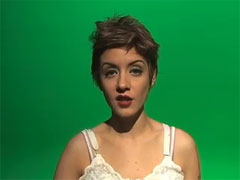
Amelia Winger-Bearskin – State of Things (2007, 19.9MB, 8:58)
Amelia Winger-Bearskin makes fun, funky performance pieces
and has a couple on her website worth viewing.
This is my favorite piece from her Chroma Key series.
Try swearing for nine minutes straight and see
how successful you are.

Quilts Never Sleep (short version) (2007, 20.9MB, 3:07 min)
Two very different but attractive & telling pieces from Dan Canyon.
The first was part of a show of – you guessed it – quilts in London in 2006,
about which read more here.
The second could’ve been made for dvblog, well, at least for me, as I’m a fool
for all things turntablist, & features the splendidly monickered Mickey Morphingaz.
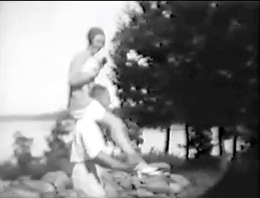
Recreation, Re-Creation (2006, 9.6 MB, 4:27 min.)
“This video juxtaposes original 16 mm footage acquired from my Grandfather with interview footage taken of my Mother and Grandparents. All but the
past-tenses of their speaking are left intact, while the film footage has been aggressively manipulated. The project seeks to question the language of constructing one’s identity through negotiation with familial history, where the past has been constructed and reconstructed in order to corroborate certain facades of culture which are wished to be left intact.”
From Bitsy Knox

When the Souls Arrive (2011, 72MB, 2:40 min)
I recently attended a fairly high profile art video festival,
which shall be nameless, and I came away feeling depressed.
There was some good work (indeed, some magnificent, not much, but some) but
on the whole it was just a dispiriting display of meretricious effects, sloppy thinking
and a striving for the quick impression; all pretty souless & forgettable stuff.
(Oh, and plus a lot of cliched tosh about the – yawn – “post-human”. Wasn’t post human,
most of it, so much as post-being-any-good)
Then, on the other hand, you come across something like this:
no in-your-faceness, modest, austere and subtle, makes you do a little bit of work,
but so, so worth spending time with.
is the Brazilian video maker who made this small and perfect gem
– an account of the celebration of the Day of the Dead by expat Mexicans
living in London.
You can see the whole thing here (and I urge you to do so).
Betty Martins cheered me up considerably and I look forward to much more
work of this quality from her.

The Singing Sculpture (2010, 3MB, 41 sec.)
“Singing Sculpture documents one of Gilbert & George’s most famous “living sculpture” pieces.
Covered in multicolored bronze paint, the artists sing and interchange parts of the English
music hall standard “Underneath the Arches.” Through their stylized performance,
Gilbert & George deliberately blur the lines between life and art, reality and contrivance.
This ambiguity does not rely on a transformation from living to sculptural form. On the contrary,
they have merged the two in order to obliterate, rather than emphasize, the distinctions between life and art.” – Walker Art Center
from Video Data Bank
Anyone who has been lucky enough to see dancer & artist Annie Pui Ling Lok
do the former will know what a fruitful combination of fierce, almost austere,
intellect & yet sensitivity to the particular, the fragile & the human, to expect.
There’s such a sure hand at work here – the confidence in collaging
disparate material & although we’ve tagged it
‘experimental’, in one sense the piece is anything but -it’s so not
a technical exercise, but a rounded, resonant work of art.

freudwasafraud (2006, 20MB, 2:32 min)
‘There’s nothing like spending a little quality time with the
latest top ten questions about your potential state of mind.’
podcast from Charlene Rule aka scratch video.

Picasso – I salute you, I embrace you! (2006, 3MB, 29 sec)

Prévert goes postcard shopping (2005, 10MB, 1:22 min)
Two gems from the excellent website of the French
Institut National de l’Audiovisuel , featuring two figures
associated with surrealism, the poet Jacques Prévert &
(seen here on crackingly deranged form) the artist Salvador Dali
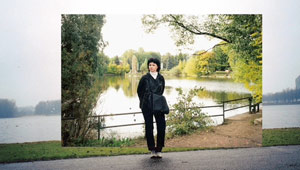
Irina Birger Thinks Drawing is Important (2010, 93 MB, 3:20 min. excerpt)
“What is the essence of a photograph, or more precisely, of an ID photo, portrait or self- portrait ?
You could almost ask, what is the essence of art. Or, what is the essence of life? That time always passes.
As the Greek philosopher Heraclitus put it in the 5th century BC, Panta Rhei, ‘Everything changes,
nothing remains still’. In the short video film ‘Irina Birger Thinks Drawing is Important’, Irina Birger
provides her answer to such questions.
A waterfall of self-portraits taken from photo albums belonging to her, her family and circle of
acquaintances, creates an ingenious, dizzying autobiography of the artist through the years.
We see the stereotypical development of the artist influenced by the history of art, from classic to
contemporary, and by the places where she has lived in her nomadic existence, from communist
Russia, the former Yugoslavia at the beginning of the civil war there, Israel during the Second Intifada and Germany after its reunification, to her present but certainly not final destination: the Kingdom of The Netherlands.
There’s a pinch to these moving images, where the essences of film and photography converge and clash. In a similar manner Birger’s life collides with the wrenching history of conflict zones and the sometimes difficult existence as an artist. ‘Drawing is Important,’ she posits at the end, her answer in this photo-turns-film project to the question of how she holds her own in life” (Text by Vera Stiphout)
by Irina Birger.
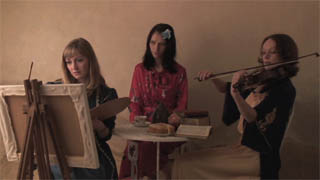
The Golden Age (2011, 181MB, 5:34 min)
We’ve posted Toby Tatum’s work
before and it’s work with a definite charge to it and ambitious too.
I think this piece is more wholly successful than its predecessor but I’m still not totally convinced.
It’s something to do with the aim of conjuring a very precise & particular
dream-world which strikes me as an all-eggs-in-one-basket kind of approach,
in that the tiniest false note disrupts the sought for spell.
Therefore Tatum creates a very high bar indeed for himself and his performers.
If one compares similarly oneiric work by Cocteau, Lynch or Hadžihalilović,
however dense and rich the atmosphere gets, there is variation with humour
or banality preparing us for more poetry to come and somehow too, framing it,
setting it off.
That sounds more critical that I want to be for this is, in every respect, a
very nicely realised and haunting piece.
Next week, or the week after, we’ll post an interview with Tatum about his work.
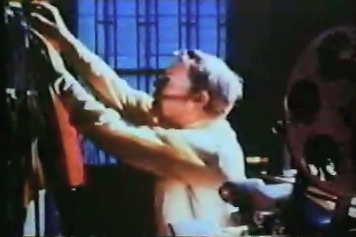
Film Portrait (1972, 31MB, 11:45 min.)
La Cartomancienne (1932, 13MB, 12 min.)
This is a memoir and the last film made by artist and filmmaker Jerome Hill.
I also found ‘La Cartomancienne’, one of his earliest film experiments.
By Mica.
Vex #1 (2006, 29.1MB, 2:08 min.)
Vex #5 (2006, 25.9MB, 1:09 min.)

Ferrari Dogs (2006, 25.9MB, 1:09 min.)
You know sometimes how when you first look at a work
you can’t process it immediately, it seems jumbled – wrong –
& you’re tempted to dismiss it.
Then you live with it awhile & suddenly it leaps into focus &
you realise you’re in the presence of something much richer
& more rewarding than the things which did immediately fall into place?
Do you know that feeling?
Well, that’s how I felt as I prepared this post.
The work, by the artist & poet Brian Kim Stefans, snuck up
on me & then hit me over the head.
Furthermore, there’s still a puzzling quality to it all, for me:
the Ferrari Dogs piece seems like work of a different category
to the vex pieces somehow ( as does Manchurian Rainman on
the site. Check it. Now – what is that all about?)
Anyway – I’ll take mystery over glibness anyday – I look forward to more.
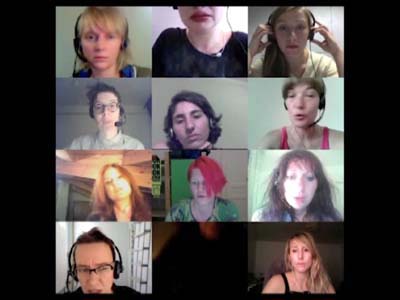
Angry Women (Left Panel/Clip) (2011, 188MB, 6:23 min)
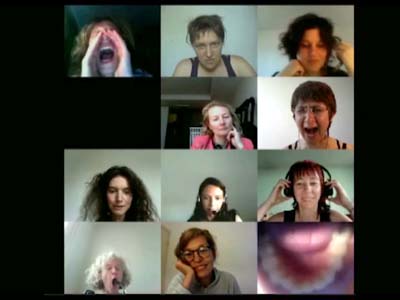
Angry Women (Right Panel/Clip) (2011, 142MB, 6:33 min)
Here are a couple of extracts by Annie Abrahams, whose work we love here at DVblog, from her show Training For a Better World which is currently running at the Centre Régional d’Art Contemporain, Languedoc-Roussillon in Sète until the first of January 2012.
I’d seriously suggest that anyone physically able to do so should visit it – I travelled down from London in a day, stayed a night and then trekked back, all by train. Very pleasant it was too.
Abraham’s exhibition runs in tandem with another, of the works of French artist Catherine Gfeller; Gfeller on the ground floor and Abrahams on the first, and the formal similarities (though I think these are largely superficial, for reasons I’ll enlarge upon soon) – the use of both moving and still images, text, an intervention at some level in the mechanics , the whys and wherefores, of how one presents these as art in a gallery setting – make it a stimulating pairing.
Abraham’s selection includes four pieces which are essentially (with some qualifications) video. They are constructed out of the telematics performance territory that she has so signally staked out in the last few years but, she insists, are not documentations of those performances. I think she’s right to emphasise this distinction – although in one sense the pieces clearly do document things that happened in performance they are ultimately video pieces made performatively .
The show doesn’t consist of moving image work only. There are some prints, drawings and a minimalist installation consisting of a single photograph of a pair of married fire-fighters and a sound track of them reading (in an extraordinarily graceful and musical edit [and this is where in this piece any surface similarities to, say, Nauman find their limit. Grace. Grace and elegance throughout.]) a collaborative text on fear.
The moving image and the other pieces occupy different ends of what is mostly a long thin exhibition space and are connected –“tied” together by a “ribbon”- a very long, three or four inch high, strip, of black highlighted, collaboratively generated white text –on the theme of madness – running at floor level for some considerable distance.
It’s important to both acknowledge this distinctly bi-partite character and then to immediately forget about it, so intimate is the connection between the two halves.
Despite the disparate and apparently laissez-faire methodologies used in the generation of all the work and the huge level of trust in the participants evinced by Abrahams, one’s main impression is of a body of work which forms a tight unity both stylistically and in its preoccupations. (And I’d argue that the principal pre-occupation is the question of what it means, physically, socially, psychically, to be a human being. And, further, that this high seriousness –allied to a playfulness which veers from the childishly innocent to the Rabelaisian – is what ultimately gives this work its huge authority and significance and distinguishes it in kind from the technically well executed and often engaging work on the floor below.)
The jewel in the crown of the show is the video installation ‘Angry Women’, created by Abrahams and 22 other women of many nationalities (3 more , in fact, in total, 2 “backstage” assistants, and a performer who opted for silence throughout) speaking about, acting out, demonstrating, reflecting upon, their anger and its causes and triggers, on webcams at their different individual locations and in their native tongues, with the images being sent to a 3X4 grid, in a format that Abrahams has made her own. Because of the limits of even current streaming technology it was necessary to conduct two distinct performances, separated, in fact, by an interval of two months. The length of each was determined by a protocol where a minute’s silence by all participants signalled the end. This resulted in pieces of differing lengths the lack of synchronisation of which adds another layer of fragile grace to the final projections, projected large on adjacent walls around their common corner, with sound from the left image grid fed to the right speaker and vice versa.
The piece occupies most of a large rectangular space at the CRAC (with the video ‘Double Blind (love)’, a collaboration with Curt Cloninger we’ve savoured here before, in its performance incarnation, in the opposite corner and in its full and majestic 264 minute duration).
The impact is visceral – we face what feels like a wave of humanity, not so much in numbers, although 23 women is impressive, at least to this man, but in the infinite malleability of face and hand, of gesture and expression and of how these things might occupy a frame. Sometimes that frame will resemble a Giacometti portrait, with the subject appearing to recede into what seems to be endlessly deep space. At others red lips or an open mouth, sensual and terrifying by turns, occupy the whole of the space – and furthermore each cell is constantly in flux (because these are living, breathing, unpredictable, human beings). There’s something both of portraiture and of the dance at work here, and a kind of found poetry too (which the moving image work has in common with the collaborative texts at the other end of the exhibition). The combination of iron control, planning, foresight (the grid, the protocols) with the letting go and trust evident elsewhere – the phased lengths, the blank space for the person who didn’t turn up, the open performative structure – makes for something of great richness.
Additionally it’s clear that those performers who had previous experience of the format were consciously playing with and against their fellows – gestures are mirrored, sounds echoed, the fiction of looking elsewhere – to the side, or above – of making contact in and across the grid itself, is impressively sustained.
The angry women turn out to be at one and the same time very particular – unique – women and women in general too; the women in general turn out to be human beings in general (and general en masse because each so particular) and the human beings in general turn out to live here, or there, now, in this, one, our only, very particular, world – that mysterious, frightening and wonderful place.
Book your train/plane ticket now!
***
Voici quelques extraits par Annie Abrahams, dont nous aimons le travail ici à DVblog, de son exposition Training For a Better World qui se déroule actuellement au Centre Régional d’Art Contemporain, Languedoc-Roussillon à Sète jusqu’au premier janvier 2012.
Je suggère sérieusement de la visiter à quiconque qui est effectivement en mesure d’y aller – j’ai voyagé depuis Londres en une seule journée, je suis resté une nuit et j’ai fait le retour le lendemain, le tout par train. C’était très agréable.
L’exposition d’Abrahams fonctionne en tandem avec une autre, des œuvres de l’artiste française Catherine Gfeller; Gfeller au rez de chaussée et Abrahams au premier étage, et les similitudes formelles (bien que je pense qu’elles soient essentiellement superficiels, pour des raisons sur lesquelles je vais m’étendre bientôt) – l’utilisation à la fois de l’image fixe et de l’image en mouvement, du texte, l’intervention à un certain niveau dans la mécanique, les tenants et aboutissants, de la façon dont on présente celles ci en tant que de l’art dans le contexte d’une galerie – en font un jumelage stimulant.
La sélection d’Abrahams comprend quatre pièces qui sont essentiellement (avec certaines réserves) vidéo. Elles sont construites à partir du territoire de la performance télématique qu’elle a jalonné si singulièrement les dernières années, mais, elle insiste, ce ne sont pas des documentations de ces performances. Je pense qu’elle a raison de souligner cette distinction – bien que dans un sens les pièces documentent bel et bien ce qui est arrivé dans la performance, elles sont finalement des pièces vidéo réalisées performativement.
L’exposition ne consiste pas seulement d’images en mouvement. Il y a quelques imprimées, des dessins et une installation minimaliste composé d’une seule photo d’un couple de pompiers mariés et une piste sonore d’eux lisant (dans un montage extrêmement gracieuse et musicale [et c’est là que dans cette pièce toute similitude de surface à, disons, Nauman trouve son limite. Grace. Grâce et de l’élégance tout au long.]) un texte collaborative sur la peur.
L’image en mouvement et les autres pièces occupent des extrémités différents de ce qui est surtout un espace d’exposition longue et mince et sont reliés – “liées” par un “ruban” – une très longue, trois ou quatre pouces de haut, bande, de texte blanc, généré en collaboration, souligné en noir – sur le thème de la folie – se déroulant au niveau du sol sur une distance considérable.
Il est important de reconnaître ce caractère nettement bi-partite et ensuite de l’oublier immédiatement, tellement intime est la connexion entre les deux moitiés.
Malgré les méthodologies disparates et apparemment laissez-faire utilisées dans la production de tout le travail et l’énorme niveau de confiance aux participants manifesté par Abrahams, la principale impression est celle d’un corps de travail qui forme une unité serrée à la fois stylistique et dans ses préoccupations. (Et je dirais que la principale préoccupation est la question de ce qu’il signifie, physiquement, socialement, psychologiquement, d’être un être humain. Et, puis, que cette haute degré de sérieux, allié à un enjouement qui vire de l’innocence enfantine au rabelaisien – est, ce qui donne finalement ce travail son énorme autorité et importance et le distingue de sa nature du travail techniquement bien exécuté et souvent engageant de l’étage en dessous).
Le joyau de la couronne de l’exposition est l’installation vidéo «Angry Women», créé par Abrahams et 22 autres femmes de plusieurs nationalités, (en fait, 3 de plus au total, 2 assistantes de “secours”, et une performeuse qui a choisi de rester silencieuse jusqu’à la fin), parlant, actant, démontrant, réfléchissant à, leur colère et ses causes et déclencheurs, devant des webcams dans leurs locations individuellement différentes et dans leur langue maternelle, avec les images envoyées à une grille de 3X4, dans un format que Abrahams a fait le sien. En raison des limites des technologies de streaming, mêmes actuelles, il était nécessaire d’effectuer deux performances distinctes, en fait séparées par une période de deux mois. La longueur de chaque performance a été déterminé par un protocole où une minute de silence par toutes les participantes marquait la fin. Il en résulte des pièces de longueurs différentes dont le manque de synchronisation ajoute une autre couche de grâce fragile aux projections finales, projetées en grand sur des murs adjacents autour de leur coin commun, avec le son de l’ image grillée de gauche envoyé au haut-parleur droit et vice versa.
La pièce occupe la majeure partie d’un grand espace rectangulaire au CRAC (avec la vidéo «Double Blind (love)», une collaboration avec Curt Cloninger que nous avons savouré ici avant dans son incarnation performative, dans le coin opposé, dans sa durée totale et majestueuse de 264 minutes).
L’effet est viscérale – nous faisons face à ce qui ressemble à une vague de humanité, non pas tant en nombre, bien que 23 femmes est impressionnant, au moins à cet homme, mais dans l’incessante malléabilité du visage et des mains, du geste et de l’expression et de la façon dont ces choses peuvent occuper un cadre. Parfois, ce cadre ressemble à un portrait de Giacometti, avec le sujet apparaissant reculer dans ce qui semble être un espace profond infini. À d’autres moments, des lèvres rouges ou une bouche ouverte, sensuel et terrifiant à tour de rôle, occupent la totalité de l’espace – et en plus chaque cellule est constamment en mouvement (parce que ce sont des êtres humains vivantes, respirantes, imprévisibles). Il y a quelque chose à la fois du portrait et de la danse à l’œuvre ici, et aussi une sorte de poésie trouvée (ce que le travail d’image en mouvement a en commun avec les textes collaboratives à l’autre bout de l’exposition). La combinaison du contrôle de fer, de la planification, de la prévision (la grille, les protocoles) avec le laisser-aller et la confiance manifeste ailleurs – les longueurs phasées, l’espace noir pour la personne qui ne se présente pas, la structure performative ouverte – produit quelque chose d’une grande richesse.
En outre, il est clair que ces artistes qui ont eu une expérience antérieure du format ont joué sciemment avec et contre leurs partenaires – les gestes sont mises en miroir, des sons font écho, la fiction de regarder ailleurs – sur le côté ou au-dessus – la prise de contact dans et à travers la grille lui-même, est impressionnant et soutenue.
Les femmes en colère se révèlent être tout à la fois des femmes très particulier – unique – et des femmes en général aussi ; les femmes en général se révèlent être des êtres humains en général (et en général en masse parce que chacune si particulière) et les êtres humains en général s’avèrent vivre ici, ou là, maintenant, dans ce, un, notre seul, très particulier monde – cet endroit mystérieux, effrayant et merveilleux.
Réservez votre train / avion billet dès maintenant!
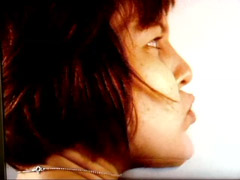
Beauty (2007, 11.4MB, 1:04 min.)
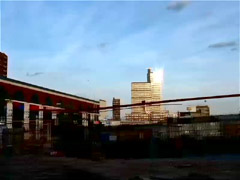
Romania (2007, 19MB, 2:01 min.)
What to say, we’ve said it all, again & again, Sondheim’s
movies are a unique & indispensable body of work.
Specifically, anyone working in video on the net who
doesn’t know them is navigating blind.
For a free masterclass hop over to his site & work your
way through all the stuff with .mov or .mp4 extensions.
( I mean, don’t confine yourself to the movies but this
is dvblog)
You won’t have wasted your time.