Jørgen Leth – 66 Scenes from America (1981, 9.9MB, 4:16)
Pretty self-explanatory: Andy eats a burger.
Scene from controversial Danish filmmaker
Jørgen Leth’s 1981 composite film, 66 Scenes from America.
Jørgen Leth – 66 Scenes from America (1981, 9.9MB, 4:16)
Pretty self-explanatory: Andy eats a burger.
Scene from controversial Danish filmmaker
Jørgen Leth’s 1981 composite film, 66 Scenes from America.

Astral Man an Illuminated Poem (1959, 22MB, 2:27 min.)

poem field No2 (1966, 60MB, 5:42 min.)
A true innovator. Creator of countless films displaying complete artistic control.
What vision Stan VanDerBeek, what vision.
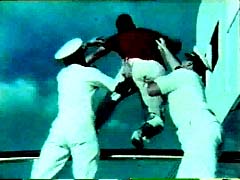
Serial Metaphysics #1 (1984-86, clip, 6.4MB, 1:08 min)

Serial Metaphysics #2 (1984-86, clip, 5.9MB, 1:08 min)
Wheeler Winston Dixon is now a professor of film studies
at the University of Nebraska, Lincoln. Before he did that he made
a lot of (on the evidence of these clips & others) really great short movies.
In particular these two clips from Serial Metaphysics, apparently almost
entirely constructed from TV ads, whet the appetite for a viewing
of the whole twenty minutes.
Dixon conjures fever dream magic from commercial banality.
Check in particular the end sequence of clip one:
David Lynch eat your heart out.
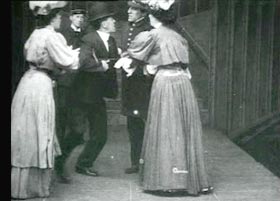
2 a.m. in the subway (1905, 8 MB, 56 sec.)
A subway platform, a policeman and a conductor, a well-dressed man
with a cigar and two women dressed in long skirts and jackets.
One of the women causes a sensation by raising her skirt and
revealing her stocking. Artificial legs are displayed out the subway car window.
Hilarious. From The Open Video Project.

Martha Rosler – Semiotics of a Kitchen (1975, 18.3MB, 6:29)
An A-Z look at the tools of a kitchen, of domesticity,
of the self in the midst of frustrated ennui.
Historically significant feminist performance art that reminds us,
“When the woman speaks, she names her own oppression.”
Rosler is one of my favorites.

Abbie Making Gefilte Fish (1973, 140MB, 21:04)
Footage of Abbie Hoffman making gefilte fish with Laura Cavestani
(who made the video) in his kitchen, 1973.
Like Abbie, I think art is in the everyday, and it sure is a fun
(and rather informative) twenty minutes if you’ve got it to spare.
Art for Abbie was education, constant revolution, evolution, and living for free.
Art and freedom were one in the same, inextricable from each other.
We miss you man.

Impactist – Nebraska – in single frames (2004, 16.9MB, 3:29)
The simplicity of this piece resonates with me.
A 2004 piece from the enormously talented Impactist duo,
Kelly Meador & Daniel Elwing.
Kerry Baldry is an enormously generous spirit – her curatorial efforts around the various
One Minutes compilations have given a good many moving image artists reason
to be grateful.
She is also herself a maker of fine work with an intensity both of focus and of feeling.
In this piece everything falls together.
She touches the familiar with wonder and terror.
Erection (1971, 180MB, 18:06 min.)
A nineteen-minute film by John and Yoko, which was made in London during
1970 and 1971. When John had heard that the London International Hotel was
to be built in Kensington, he sought permission to film its entire construction.
Once he’d obtained it he contacted the photographer Iain MacMillan and asked
him to take a series of photographs of the construction. MacMillan had a stills
camera and filmed the erection of the hotel from a fixed position for a period
of eighteen months.
The stills were presented in sequence in the film, which ended with a shot of the
completed hotel where all the lights were then turned off, leaving a black screen.
On the soundtrack Yoko sang two songs, ‘Airmale’ and ‘You’, using tapes of recordings
of Joe Jones Tone Deaf Music Co., which was, in fact, a number of toy percussion
instruments that played themselves, a squeaky style of sound devised by a former
associate of Yoke’s Fluxus days, Joe Jones. The hotel was situated at 147 Cromwell
Road and later became the London Swallow Hotel.

Gilgamesh, Part #1 (2012, 214MB, 5:03 min)
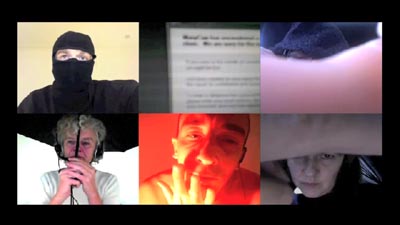
Beyond Spectacle (2012, 214MB, 5:03 min)
About DVblog –
Doron started DVblog in summer 2005 and Michael started posting about a month after.
A number of people have contributed hugely along the way – notably Mica Scalin, Brittany
Shoot and Brian Gibson.
We’ve been vandalised a couple of times (hence postings now dating back only to late 2006,
although the vast majority of what was ever posted is back up now) but we’ve also had some really
delightful feedback from people who’ve felt what we’ve done is worthwhile.
Early on we decided that anything we posted would actually live on our server and this means we have assembled an extraordinary and unique archive of the birth and infancy of art video specifically created for or focussed upon the network.
One day we will donate this to an institution that will preserve it and continue to make it available for both joy and study.
When we started Quicktime was the only serious way for anyone to post moving image work to the net. Although it remains the backbone of virtually all digital moving image activity, as a mode of delivery it has now been almost completely superseded by streaming video. This has two implications – one being that the casual viewer has become less patient and is much more likely to go to YouTube or similar, where there’s no significant wait and where quality has improved immeasurably. The other is that fewer and fewer artists are posting their work in QuickTime format – so our old methodology of accepting submitted work but also scouring the net for interesting stuff is at least 50% outmoded.
Finally we want to say – it has been hard work and for no material reward. Indeed, not only have we never made a dime out of DVblog, it has cost us both cash and a great deal of time to sustain. Not that we are complaining – we hope we provided a service to people and certainly we learned a great deal and derived a great deal of pleasure from everything we posted. We made some good and lasting friendships too.
For the reasons listed above we are going to stop posting regularly from today. We finish with pieces from two artists who, in very different ways, have given us a great deal of pleasure – Annie Abrahams and Edward Picot.
Annie, with a record of a networked performance in November of 2012 and Edward with a splendidly mad take on the tale of Gilgamesh, featuring characters from his Dr Hairy series.
We’re not proposing to shut up shop entirely – we will continue post such work in QuickTime format which is submitted to us and which we like. We still think there is something special about the amount of control over quality posting an actual QT file gives and we’re very interested in continuing to write short, but we hope thoughtful and helpful, texts about these. Please, therefore, don’t be shy abuot sending us stuff!
We’d like to thank all who have contributed work over the past seven and a half years and, of course, those who have taken an interest both in the work and what we’ve had to say about it.
Finally we wish readers and contributors alike a happy, productive and thoughtful 2013.
Michael Szpakowski & Doron Golan, 1st Jan 2013.
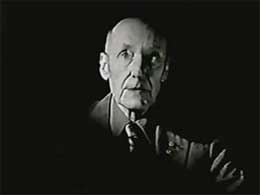
Thanksgiving Prayer (1986, 7.6MB, 2:21 min.)
An astonishing rendition by William Burroughs of his
‘Thanksgiving Prayer’ in a short video directed by
Gus Van Sant.

Christoph Brunner – schwarzenbergplatz (2005, 9.8MB, 0:46)

Christoph Brunner – schwarzenbergplatz 2 (2005, 13.5MB, 1:03)
Orte in Zeiten is a filmmaking process conceived
by Christoph Brunner that continuously re-exposes film
to make surreal loops of space and time.
These two clips were taken during the development
of OiZ, which roughly translates to “places in time”.
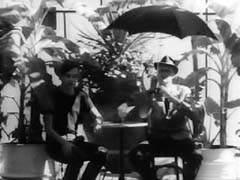
The Cut-Ups (clip) (1966, 15.4MB, 1:20 min.)
William Burroughs & co-conspirators made this in 1966.
1966! – could’ve been the day after tomorrow.

Imitations of Life (excerpt) (2003, 35MB, 4 min.)
Imitations of Life is a ten-part video that strains childhood through a history
of reproduction, culling pictures from the Lumières to
the present day in order to find the future in our past.
by experimental filmmaker Mike Hoolboom.

Emily Richardson -‘Over the Horizon’ (extract) (2012, 75MB, 1:10min)
We’ll start this season with an suggestion for something you
can physically attend and absolutely should, too, if you’re
anywhere near London this Thursday evening (Sept 27th).
As part of the London Underground Film Sessions
The Horse Hospital are premiering Volume 6 of Kerry Baldry‘s
exemplary ‘One Minutes’ compilations of …er… one-minute-in-length
artist moving image work.
Transparency dictates I reveal I have a piece in it, but any claims
for mine aside, I can confidently predict a wonderfully varied, well
curated, roller coaster of work.
This piece is an extract from a longer work by Emily Richardson
(and, of course, splendid though it is, showing a single piece
immediately traduces one of the principal attractions of the project
which is the heady variety and contrast of it all. Here and here
is some stuff from previous volumes)
Hope to see you there!

Vera Brunner-Sung – untitled (2006, 2.5MB, 1:10)

Vera Brunner-Sung – Longshore (2004, 9.9MB, 4:34)
Two short films from Vera Brunner-Sung, made respectively
on 16mm and super 8, both exploring boundaries of privacy
and community, the understanding of memory and place.
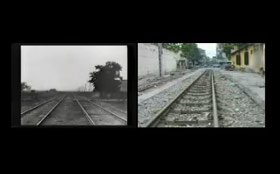
Man With a Movie Camera (Trailer) (1929-2007, 6MB, 2:17 min.)
“Man With a Movie Camera is a participatory video shot by people around the world
who are invited to record video according to the original script of Vertov’s Man With
A Movie Camera and submit it to a website which will archive, sequence and deliver
it. When the work streams your contribution becomes part of a worldwide montage,
in Vertov’s terms the ‘decoding of life as it is’.
Project by Perry Bard.
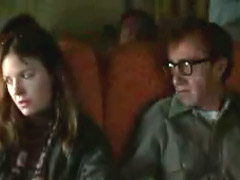
at interval (1977/2006, 24.3MB, 13:22 min)
Early work from the redoubtable Nathaniel Stern where he reworked,
in the most curious of ways, Woody Allen’s Annie Hall.
Interesting that although the working method here seems
almost diametrically opposed to the hands on, performative
approach found in his odys series here too is that same
sense of the fragility & vulnerability of human beings and their
bodies & psyches & of the unreliability of the language we use
to try & make what we want to happen & to relate or lie about what did .

Henry Fool -trailer (1997, 5.2MB, 2:05 min.)

Henry Fool -clip (1997, 3.3MB, 57 secs)
In a rationally ordered universe Hal Hartley would be feted
as one of the most thoughtful, bold & innovative filmakers
of the last 20 years.
We showed the trailer for Fay Grim, his sequel to 1997’s Henry Fool
here awhile back.
Here’s ’s the trailer from Henry Fool & also a short clip.
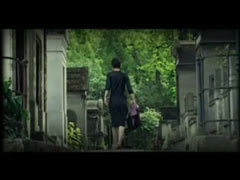
comme un chat noir au fond d’un sac (2006, 18.4MB, 4:47 min)
A beautiful excerpt from Stephane Elmadjian’s feature film found
on composer Daniel Wohl’s website.
Starting off a bit intense it winds itself down and into some breathtaking stuff.
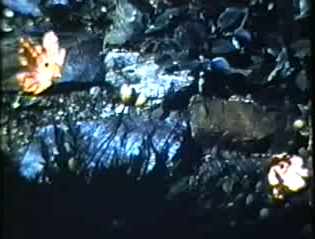
Marie Menken – Glimpse of the Garden (1957, 40MB, 5:04)
Marie Menken, avant-garde filmmaker of the 1940s, 50s,
and 60s – in addition to being the inspiration for
Who’s Afraid of Virginia Woolf? and a Warhol
superstar – made inspirational work from a time we seem
to overlook too much today. The garden here belongs
to one of her husband’s former male lovers, and while
Menken was often criticized for being quaint in her displays,
her style is an obviously feminine one that hides much
deeper meaning in ordinary but stunning visuals.
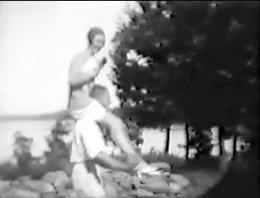
Recreation, Re-Creation (2006, 9.6 MB, 4:27 min.)
“This video juxtaposes original 16 mm footage acquired from my Grandfather with interview footage taken of my Mother and Grandparents. All but the
past-tenses of their speaking are left intact, while the film footage has been aggressively manipulated. The project seeks to question the language of constructing one’s identity through negotiation with familial history, where the past has been constructed and reconstructed in order to corroborate certain facades of culture which are wished to be left intact.”
From Bitsy Knox
heima trailer (2007, 46.7 MB, 3:53 min.)
An exquisite trailer for the promising first film from Iceland’s Sigur Ròs.
Watch, and then tell me you did not add Iceland to your top 5 places
to see before you die.
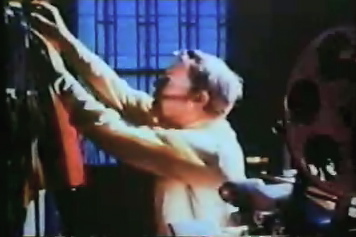
Film Portrait (1972, 31MB, 11:45 min.)
La Cartomancienne (1932, 13MB, 12 min.)
This is a memoir and the last film made by artist and filmmaker Jerome Hill.
I also found ‘La Cartomancienne’, one of his earliest film experiments.
By Mica.
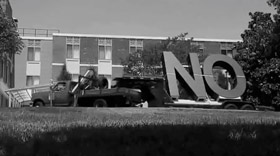
NO, Global Tour trailer (2010, 21 MB, 3:11 min)
Team Gallery, Lisson Gallery , Galería Helga de Alvear & Prometeogallery di Ida Pisani,
in association with Artprojx Cinema, present the UK premiere of NO, Global Tour,
2010 by Santiago Sierra.
The 120 minute film consists of the manufacture and transportation of two monumental sculptures
in the form of the word “NO”, travelling through different territories on a flatbed truck.
The NO, GLOBAL TOUR has resulted in a feature film that documents the passage of this
large NO through various world cities.
A monumental sculpture – unchanged both in its form and immediate meaning – that gradually
assumes a complex semantic load during a journey full of eventualities, accidents, and unexpected events.
A Broad Way, Trailer (2007, 60.89 MB, 5:17 min)
Saul Goode worked with 400 filmmakers to
document every corner of New York’s most
famous street, Broadway.
By Mica
‘White Flood’ – clip 1 (1940-2, 1.1 MB, 30 sec.)
‘A Child Went Forth’ – clip (1940-2, 1.4 MB, 30 sec.)
‘White Flood’ – clip 2 (1940-2, 661 KB, 29 sec.)
Easily the most interesting of all Brecht’s composer collaborators
& in flat contradiction to the current myth spread by those
who dislike his politics, by far the better composer than the rather
dull Weill, Hanns Eisler’s keen intellect turned to questions of film in his
exile in the USA in the early forties.
Under the auspices of the New School & funded by the Rockefeller foundation
Eisler conducted an intensive investigation of the relationship between
film & music , often involving him writing new music to already existing footage.
You can see some of this footage here – but what you really need to do is to listen.
There is no-one who could not learn something from the amazing way Eisler
deploys music here.
After the project, Eisler went on to write, with Theodore Adorno,
himself no slouch intellectually (& also a practicing composer),
one of the key books on music & the movies –‘Composing for the Films’
These clips come from the website for a new edition of the book
released with a companion DVD documenting much of the Rockefeller experimentation.
Indispensable.
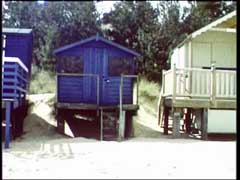
British Beach Hut Miscellany(2006, 5.2MB, 1:36 min)
Made by Giles Perkins. Shot on Super 8 & digitally edited.
English pastoral loveliness with a conceptual/formalist twist,
which resolves to… English pastoral loveliness.
Lovely!
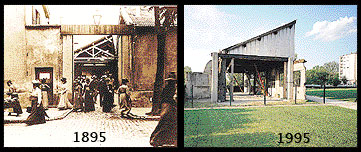
La sortie des ouvriers de l’usine Lumière à Lyon (1895, 6MB, 46 sec.)
The year is 1895. The “Hangar” was the first set in the history of Cinematography and
can be seen here in “La Sortie de l’usine Lumière”, Lumière’s first film.
from the fantastic site – Institut Lumière.
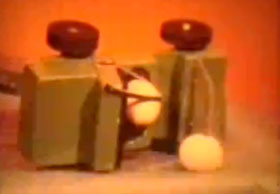
Change is Constant (2006, 25 MB, 3:02 min)
This is a short film I edited to one of the tunes recorded by
Amoeba Technology. I shot most of the footage use in the video,
the footage is a mixture of 16mm, Super 8 and Mini DV.
from Mark Reilly, at alienresident.
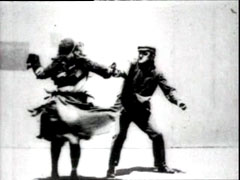
A Tough Dance (1902, 7.1MB, 47 sec.)
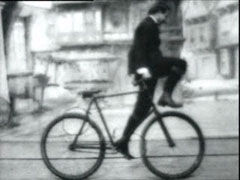
Bicycle Trick Riding (1899, 5.5MB, 37 sec.)
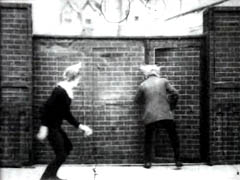
Three Acrobats (1899, 5.4MB, 36 sec.)
Three exhilarating chunks of early movie making from the
Library of Congress online collection of variety stage motion pictures.
I particularly love the deeply strange A ‘Tough’ Dance.
There’s also a great early animation collection on the LOC site.
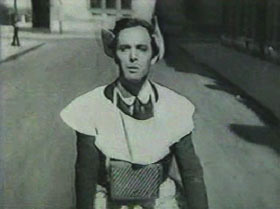
Un chien andalou (1929, 156MB, 15:40 min.)
This is just the source.
Can you imagine Cocteau, Deren, later Hitchcock & Cronenberg
without this?
Oh..more:- the whole of cinema would have a great gaping bloody gap
in it & what was left would be dull dull dull & Black Francis wouldn’t have been
able to write ‘Debaser’.
It simply prised open the language.
Afterwards, Bunuel went on to make some of the sharpest, most provocative
& disturbing films of the 20th century & Dali went on to
…well… be Dali.
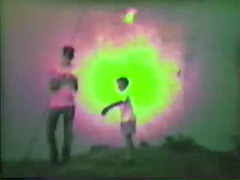
Home Movies (2007, 11.9MB, 1:10 min)
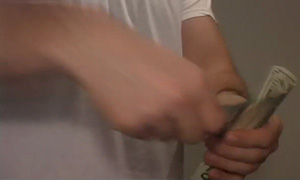
Money at the Situation (2007, 6.5MB, 37 sec)
Assured & capable micro movie making from Bill Shackelford in 2007.
In the case of Home Movies, more: beautiful, poetic
& singular, using only the artefact laden footage around cuts in
his grandfather’s 8mm home movies from the 50s & 60s.
Bravo!

Very nicely executed short film from UK film-maker Toby Tatum,
who is clearly both gifted and imaginative.
It brings to mind an attempt to conjure in a distilled way the atmosphere of
pieces like Lucile Hadzihalilovic’s Innocence.
(and nothing wrong with this; I’m using Innocence as a point of comparison
rather than asserting influence)
I’m not sure it entirely succeeds – the act of distillation, of reduction to
suggestion, to atmosphere (ironically the very richness of the prize-winning music by Abi Fry
contributes to this) means it ends up feeling laid on a tad thickly.
Nonetheless it’s work that demands & deserves attention and I’ll be interested to see where
Tatum heads next.
Beautiful and delicate, yet somehow tough, bit of
performative portraiture from 1994 by Eleanor Suess.
I really like the fact her work doesn’t scream look-
at-me-how-clever-I-am but when one does look
carefully, there is art enough to engage,
reward and move.

Gavito & Plazaola (n/k, 13.5MB, 3:44 min.)
‘The secret of tango is in this moment of improvisation that
happens between step and step. It is to make the impossible thing
possible: to dance silence. This is essential to learn in tangodance,
the real dance, that of the silence, of following the melody.’
– Carlos Gavito
Watch the late Carlos Gavito & his partner Maria Plazaola
play havoc with the space time continuum in this extraordinary
piece in which time slows down, speeds up & actually comes to a
halt at least once.
Mesmerizing.
[ Found on this very strange tango site with lots more videos]
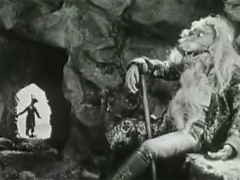
Le Lion Devenu Vieux (1932, 3.5MB, 1:04 sec.)
Ladislas Starewitch is often credited with inventing stop motion animation
as we know it, though so are several other people. It depends on what fits
into your definition of stop motion.
Certainly he was probably the first to actually make little figures and move
them frame by frame in an attempt to duplicate lifelike movement of actual
living things. it was because he was filming beetles and found that the hot
lights made them lethargic, so he made his own little beetles asrealistically
as possible and animated them instead.
This gave birth to further projects with very lifelike but sometimes partially
anthropomorphic (human-like) animals.
from – Darkstrider.
By Mica. (thanks Adam)

PIRATE (2006, 45 MB, 8:25 min)
By Annika Larsson.
Music by Tobias Bernstrup & Annika Larsson.

RUBBER (2011, 35 MB, 2:21 min)
Trailer for RUBBER, the story of Robert, an inanimate tire that has been
abandoned in the desert, and suddenly and inexplicably comes to life.
RUBBER is a ‘smart, funny and wholly original tribute to the cinematic
concept of “no reason” ‘.
Director: Quentin Dupieux

DuPont (2011, 25 MB, 2:42 min.)

Smokey (2011, 25 MB, 2:45 min.)
A couple of previews from Rob Parrish
Samuel Beckett‘s only venture into the medium of cinema, Film was written
in 1963 and filmed in New York in the summer of 1964, directed by
Alan Schneider and featuring Buster Keaton. For the shooting Mr.
Beckett made his only trip to America. The film, which has no dialogue,
takes its basis Berkeley’s notion esse est percepti that is, to be is to be perceived.
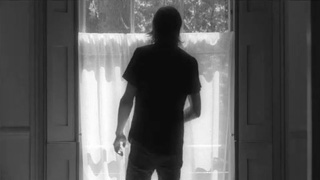
The Mouse Escapes (2010, 56MB, 11:06 min)
After we posted the trailer for this the other week, director Simon
Mclennan was kind enough to let us post the whole movie, so here it is (and
quirky, and poetic and imaginative as it promised to be, it is.)

Alice in Wonderland (1903, 136MB, 9:32)
Enthralling first ever screen version of Alice in Wonderland
from 1903, lovingly restored by the folks at the BFI.
There’s no-one –no-one – who could not learn
something about film-making from this gem.
Nine minutes of sheer, grinning-with-joy delight.
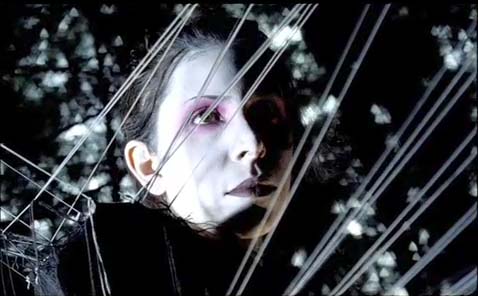
The Mouse Escapes [Trailer] (2010, 4MB, 37 secs)
Difficult to gauge from the trailer what the full 12 minute piece
might be like but it will clearly be interesting & atmospheric and guided
by an acute visual sense.
The music, written by director Mclennan, is also rather good.
Website, with lots of details, here.

2001: A Space Odyssey (2007, 30 MB, 14:34 min.)
The fair use trio: zach layton, matty ostrowski, luke dubois.
From zach layton industries.
Binary Code (1994-98, 2MB, 52 secs)
On the Ephemeral Nature of Little Movies (1994-98, 3MB, 1:05 min)
I mentioned the Manovich Little Movies in the post I did the
other week on Eryk Salvaggio’s ‘Unfinished Mpeg Haiku’.
In the course of writing that I went to Manovich’s site to look at them
& was surprised to find that their page was in some disarray
and the movies themselves had been removed.
Nor could I find them either in the version archived on the Rhizome Artbase.
It seems a shame for them not to be available -they’re historical
(and in many ways amazingly presecient) documents at the least,
although I find them – especially the last one – gripping and touching too.
Then I remembered the wonderful Wayback Machine and I found them
there, all snug and safe and sound.
We’ll post them here in twos in the next week or so,
in the order in which they appeared in Manovich’s
original presentation of them.
Although the image linking to it has been removed from the site
Manovich’s very interesting statement remains.
(I guess if that goes too you’ll still be able to Wayback it)
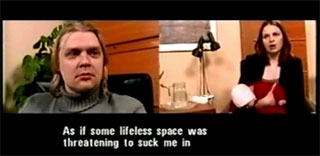
Consolation Service (1999, 10 MB, 1:43 min.)
“Consolation Service” follows a young Finnish couple, Anni and J-P, as they
make public their decision to divorce. It is set in early spring in Helsinki, with
its frozen landscape on the cusp of thawing.
Consolation service (awarded at the Venice Biennial in 1999) Ahtila also
deconstructs the formation of the narrative and cinematic illusion: as though
in a straight documentary film (Cinéma vérité), both narrator and camera are
shown openly. The illusion of fiction is thus shattered, made visible. The use of
a hand-held shaking camera reminds the group Dogma 95 led by Lars Von Triers.
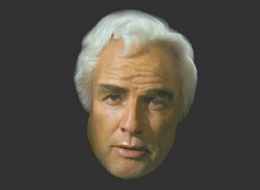
Jor El (1978-2006, 38MB, 3:29 min.)
Marlon Brando, the CG character, rather spookily reappears as
Jor-El in Superman Returns.
From Rhythm & Hues studios.

RAMBO (1987, 5.6 MB, 2:32 min)

ZERO ONE KILL MY DESIRE (1988, 7 MB, 3:12 min)
Early videos by Max Moswitzer using found footage material,
video collage, remix and animation.
More Max Moswitzer here.

Applause (2010, 104 MB, 1:02 min)
Last week we showed some of Kerry Baldry’s curatorial work,
now here’s one of her own pieces.
Says Kerry:
“Applause is a piece of work made on 16mm film.
Using superimposition and coloured gels Applause has been edited in camera …”
& its a smart & winning piece which punches above its weight.
It looks great & there’s something about the way the visuals work
that really illuminates the sound – the..er..um..applause-ness –
of the applause & this in turn directs us back, carefully, to the visuals.
(& both make us ponder it as a social phenomenon)
The piece made me listen attentively, mindfully, & then look &
listen & think & then do all three again.

ZWlSCHENLAGERUNG EINER NULLOESUNG (1988, 10.5 MB, 4:47 min)

COMPUTER GAME (1987, 9 MB, 3:53 min)
Early videos by Max Moswitzer using found footage material, remix
and live performance.
ZWlSCHENLAGERUNG EINER NULLOESUNG was using documentary
films from 1938-1945 and was a live action performance at the
University of Applied Arts in Vienna in 1988.
COMPUTER GAME was exhibited at ARS Electronica in 1987.
More Max Moswitzer here.
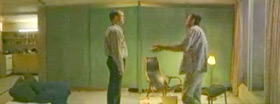
Win, Place or Show (clip) (1998, 1.6 MB, 47 sec.)
Two men are having a discussion in a small apartment. The scene,
lasting only six minutes, is filmed from twenty camera positions.
A computer program then produces some 200,000 possible combinations
of images and sounds, so the viewer always sees a different version of the story.
Win, Place or Show questions our conditioned viewing behaviour.
video installation by Stan Douglas.
from ZKM Videosammlung.

Interview with Chen Chieh Jen (2008, 40 MB, 6:05 min)
Studio Banana TV interviews Taiwanese videoartist Chen Chieh Jen.
Chen
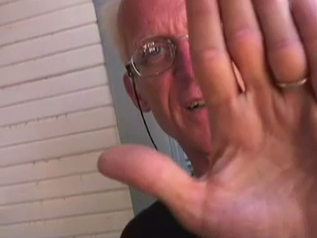
Jon Jost is not making movies (2006, 36.4 MB, 6 min.)
In 2006, Woods Hole Film Festival featured a tribute
to filmmaker Jon Jost.
I got a chance to talk with him for a few minutes
about his career in film and his commitment to
pushing the medium of digital video. In this video
he gives some great advice to new DV filmmakers,
and explains once and for all 24fps setting on your camera.
By Mica.

Ground Play (extract) (2009, 64 MB, 5:15 min)
I stumbled across Robert Todd’s work by accident & I’m glad that I did.
Judging by the extracts on his site, one of which we’re posting here, he will bear
a good deal of further investigation.
Here I love the use of oblique angles, cropping &c. to create a world both highly abstracted
yet naggingly familiar (and very beautiful).
There’s also an interesting dynamic going on between the probing camerwork & the
thoughtful and restrained editing.
There’s an interview with Todd here and you can buy DVDs of his work .

The Insomniac City Cycles Trailer (2004-2009, 60 MB, 1:56 min)
“A man wakes up with a bullet wound in an abandoned parking garage in Tel Aviv,
having lost his memory and a gun. As the man struggles to recall his recent past,
a woman wakes up in a Shanghai hotel from a similar dream.
A fragmented conversation with a stranger on the phone sets off a strange exploration
between the two.
Tel Aviv and Shanghai in a movie within a movie and a dream within a dream..
..In The Insomniac City Cycles Ran Slavin explores a world with internal logic built
on the axis of memory the real and the fantastic.
It is a travel through dream structures, events and un-foldings that inventively blend
mystery, neo-noir and science fiction genres with experimental film making techniques.”
Directed Written and Produced by Ran Slavin.