Abbie Hoffman and gefilte fish


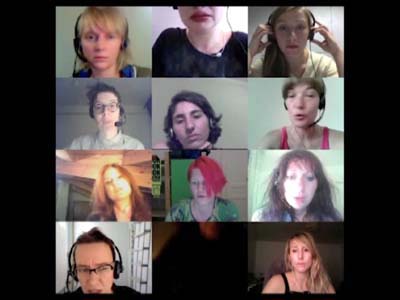
Abbie Making Gefilte Fish (1973, 156.4MB, 21:04)

Footage of Abbie Hoffman making gefilte fish with Laura Cavestani
(who made the video) in his kitchen, 1973.
Like Abbie, I think art is in the everyday, and it sure is a fun
(and rather informative) twenty minutes if you’ve got it to spare.

Art for Abbie was education, constant revolution, evolution, and living for free.
Art and freedom were one in the same, inextricable from each other.
We miss you man.

Ruth Catlow – As I Looked Up…

as i looked up
As I Looked Up (2011, 32MB, 2:23 min)
A co-director of the formidable Furtherfield, Ruth Catlow charms
and something more – something to do with the urgency and vulnerability
of performance and the importance of memory, of a sense of place – in this
fragile & lovely elaboration of an Ivor Cutler song.
Things its difficult to put your finger on but which go right to our core;
pointing to – literally singing – those things being in the ‘artist’ job description…

First of three. Two more pieces, just as delicate, just as necessary, to come.

James Joyce has a Posse

james joyce has a posse
James Joyce has a Posse (2011, 32MB, 4:49 min)

And mentioning Curt Cloninger, as we did on Friday last, it’s nice to report he has made
a new video which is both gorgeous and engimatic, with a musicality which stems
not only from the actual sounds but the video’s very construction, that repeated
wistful, strange, ‘Portrait of the Artist’, title motif…
Cloninger is someone (Eddie Whelan the other who springs to mind) who has thoroughly incorporated
data-moshing as an expressive tool into their vocabulary, defying reports of its early death.
Poetry.

PS And just in passing – I’m fascinated by movies like this one, for which it’s very difficult
to create an adequate poster image.
Data-moshing is a particularly dynamic form of moving image work
where the motion is like the Cheshire Cat’s grin.
It’s not just data-moshing – it happens elsewhere.
It’s like some movies are, in some sense, “further away” in the line of image kinship
with the still.

Gov. Scott Walker gets checked, Mic Checked!

scott walker mic checked
Gov. Scott Walker gets checked, Mic Checked! (2011, 81MB, 3:45 min)

If you don’t feel inspired & cheered up by this tremendous video please do the checking
your pulse thing…
Stand Up Chicago

Annie Abrahams –Training for a Better World

angry women left
Angry Women (Left Panel/Clip) (2011, 188MB, 6:23 min)
angry women left
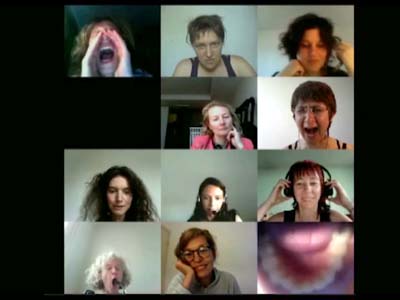
Angry Women (Right Panel/Clip) (2011, 142MB, 6:33 min)

Here are a couple of extracts by Annie Abrahams, whose work we love here at DVblog, from her show Training For a Better World which is currently running at the Centre Régional d’Art Contemporain, Languedoc-Roussillon in Sète until the first of January 2012.
I’d seriously suggest that anyone physically able to do so should visit it – I travelled down from London in a day, stayed a night and then trekked back, all by train. Very pleasant it was too.

Abraham’s exhibition runs in tandem with another, of the works of French artist Catherine Gfeller; Gfeller on the ground floor and Abrahams on the first, and the formal similarities (though I think these are largely superficial, for reasons I’ll enlarge upon soon) – the use of both moving and still images, text, an intervention at some level in the mechanics , the whys and wherefores, of how one presents these as art in a gallery setting – make it a stimulating pairing.

Abraham’s selection includes four pieces which are essentially (with some qualifications) video. They are constructed out of the telematics performance territory that she has so signally staked out in the last few years but, she insists, are not documentations of those performances. I think she’s right to emphasise this distinction – although in one sense the pieces clearly do document things that happened in performance they are ultimately video pieces made performatively .

The show doesn’t consist of moving image work only. There are some prints, drawings and a minimalist installation consisting of a single photograph of a pair of married fire-fighters and a sound track of them reading (in an extraordinarily graceful and musical edit [and this is where in this piece any surface similarities to, say, Nauman find their limit. Grace. Grace and elegance throughout.]) a collaborative text on fear.

The moving image and the other pieces occupy different ends of what is mostly a long thin exhibition space and are connected –“tied” together by a “ribbon”- a very long, three or four inch high, strip, of black highlighted, collaboratively generated white text –on the theme of madness – running at floor level for some considerable distance.

It’s important to both acknowledge this distinctly bi-partite character and then to immediately forget about it, so intimate is the connection between the two halves.
Despite the disparate and apparently laissez-faire methodologies used in the generation of all the work and the huge level of trust in the participants evinced by Abrahams, one’s main impression is of a body of work which forms a tight unity both stylistically and in its preoccupations. (And I’d argue that the principal pre-occupation is the question of what it means, physically, socially, psychically, to be a human being. And, further, that this high seriousness –allied to a playfulness which veers from the childishly innocent to the Rabelaisian – is what ultimately gives this work its huge authority and significance and distinguishes it in kind from the technically well executed and often engaging work on the floor below.)

The jewel in the crown of the show is the video installation ‘Angry Women’, created by Abrahams and 22 other women of many nationalities (3 more , in fact, in total, 2 “backstage” assistants, and a performer who opted for silence throughout) speaking about, acting out, demonstrating, reflecting upon, their anger and its causes and triggers, on webcams at their different individual locations and in their native tongues, with the images being sent to a 3X4 grid, in a format that Abrahams has made her own. Because of the limits of even current streaming technology it was necessary to conduct two distinct performances, separated, in fact, by an interval of two months. The length of each was determined by a protocol where a minute’s silence by all participants signalled the end. This resulted in pieces of differing lengths the lack of synchronisation of which adds another layer of fragile grace to the final projections, projected large on adjacent walls around their common corner, with sound from the left image grid fed to the right speaker and vice versa.

The piece occupies most of a large rectangular space at the CRAC (with the video ‘Double Blind (love)’, a collaboration with Curt Cloninger we’ve savoured here before, in its performance incarnation, in the opposite corner and in its full and majestic 264 minute duration).

The impact is visceral – we face what feels like a wave of humanity, not so much in numbers, although 23 women is impressive, at least to this man, but in the infinite malleability of face and hand, of gesture and expression and of how these things might occupy a frame. Sometimes that frame will resemble a Giacometti portrait, with the subject appearing to recede into what seems to be endlessly deep space. At others red lips or an open mouth, sensual and terrifying by turns, occupy the whole of the space – and furthermore each cell is constantly in flux (because these are living, breathing, unpredictable, human beings). There’s something both of portraiture and of the dance at work here, and a kind of found poetry too (which the moving image work has in common with the collaborative texts at the other end of the exhibition). The combination of iron control, planning, foresight (the grid, the protocols) with the letting go and trust evident elsewhere – the phased lengths, the blank space for the person who didn’t turn up, the open performative structure – makes for something of great richness.
Additionally it’s clear that those performers who had previous experience of the format were consciously playing with and against their fellows – gestures are mirrored, sounds echoed, the fiction of looking elsewhere – to the side, or above – of making contact in and across the grid itself, is impressively sustained.

The angry women turn out to be at one and the same time very particular – unique – women and women in general too; the women in general turn out to be human beings in general (and general en masse because each so particular) and the human beings in general turn out to live here, or there, now, in this, one, our only, very particular, world – that mysterious, frightening and wonderful place.

Book your train/plane ticket now!

***

Voici quelques extraits par Annie Abrahams, dont nous aimons le travail ici à DVblog, de son exposition Training For a Better World qui se déroule actuellement au Centre Régional d’Art Contemporain, Languedoc-Roussillon à Sète jusqu’au premier janvier 2012.
Je suggère sérieusement de la visiter à quiconque qui est effectivement en mesure d’y aller – j’ai voyagé depuis Londres en une seule journée, je suis resté une nuit et j’ai fait le retour le lendemain, le tout par train. C’était très agréable.

L’exposition d’Abrahams fonctionne en tandem avec une autre, des œuvres de l’artiste française Catherine Gfeller; Gfeller au rez de chaussée et Abrahams au premier étage, et les similitudes formelles (bien que je pense qu’elles soient essentiellement superficiels, pour des raisons sur lesquelles je vais m’étendre bientôt) – l’utilisation à la fois de l’image fixe et de l’image en mouvement, du texte, l’intervention à un certain niveau dans la mécanique, les tenants et aboutissants, de la façon dont on présente celles ci en tant que de l’art dans le contexte d’une galerie – en font un jumelage stimulant.

La sélection d’Abrahams comprend quatre pièces qui sont essentiellement (avec certaines réserves) vidéo. Elles sont construites à partir du territoire de la performance télématique qu’elle a jalonné si singulièrement les dernières années, mais, elle insiste, ce ne sont pas des documentations de ces performances. Je pense qu’elle a raison de souligner cette distinction – bien que dans un sens les pièces documentent bel et bien ce qui est arrivé dans la performance, elles sont finalement des pièces vidéo réalisées performativement.

L’exposition ne consiste pas seulement d’images en mouvement. Il y a quelques imprimées, des dessins et une installation minimaliste composé d’une seule photo d’un couple de pompiers mariés et une piste sonore d’eux lisant (dans un montage extrêmement gracieuse et musicale [et c’est là que dans cette pièce toute similitude de surface à, disons, Nauman trouve son limite. Grace. Grâce et de l’élégance tout au long.]) un texte collaborative sur la peur.

L’image en mouvement et les autres pièces occupent des extrémités différents de ce qui est surtout un espace d’exposition longue et mince et sont reliés – “liées” par un “ruban” – une très longue, trois ou quatre pouces de haut, bande, de texte blanc, généré en collaboration, souligné en noir – sur le thème de la folie – se déroulant au niveau du sol sur une distance considérable.

Il est important de reconnaître ce caractère nettement bi-partite et ensuite de l’oublier immédiatement, tellement intime est la connexion entre les deux moitiés.
Malgré les méthodologies disparates et apparemment laissez-faire utilisées dans la production de tout le travail et l’énorme niveau de confiance aux participants manifesté par Abrahams, la principale impression est celle d’un corps de travail qui forme une unité serrée à la fois stylistique et dans ses préoccupations. (Et je dirais que la principale préoccupation est la question de ce qu’il signifie, physiquement, socialement, psychologiquement, d’être un être humain. Et, puis, que cette haute degré de sérieux, allié à un enjouement qui vire de l’innocence enfantine au rabelaisien – est, ce qui donne finalement ce travail son énorme autorité et importance et le distingue de sa nature du travail techniquement bien exécuté et souvent engageant de l’étage en dessous).

Le joyau de la couronne de l’exposition est l’installation vidéo «Angry Women», créé par Abrahams et 22 autres femmes de plusieurs nationalités, (en fait, 3 de plus au total, 2 assistantes de “secours”, et une performeuse qui a choisi de rester silencieuse jusqu’à la fin), parlant, actant, démontrant, réfléchissant à, leur colère et ses causes et déclencheurs, devant des webcams dans leurs locations individuellement différentes et dans leur langue maternelle, avec les images envoyées à une grille de 3X4, dans un format que Abrahams a fait le sien. En raison des limites des technologies de streaming, mêmes actuelles, il était nécessaire d’effectuer deux performances distinctes, en fait séparées par une période de deux mois. La longueur de chaque performance a été déterminé par un protocole où une minute de silence par toutes les participantes marquait la fin. Il en résulte des pièces de longueurs différentes dont le manque de synchronisation ajoute une autre couche de grâce fragile aux projections finales, projetées en grand sur des murs adjacents autour de leur coin commun, avec le son de l’ image grillée de gauche envoyé au haut-parleur droit et vice versa.

La pièce occupe la majeure partie d’un grand espace rectangulaire au CRAC (avec la vidéo «Double Blind (love)», une collaboration avec Curt Cloninger que nous avons savouré ici avant dans son incarnation performative, dans le coin opposé, dans sa durée totale et majestueuse de 264 minutes).

L’effet est viscérale – nous faisons face à ce qui ressemble à une vague de humanité, non pas tant en nombre, bien que 23 femmes est impressionnant, au moins à cet homme, mais dans l’incessante malléabilité du visage et des mains, du geste et de l’expression et de la façon dont ces choses peuvent occuper un cadre. Parfois, ce cadre ressemble à un portrait de Giacometti, avec le sujet apparaissant reculer dans ce qui semble être un espace profond infini. À d’autres moments, des lèvres rouges ou une bouche ouverte, sensuel et terrifiant à tour de rôle, occupent la totalité de l’espace – et en plus chaque cellule est constamment en mouvement (parce que ce sont des êtres humains vivantes, respirantes, imprévisibles). Il y a quelque chose à la fois du portrait et de la danse à l’œuvre ici, et aussi une sorte de poésie trouvée (ce que le travail d’image en mouvement a en commun avec les textes collaboratives à l’autre bout de l’exposition). La combinaison du contrôle de fer, de la planification, de la prévision (la grille, les protocoles) avec le laisser-aller et la confiance manifeste ailleurs – les longueurs phasées, l’espace noir pour la personne qui ne se présente pas, la structure performative ouverte – produit quelque chose d’une grande richesse.
En outre, il est clair que ces artistes qui ont eu une expérience antérieure du format ont joué sciemment avec et contre leurs partenaires – les gestes sont mises en miroir, des sons font écho, la fiction de regarder ailleurs – sur le côté ou au-dessus – la prise de contact dans et à travers la grille lui-même, est impressionnant et soutenue.

Les femmes en colère se révèlent être tout à la fois des femmes très particulier – unique – et des femmes en général aussi ; les femmes en général se révèlent être des êtres humains en général (et en général en masse parce que chacune si particulière) et les êtres humains en général s’avèrent vivre ici, ou là, maintenant, dans ce, un, notre seul, très particulier monde – cet endroit mystérieux, effrayant et merveilleux.

Réservez votre train / avion billet dès maintenant!

A Broad Way

a_broad_way
A Broad Way, Trailer (2007, 60.89 MB, 5:17 min)


Saul Goode
worked with 400 filmmakers to
document every corner of New York’s most
famous street, Broadway.

By Mica

Sam Renseiw – Change of Colour

Change of Colour
Change of Colour (2007, 6.16MB, 1:00 min)

Does what it says on the packaging & sublimely.
This is so beautiful.
A Lumière from Sam Renseiw.

Alan Sondheim – Two Movies

Beauty
Beauty (2007, 11.4MB, 1:04 min.)

Romania
Romania (2007, 19MB, 2:01 min.)

What to say, we’ve said it all, again & again, Sondheim’s
movies are a unique & indispensable body of work.
Specifically, anyone working in video on the net who
doesn’t know them is navigating blind.
For a free masterclass hop over to his site & work your
way through all the stuff with .mov or .mp4 extensions.
( I mean, don’t confine yourself to the movies but this
is dvblog)
You won’t have wasted your time.

Tired of the WC, Gulanny – KBSC505 vs WWFT

knbs_wwft
KBSC505 vs WWFT (clip) (2006, 27MB, 8:14 min.)

WeWorkForThem short was created as an extra for KNBSC505’s
Noise Driven Ambient Audio And Visuals DVD. Exploring the emotions, physical & mental
pain and illusions of bacteria this video follows 8 minutes from infection to cure.

Errol Morris: Donald Trump on Citizen Kane

trump_kane
Donald Trump on Citizen Kane (2004, 40.2MB, 3:22 min.)

by Errol Morris.
‘The last thing one would imagine Donald Trump talking about is Citizen Kane,
what many believe to the greatest film ever made, but here he is talking about
in one of the aborted projects by Errol Morris — like he has lived it, like he is a
reincarnation of Charles Foster Kane. The beauty is not just in the Errol Morris
meditative style or even what Trump has to say about Citizen Kane but what we
want to see. Mainly, that Trump’s life mirrors that of Kane and that this real life
epic character sees his own tragedy.
Talking about wealth, he says ‘In real life, wealth does in fact isolate you from other
people…it is a protective mechanism’. That quote speaks volumes. The salesman is
poking holes into his much marketed life. Asked on what advice he would give
Charles Foster Kane, Trump says boldly: ‘Get yourself a different woman!’.

Grant Orchard – Basketball

Basketball
Basketball (2007, 13.5MB, 1:57 min.)

Director Grant Orchard joined Studio aka in 1997, and soon gained attention
for his idiosyncratic design and his ability to approach projects from many
different angles. He has created TV commercials for clients as diverse as Compaq,
Virgin and Orange. Grant has won two prestigious D&AD awards and achieved recognition
for his first independent short film WELCOME TO GLARINGLY.
He subsequently created 10 mini-films for QOOBtv under the banner LOVESPORT.
– from the shining Lumen Eclipse.

Two from Jade Enterprises


jade – takethebus (2002, 3.6MB, 1:37)


jade – jet (2003, 2.4MB, 0:17)

Older experimental clips from Austria’s Michaela
Schwentner, also known as jade enterprises.

Business – Junu Ahn

Business
Business (2007, 67.9MB, 9:33 min)

I find it easier to admire this piece, to respect its clear integrity,
than to actually like it much – it’s a pretty hardcore glitch
assemblage & it doesn’t let up …oooooh noooo… not at all
(Strikes me as a bit of a video analog for something like Lou Reed’s (in)famous
)
It’ll be interesting to see where Junu Ahn goes next…

Hanns Eisler – ‘Composing for the Films’

White Flood clip 1
‘White Flood’ – clip 1 (1940-2, 1.1 MB, 30 sec.)

A Child Went Forth clip
‘A Child Went Forth’ – clip (1940-2, 1.4 MB, 30 sec.)

White Flood clip 2
‘White Flood’ – clip 2 (1940-2, 661 KB, 29 sec.)

Easily the most interesting of all Brecht’s composer collaborators
& in flat contradiction to the current myth spread by those
who dislike his politics, by far the better composer than the rather
dull Weill, Hanns Eisler’s keen intellect turned to questions of film in his
exile in the USA in the early forties.
Under the auspices of the New School & funded by the Rockefeller foundation
Eisler conducted an intensive investigation of the relationship between
film & music , often involving him writing new music to already existing footage.
You can see some of this footage here – but what you really need to do is to listen.
There is no-one who could not learn something from the amazing way Eisler
deploys music here.
After the project, Eisler went on to write, with Theodore Adorno,
himself no slouch intellectually (& also a practicing composer),
one of the key books on music & the movies –‘Composing for the Films’
These clips come from the website for a new edition of the book
released with a companion DVD documenting much of the Rockefeller experimentation.
Indispensable.

Clouds by John Murphy

c1
Clouds…Courts (2007, 10MB, 4:45 min.)

c2
Clouds…Words (2007, 7.85MB, 3:35 min.)

John Murphy is an Irish artist living and working in Madrid Spain.
Clouds…Courts shows us the late afternoon sky and we hear
Craig Murray formerly UK’s Ambassador to Uzbekistan
speaking about torture and England’s role in the Iraq war.

In Clouds…Words we hear about ways to die in Iraq, according
to a BBC journalist while watching the early spring sky in Madrid.

‘Erection’ by John Lennon & Yoko Ono

Erection John Lennon
Erection (1971, 180MB, 18:06 min.)

A nineteen-minute film by John and Yoko, which was made in London during
1970 and 1971. When John had heard that the London International Hotel was
to be built in Kensington, he sought permission to film its entire construction.
Once he’d obtained it he contacted the photographer Iain MacMillan and asked
him to take a series of photographs of the construction. MacMillan had a stills
camera and filmed the erection of the hotel from a fixed position for a period
of eighteen months.
The stills were presented in sequence in the film, which ended with a shot of the
completed hotel where all the lights were then turned off, leaving a black screen.
On the soundtrack Yoko sang two songs, ‘Airmale’ and ‘You’, using tapes of recordings
of Joe Jones Tone Deaf Music Co., which was, in fact, a number of toy percussion
instruments that played themselves, a squeaky style of sound devised by a former
associate of Yoke’s Fluxus days, Joe Jones. The hotel was situated at 147 Cromwell
Road and later became the London Swallow Hotel.

Douglas Fishbone

Towards a Common Understanding (excerpt)
Towards a Common Understanding (excerpt) (2007, 9.4MB, 6:50min)

Douglas Fishbone is one of my favorite video art jokesters.
He leaves no stone unturned in his search for a common
understanding, which takes him to the furthest reaches
of the world wide web and back.
I have been trying to find a video of his online to
include here for a while now, then I just asked him and
he graciously sent me this video for the faithful DVBlog viewers.
Beware, there are many disturbing images in this video but none
of them on screen for more than a few seconds and all quite spectacular.

By Mica

British Beach Hut Miscellany

British Beach Hut Miscellany
British Beach Hut Miscellany(2006, 5.2MB, 1:36 min)

Made by Giles Perkins. Shot on Super 8 & digitally edited.
English pastoral loveliness with a conceptual/formalist twist,
which resolves to… English pastoral loveliness.
Lovely!

Hexstatic

Ninja Tune
ninja tune (2006, 10.9MB, 5:06 min.)

Distorted Minds
distorted minds (2006, 6.9MB, 3:18 min.)

Brilliant, and in the case of the first piece, hilarious work from
Hexstatic out of London.
The second featuring Juice Aleem.

Now. Go practice.

Celia Cooley – Occupy DC Interviews 10/10/2011

indian_movie.jpg
Occupy DC Interviews 10/10/2011 (2011, 73MB, 58 sec)

Demonstrating what we all might have said rhetorically, but really demonstrating it –
that a smart seven year old (with a little tech help from her parents)
can do a better job than any of the official media, Celia Cooley interviews
Occupy DC participants in a piece that both delights and makes one fiercely
proud to be one of the 99%.
Great job.

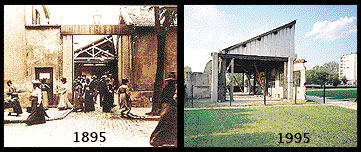
Lumière – La sortie des ouvriers de l’usine Lumière à Lyon

hangar
La sortie des ouvriers de l’usine Lumière à Lyon (1895, 2MB, 46 sec.)

The year is 1895. The “Hangar” was the first set in the history of Cinematography and
can be seen here in “La Sortie de l’usine Lumière”, Lumière’s first film.
from the fantastic site – Institut Lumière.

aircondition – Oliver Laric

aircondition
aircondition (2006, 17.4MB, 2 min.)

by Oliver Laric.

One Minute Movies and MIRAJ

indian_movie.jpg
Indian Movie [Declan Kilfeather] (2007, 3MB, 55 sec)

punch.jpg
Punch [Kerry Baldry] (1994, 30MB, 1:14 min)

landgauge.jpg
Land Gauge [Steven Ball] (1981/2008, 44MB, 1:21 min)

upside_down_world.jpg
Upside Down World [Marty St.James] (2008, 19MB, 1:25 min)

A dual purpose for this post.
I wrote a review of Vols. 1 to 4 of Kerry Baldry’s excellent One Minutes
project for a new journal, the Moving Image Review and Journal, due out soonish
(although the first issue is dated January 2012, I understand it’ll be out late this month)
and I thought it would be nice to post the pieces I discuss in it here.
So, here, with one exception, they are.
The second thing follows – just to encourage you, especially if you
are in Academia somewhere, to get a sub to this (or order it from your
library &c) – it’s going to be an interesting and useful resource.

Sebastian Sommer – Happily Drowning

indian_movie.jpg
Happily Drowning [clip] (2011, 126MB, 58 sec)

Here’s a clip from a short film by Sebastian Sommer, based on stories by the seemingly ubiquitousTao Lin.

It’s very nicely made – here is someone who takes to (and to some extent, reforges)
film grammar like a fish in water.
I’m not entirely convinced that the narrative is clear enough ( it all
looks so great and having not read the original I was intially prepared
to accept any lack of understanding was mine) – it was only a one sentence precis on
Sommer’s site that really clued me into what was happening.
Clearly, though, someone to be watched…
See the whole thing here

2 from Jack Ryan

RyanJ_I_Fell_For_You.jpg
I Fell for You (2011, 216MB, 1:00 min)

TraitThreshHoldcompressed.jpg
Threshold (2011, 86MB, 3:29 min)

I Fell For You:

‘My early artistic ideas came from a 3-year experience as
a commercial fisherman in Alaska. At the time, my work
centered on ideas consistent with the locale: hermetic
fabulousness, escape, odyssey, and the sublime.
Todayperversities of the sublime continue to influence the
way I shape projects. A consensual explanation of the
contemporary sublime would acknowledge that there are
thresholds of human perception and a desire to explore these
thresholds connecting ourselves to a greater environment of
understanding and awareness. At the root of my work is
an interest in human experience.’

Threshold:

‘Borrowing from fluxus films Threshold is filmed in Iceland
and the Oregon Coast and made for a project with The
Archer Gallery.
The video takes place where land meets sea, where the
landscape moves from vertical to horizontal, and
associatively between life (verticality) and death (horizontality)’

I’m guessing the club formed by the intersection of the sets of
experimental video makers and of former commercial fishermen
in Alaska is a fairly exclusive one.
Jack Ryan upholds its honor in these two exhilarating
(but totally uningratiating, no puppy-dog-eyes here) pieces.
I especially love “I fell…”.
Very bracing.

Harddisko – Noise & Disturbances Amplifier System

Harddisko
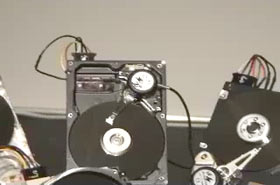
Harddisko (2007, 29MB, 1:29 min.)

Harddisko is an installation piece by Valentina Vuksic dealing with raw
computer sounds. Rhythmic noises are evoked from sixteen
hard drives, orchestrated through simple power circuits.
By cutting each disk’s power in varying sequences and amplifying its
particular sound characteristics, an unpredictable acoustic
and visual interplay emerges.

Edward Picot – Appraisal parts #3 & #4

appraisalpart1.jpg
Appraisal Part #3 (2011, 159MB, 9:47 min)

appraisalpart1.jpg
Appraisal Part #4 (2011, 143MB, 9:40 min)

Latest two in Edward Picot’s wonderful Dr Hairy series.

Change is Constant – Mark Reilly

Change is Constant
Change is Constant (2006, 6.5 MB, 3:02 min)

This is a short film I edited to one of the tunes recorded by
Amoeba Technology. I shot most of the footage use in the video,
the footage is a mixture of 16mm, Super 8 and Mini DV.

from Mark Reilly, at alienresident.

Dan Osborne – Grillin’

grillin.jpg
Grillin’ (2011, 4MB, 57 sec, silent, looped)

Dan Osborne has a fertile and restless creativity.
I can’t think of anything he’s made I haven’t enjoyed
a lot, and his range is formidable.

Here he turns his hand to a small but perfect animation.

Andrew Norman Wilson #5

the_incorporation_of_demands_for_liberation.jpg
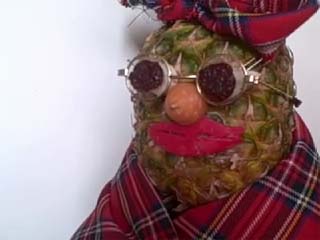
The Incorporation of Demands for Liberation(2011, 13MB, 3:24 min)

Brilliant!
Last piece from ANW, for the moment, although we
certainly hope to feature more in the future –
some of the most original and exciting work I’ve seen recently.

For some context see Monday’s post.