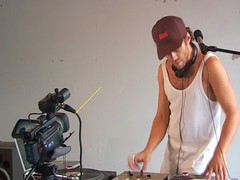
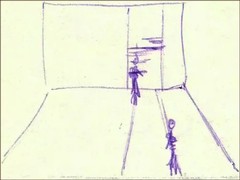
Bleip – No (2001, 14.32 MB, 2:59 min.)
Beautiful visuals and some on point editing from Pleix,
a group of digital artists in Paris, France.
The music on this one is provided by Bleip.
Bleip – No (2001, 14.32 MB, 2:59 min.)
Beautiful visuals and some on point editing from Pleix,
a group of digital artists in Paris, France.
The music on this one is provided by Bleip.
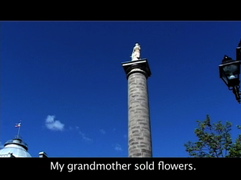
Sixth Map (2006, 17.3MB, 3.44 min.)
When filmmaker/videoblogger Daniel Liss challenged himself to make 7 videos in 7 days,
he also challenged his online audience to collaborate with him in the process.
His daily assignments came from viewers of his videoblog who determined
where, about what and how he should make each video.
Each day, they posted an assignment and each day Daniel posted a video in response.
Then came praise and criticism in the comments of each day’s videoblog post.
The process took him miles from home, he told personal stories, invented new narratives,
and played more than a few tricks on his guiding/goading audience.
For this video he was given the assignment,
“Today, you are a local. Trick us into believing that you are a local.
Tell us a story about your history.”
By Mica

Jeremy D. Slater – Manic Chinatown Bicycle (2007, 15.6MB, 2:01)

Jeremy D. Slater – Kanjiscroll (2007, 11.1MB, 0:41)
Two travel videos – albeit different sorts of it –
from Jeremy Slater, who primarily works in sound.
But I like his video work – minimal, often observational
in one way or another – so here are two samples.
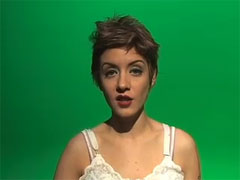
Amelia Winger-Bearskin – State of Things (2007, 19.9MB, 8:58)
Amelia Winger-Bearskin makes fun, funky performance pieces
and has a couple on her website worth viewing.
This is my favorite piece from her Chroma Key series.
Try swearing for nine minutes straight and see
how successful you are.

Blip Boutique – Not In Love (2007, 30.2MB, 1:28)

Blip Boutique – 24 in 60: hollywood (2007, 18.8MB, 1:14)
Two shorts from 2007, from Blip Boutique,
makers of fine viral, art, and music videos
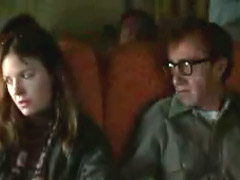
at interval (1977/2006, 24.3MB, 13:22 min)
Early work from the redoubtable Nathaniel Stern where he reworked,
in the most curious of ways, Woody Allen’s Annie Hall.
Interesting that although the working method here seems
almost diametrically opposed to the hands on, performative
approach found in his odys series here too is that same
sense of the fragility & vulnerability of human beings and their
bodies & psyches & of the unreliability of the language we use
to try & make what we want to happen & to relate or lie about what did .

Child Safety (2011, 189MB, 16:19 min)
Latest adventures of Edward Picot’s splendid Dr Hairy.

Henry Fool -trailer (1997, 5.2MB, 2:05 min.)

Henry Fool -clip (1997, 3.3MB, 57 secs)
In a rationally ordered universe Hal Hartley would be feted
as one of the most thoughtful, bold & innovative filmakers
of the last 20 years.
We showed the trailer for Fay Grim, his sequel to 1997’s Henry Fool
here awhile back.
Here’s ’s the trailer from Henry Fool & also a short clip.

EL – Obuu Mo (Azonto Version) (2011, 89 MB, 4:23 min)
“Look boy, I’m changing my trajectory of isotopes to my temporal place of domicile,
to cause a thermostatical refreshment, to my gorgeous masculine homosapien.
I don’t want any discombobulation by the time I come back. Is that clear?”
Song by E.L.

2 Shy: Azonto Girl(2011, 82 MB, 3:39 min)
Q: Why?
A: Because we can
emptyspaces (2000, 31MB, 2:26 min)
Zdeno Hlinka aka ZDEN.
A multimedia artist from Slovakia who’s been a pioneer in
working with real-time and visual mixing.
comme un chat noir au fond d’un sac (2006, 18.4MB, 4:47 min)
A beautiful excerpt from Stephane Elmadjian’s feature film found
on composer Daniel Wohl’s website.
Starting off a bit intense it winds itself down and into some breathtaking stuff.
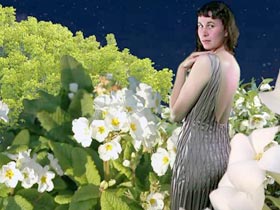
Dark Continents 1 (2007, 51 MB, 2:34 min.)
Video artist and animator Tyler Coburn‘s self conscious and rough use
of digital techniques presents a compelling parallel to Hollywood’s continual
and rapid movement toward the fantastically “real”.

The Motels – Shame (1985, 18.7MB, 3:59)

Rick Springfield – Celebrate Youth (1985, 25.6MB, 3:58)
Before directing features like Se7en, Zodiac, and Fight Club,
badass David Fincher made some awesomely 80s music videos.
He continues to make solid music videos for more
contemporary acts, favoring the short form to the
Hollywood machine. These lyrically poor videos
serve as proof that you too can film talking billboards,
windy alleys full of teens, use the color-pass effect,
and still go on to direct such hits as Alien 3.
Foundation(2011, 153MB, 14:01 min)
Here’s a striking and very beautiful piece of work from
Mississippi based artist Tony Arnold.
There is clear evidence of his discovery and love affair
with the greats of the American experimental film tradition but
he’s obviously gifted and visionary and very much his own
person. (I love his choice of music, sounds a bit like Ornette
Coleman but I think it’s not…wonderful, anyway)

Duncan Speakman – Is Life Boring? (2005, 5.3MB, 1:17 min.)
From Duncan Speakman (yes, his real name) and the now abandoned 29fragiledays.
Duncan moved onto the less populated Delicate Museum, but I enjoy his older work much more (maybe because there is simply more of it?).
No contrived voice-overs (at least not at first), I’m also given enough time to meditate on the video.
Sometimes short is too short.
This is one of the best pieces from his previous incarnation.
Time After Time (2003, 45.5MB, 5:39 min)
I was initially rather mystified by the vogue in UK galleries for
the work of Albanian artist Anri Sala but after a while the penny
dropped.
The courage to embrace the poetry of detail, of stillness,
apparent lack of incident & furthermore to trust
one’s viewers to accompany one to that place…
Elegant, sad, lugubrious & also, I think, much more crafted
than first meets the eye.
Great.
Festival of Money (2012, 111MB, 8:06 min)
Amusing & depressing both, because it is so spot on, a lovely bit of
satire from Marc Garrett and Ruth Catlow of Furtherfield fame.
Most artists, of course, are from the 99%…this is a timely reminder of
where our interests lie and don’t lie…

Quilts Never Sleep (short version) (2007, 20.9MB, 3:07 min)
Two very different but attractive & telling pieces from Dan Canyon.
The first was part of a show of – you guessed it – quilts in London in 2006,
about which read more here.
The second could’ve been made for dvblog, well, at least for me, as I’m a fool
for all things turntablist, & features the splendidly monickered Mickey Morphingaz.
Marie Menken – Glimpse of the Garden (1957, 40MB, 5:04)
Marie Menken, avant-garde filmmaker of the 1940s, 50s,
and 60s – in addition to being the inspiration for
Who’s Afraid of Virginia Woolf? and a Warhol
superstar – made inspirational work from a time we seem
to overlook too much today. The garden here belongs
to one of her husband’s former male lovers, and while
Menken was often criticized for being quaint in her displays,
her style is an obviously feminine one that hides much
deeper meaning in ordinary but stunning visuals.
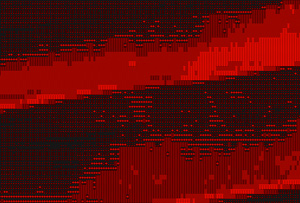
Urbandale (2000, 43MB, 7:30 min.)
“Urbandale”, an ASCII/ANSI movie by Cory Arcangel.
“Filmed at Urbandale Plaza in the eastern suburbs of Buffalo N.Y.,
“urbandale” is a study of America’s suburban sprawl stripped to its barest
essentials and void of unnecessary contemporary cultural influence. This
film captures the sly, bland smile strip plazas cast at modern culture.
The film, rendered in text, focuses on the repetitive motion of food
stuffs being cooked in the lobby of a discount department store.”
“Urbandale” was a 2000 commission of New_Radio_and_Performing_Arts for it’s Turbulence project.
PS
This is a mp4 version of the original urbandalePNG video. (quality of the video has been degraded)
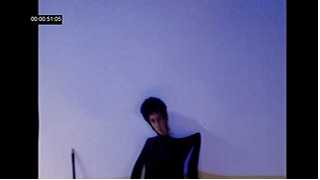
Blanking (2011, 30MB, 1:07 min)
for Carol Novack
‘I was working on this, shot with Foofwa d’Imobilite at Eyebeam,
when I heard the news that Carol Novack had died. for many of us,
this was unexpected and awful, as if the year couldn’t end
without just one more tragedy.
Foofwa and I had talked about our
work together, earlier, about issues of pain, wounding, death;
I think this piece, made at the time, is all I could do, I speak
through image and sound, these words already lost, resting in
peace
thank you Foofwa and Jamie and Jackson at Eyebeam’
Alan Sondheim
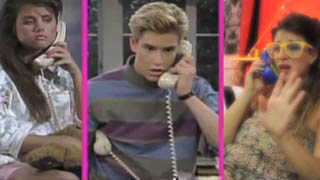
Saved By The Bell/Mofones (2011, 33MB, 54 secs)
The title of this post being words that seldom pass my lips but which in this case
are entirely to the point.
The splendidly creative video artist Morrisa Maltz whose work we’ve been delighted
to feature here several times made these..um..arty-i-phone holders, which are, it has
to be said, rather good and to cut a long story short their commercial potential was
spotted and now she is a C….E….O & Urban Outfitters are selling her stuff.
I hope she spends all of any money she makes on giving herself time to make more of the
very smart and fetching art videos she’s so good at.
Anyway this is a promotional vid for the moFones, lovingly carved from “Saved by the Bell”.
She even does marketing classily.

A Christmas Medley From Barnsley Town Centre (2011, 87MB, 1:29 min)
Normally we don’t post our own work here but I couldn’t resist this.
Also – it was a gift; no editing, just the take. (OK. I turned down the brightness
& jacked up the contrast a little.)
Barnsley is actually the friendliest of places, with a grumpy, wry, cheerfulness born of
generations of working-class solidarity, especially in the pits, though it’s now
ravaged by the cuts and closures of the past years.
From me & Doron, Happy Holidays and looking forward to a better world next year.
We’re taking a small holiday break & we’ll be back with something rather splendid
from Morrisa Maltz on January 2nd.

When the Souls Arrive (2011, 72MB, 2:40 min)
I recently attended a fairly high profile art video festival,
which shall be nameless, and I came away feeling depressed.
There was some good work (indeed, some magnificent, not much, but some) but
on the whole it was just a dispiriting display of meretricious effects, sloppy thinking
and a striving for the quick impression; all pretty souless & forgettable stuff.
(Oh, and plus a lot of cliched tosh about the – yawn – “post-human”. Wasn’t post human,
most of it, so much as post-being-any-good)
Then, on the other hand, you come across something like this:
no in-your-faceness, modest, austere and subtle, makes you do a little bit of work,
but so, so worth spending time with.
is the Brazilian video maker who made this small and perfect gem
– an account of the celebration of the Day of the Dead by expat Mexicans
living in London.
You can see the whole thing here (and I urge you to do so).
Betty Martins cheered me up considerably and I look forward to much more
work of this quality from her.
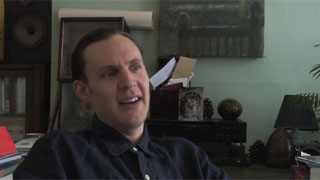
Toby Tatum on ‘The Golden Age’ (2011, 78MB, 4:38 min)
Toby Tatum, talking about his film The Golden Age, which we posted here
a couple of weeks back.
I’m always hungry for artists talking about process. Learn! Steal!
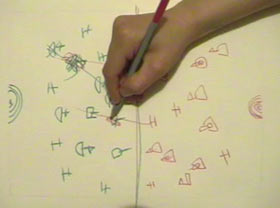
Struggle for Existence (2004, 18MB, 1:58 min.)
“By linking Darwin’s “The truth of universal struggle for existence” with a Taiwanese children’s game, The video represents two individuals’ slaughter in the virtual battle field and reflects on the ideology of boundary dividing, self-defending patriotism and bellicosity.”
by – Yu-Chen Wang.
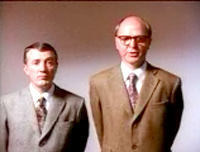
The Singing Sculpture (2010, 3MB, 41 sec.)
“Singing Sculpture documents one of Gilbert & George’s most famous “living sculpture” pieces.
Covered in multicolored bronze paint, the artists sing and interchange parts of the English
music hall standard “Underneath the Arches.” Through their stylized performance,
Gilbert & George deliberately blur the lines between life and art, reality and contrivance.
This ambiguity does not rely on a transformation from living to sculptural form. On the contrary,
they have merged the two in order to obliterate, rather than emphasize, the distinctions between life and art.” – Walker Art Center
from Video Data Bank
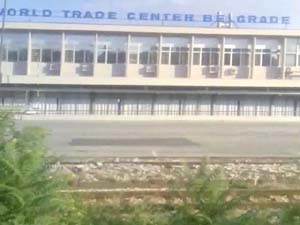
overland (2010, 131MB, 2:58 min)
And sadly, the last in our little season of movies by Ruth Catlow. This is another
train movie, no conceptual underpinnings to speak of this time, just a beautiful,
bleached out pastels, lo-fi ( mobile?) account of the Serbian section of a journey by train to Istanbul
last year when she was refusing ‘to fly for art’, something more people should do more often if
the results here are anything to go by.
More from Ruth, of course, as she produces it…
The Word Girl (1985, 7.62MB, 3:14 min)
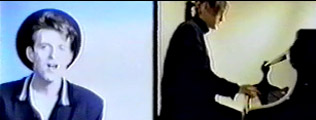
Oh Patti (1988, 20.3MB, 4:14 min)
Two of the most perfect pop songs ever made, the first from
1985’s Cupid & Psyche & the second from 1988’s Provision
(& which features a trumpet solo from Miles Davis of staggering
economy & otherworldly beauty).
Pet Sounds excepted, pop music just doesn’t come better.
The vids aren’t just an adjunct – of course they have historical
interest (that weird decade!), but there’s something fragile
& haunting & mysterious there which survives the occasional impossible
to overlook moment of naffness.
Wonderful.
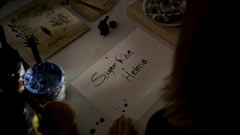
heima trailer (2007, 46.7 MB, 3:53 min.)
An exquisite trailer for the promising first film from Iceland’s Sigur Ròs.
Watch, and then tell me you did not add Iceland to your top 5 places
to see before you die.
Anyone who has been lucky enough to see dancer & artist Annie Pui Ling Lok
do the former will know what a fruitful combination of fierce, almost austere,
intellect & yet sensitivity to the particular, the fragile & the human, to expect.
There’s such a sure hand at work here – the confidence in collaging
disparate material & although we’ve tagged it
‘experimental’, in one sense the piece is anything but -it’s so not
a technical exercise, but a rounded, resonant work of art.

Eric Lerner – Mr. Deja Vu (2006, 27.2MB, 3:48)
From Eric Lerner‘s collection of Mr.CityMen.
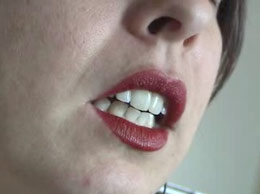
freudwasafraud (2006, 20MB, 2:32 min)
‘There’s nothing like spending a little quality time with the
latest top ten questions about your potential state of mind.’
podcast from Charlene Rule aka scratch video.
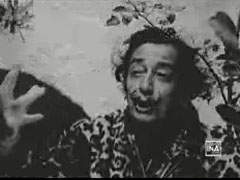
Picasso – I salute you, I embrace you! (2006, 3MB, 29 sec)
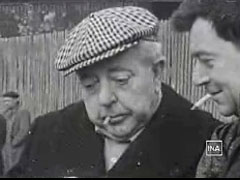
Prévert goes postcard shopping (2005, 10MB, 1:22 min)
Two gems from the excellent website of the French
Institut National de l’Audiovisuel , featuring two figures
associated with surrealism, the poet Jacques Prévert &
(seen here on crackingly deranged form) the artist Salvador Dali

Steamlight (2006, 16.2MB, 2:51)

Watauga (2007, 203.1MB, 26:23)
Two extraordinary pieces from Patrick Power.
Its as if the Qatsi trilogy found a way to use a videoblog as a testing ground.
This is much more than a test, though.
Some of the most important work I have seen in a while.
Beautifully touching randomized archives.
Pushing the limits of contemplative observation.
Taking time to visually visit other places.
There is so much beauty in reflections and the synchronicities of our minds.
Sample these two, then go visit the rest of his collection. Patrick makes the world watchable.
Edit: Sadly, Patrick Power passed away in 2007. This post was created to honor this man’s work, and now sadly, we must honor that work as his legacy.

New Media in the Marketplace (2011, 37 MB, 52 min)
“Over the years, we’ve found that a number of the artists we support in our Emerging Fields category have questions about how they can better market and exhibit their work. They have questions about pricing and editioning; changing formats; what it is that they are actually selling when they offer a work for sale; what their obligations to representatives and collectors are after a sale; and whether or not they should even participate in an art market that is, in their eyes, more sympathetic and better able to represent works in more conventional or established media.
On November 2, Creative Capital hosted a webinar for grantees to explore some of these issues and answer specific questions from artists working in new media. The panelists were Jason Salavon (2000 Visual Arts), Karolina Sobecka (2009 Emerging Fields), Stephen Vitiello (2006 Emerging Fields) and Marina Zurkow (2001 Visual Arts). Sean Elwood, Creative Capital’s Director of Programs & Initiatives, served as the facilitator.”
LISTEN TO THE PODCAST FROM THIS DISCUSSION
Podcast from Creative Capital.
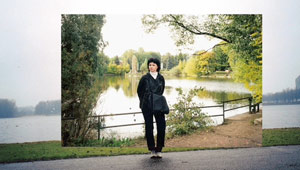
Irina Birger Thinks Drawing is Important (2010, 93 MB, 3:20 min. excerpt)
“What is the essence of a photograph, or more precisely, of an ID photo, portrait or self- portrait ?
You could almost ask, what is the essence of art. Or, what is the essence of life? That time always passes.
As the Greek philosopher Heraclitus put it in the 5th century BC, Panta Rhei, ‘Everything changes,
nothing remains still’. In the short video film ‘Irina Birger Thinks Drawing is Important’, Irina Birger
provides her answer to such questions.
A waterfall of self-portraits taken from photo albums belonging to her, her family and circle of
acquaintances, creates an ingenious, dizzying autobiography of the artist through the years.
We see the stereotypical development of the artist influenced by the history of art, from classic to
contemporary, and by the places where she has lived in her nomadic existence, from communist
Russia, the former Yugoslavia at the beginning of the civil war there, Israel during the Second Intifada and Germany after its reunification, to her present but certainly not final destination: the Kingdom of The Netherlands.
There’s a pinch to these moving images, where the essences of film and photography converge and clash. In a similar manner Birger’s life collides with the wrenching history of conflict zones and the sometimes difficult existence as an artist. ‘Drawing is Important,’ she posits at the end, her answer in this photo-turns-film project to the question of how she holds her own in life” (Text by Vera Stiphout)
by Irina Birger.
Painting (2007, 11 MB, 43 Sec)
Neste vídeo há uma grande delicadeza, uma fragilidade,
que não deve levar a pensar que essa peça de Regina Pinto
é de alguma forma ocasional ou menos artística.
Em vez disso, esse é o trabalho de um artista maduro,
sem nada a provar, e com a enorme liberdade que isso traz.
Um estudo de todo o corpo de seu trabalho evidencia
amplamente tudo isso e mostra quão profundamente
consistente e coerente ele se apresenta.
Poder-se-ia ainda acrescentar o quanto ele nos emociona,
o quanto é estranho e muito bonito.
There’s a delicacy, a fragility, about this piece
that shouldn’t lead one to think that Regina Célia Pinto’s
work is in any way casual or artless.
Rather, this is the work of a mature artist with
nothing to prove and the enormous freedom that brings.
A study of the whole body of her work
amply bears this out.
It shows just how consistent and deeply considered
it is and, one should add, how affecting, how strange
and how very beautiful.
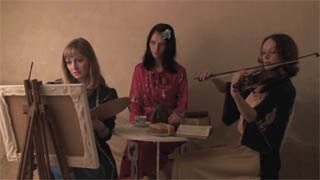
The Golden Age (2011, 181MB, 5:34 min)
We’ve posted Toby Tatum’s work
before and it’s work with a definite charge to it and ambitious too.
I think this piece is more wholly successful than its predecessor but I’m still not totally convinced.
It’s something to do with the aim of conjuring a very precise & particular
dream-world which strikes me as an all-eggs-in-one-basket kind of approach,
in that the tiniest false note disrupts the sought for spell.
Therefore Tatum creates a very high bar indeed for himself and his performers.
If one compares similarly oneiric work by Cocteau, Lynch or Hadžihalilović,
however dense and rich the atmosphere gets, there is variation with humour
or banality preparing us for more poetry to come and somehow too, framing it,
setting it off.
That sounds more critical that I want to be for this is, in every respect, a
very nicely realised and haunting piece.
Next week, or the week after, we’ll post an interview with Tatum about his work.
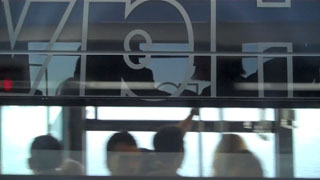
travel images unseen (2011, 156MB, 6:01 min)
‘5 video clips taken on a simple video camera, through a window on a coach to the
plane from Istanbul and arriving in London by train. Selected by and stitched, unseen
by the creator who will never watch the video, ever.’
The gentlest conceptualism & quite, quite lovely too.
There’s something about knowing the premise that leaves one
very open – one could say innoculates one – to its formal consequences –
here a looseness which somehow gently stretches time, makes it grainier
but conversely sharpens our attention, perhaps to make up for the
maker’s own vow of abstention.
One more in the series to come.

Jack Goldstein – Metro-Goldwyn-Mayer (1975, 16.2MB, 2:10)
An endlessly cyclical Hollywood, summed up in two minutes,
over thirty years ago. Still relevant and all too real.
by Jack Goldstein.
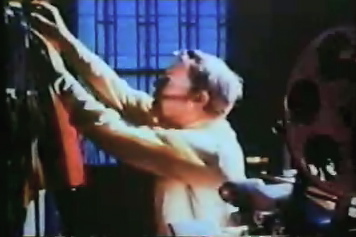
Film Portrait (1972, 31MB, 11:45 min.)
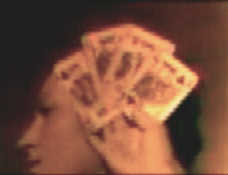
La Cartomancienne (1932, 13MB, 12 min.)
This is a memoir and the last film made by artist and filmmaker Jerome Hill.
I also found ‘La Cartomancienne’, one of his earliest film experiments.
By Mica.
Vex #1 (2006, 29.1MB, 2:08 min.)
Vex #5 (2006, 25.9MB, 1:09 min.)

Ferrari Dogs (2006, 25.9MB, 1:09 min.)
You know sometimes how when you first look at a work
you can’t process it immediately, it seems jumbled – wrong –
& you’re tempted to dismiss it.
Then you live with it awhile & suddenly it leaps into focus &
you realise you’re in the presence of something much richer
& more rewarding than the things which did immediately fall into place?
Do you know that feeling?
Well, that’s how I felt as I prepared this post.
The work, by the artist & poet Brian Kim Stefans, snuck up
on me & then hit me over the head.
Furthermore, there’s still a puzzling quality to it all, for me:
the Ferrari Dogs piece seems like work of a different category
to the vex pieces somehow ( as does Manchurian Rainman on
the site. Check it. Now – what is that all about?)
Anyway – I’ll take mystery over glibness anyday – I look forward to more.
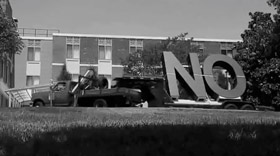
NO, Global Tour trailer (2010, 21 MB, 3:11 min)
Team Gallery, Lisson Gallery , Galería Helga de Alvear & Prometeogallery di Ida Pisani,
in association with Artprojx Cinema, present the UK premiere of NO, Global Tour,
2010 by Santiago Sierra.
The 120 minute film consists of the manufacture and transportation of two monumental sculptures
in the form of the word “NO”, travelling through different territories on a flatbed truck.
The NO, GLOBAL TOUR has resulted in a feature film that documents the passage of this
large NO through various world cities.
A monumental sculpture – unchanged both in its form and immediate meaning – that gradually
assumes a complex semantic load during a journey full of eventualities, accidents, and unexpected events.
As I Looked Up (2011, 32MB, 2:23 min)
A co-director of the formidable Furtherfield, Ruth Catlow charms
and something more – something to do with the urgency and vulnerability
of performance and the importance of memory, of a sense of place – in this
fragile & lovely elaboration of an Ivor Cutler song.
Things its difficult to put your finger on but which go right to our core;
pointing to – literally singing – those things being in the ‘artist’ job description…
First of three. Two more pieces, just as delicate, just as necessary, to come.
James Joyce has a Posse (2011, 32MB, 4:49 min)
And mentioning Curt Cloninger, as we did on Friday last, it’s nice to report he has made
a new video which is both gorgeous and engimatic, with a musicality which stems
not only from the actual sounds but the video’s very construction, that repeated
wistful, strange, ‘Portrait of the Artist’, title motif…
Cloninger is someone (Eddie Whelan the other who springs to mind) who has thoroughly incorporated
data-moshing as an expressive tool into their vocabulary, defying reports of its early death.
Poetry.
PS And just in passing – I’m fascinated by movies like this one, for which it’s very difficult
to create an adequate poster image.
Data-moshing is a particularly dynamic form of moving image work
where the motion is like the Cheshire Cat’s grin.
It’s not just data-moshing – it happens elsewhere.
It’s like some movies are, in some sense, “further away” in the line of image kinship
with the still.
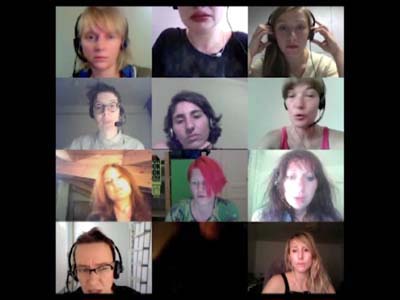
Angry Women (Left Panel/Clip) (2011, 188MB, 6:23 min)
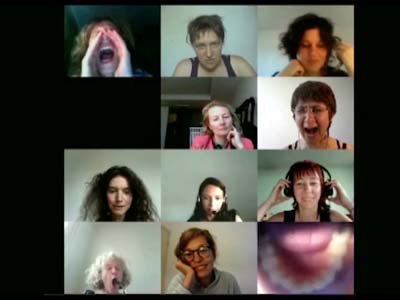
Angry Women (Right Panel/Clip) (2011, 142MB, 6:33 min)
Here are a couple of extracts by Annie Abrahams, whose work we love here at DVblog, from her show Training For a Better World which is currently running at the Centre Régional d’Art Contemporain, Languedoc-Roussillon in Sète until the first of January 2012.
I’d seriously suggest that anyone physically able to do so should visit it – I travelled down from London in a day, stayed a night and then trekked back, all by train. Very pleasant it was too.
Abraham’s exhibition runs in tandem with another, of the works of French artist Catherine Gfeller; Gfeller on the ground floor and Abrahams on the first, and the formal similarities (though I think these are largely superficial, for reasons I’ll enlarge upon soon) – the use of both moving and still images, text, an intervention at some level in the mechanics , the whys and wherefores, of how one presents these as art in a gallery setting – make it a stimulating pairing.
Abraham’s selection includes four pieces which are essentially (with some qualifications) video. They are constructed out of the telematics performance territory that she has so signally staked out in the last few years but, she insists, are not documentations of those performances. I think she’s right to emphasise this distinction – although in one sense the pieces clearly do document things that happened in performance they are ultimately video pieces made performatively .
The show doesn’t consist of moving image work only. There are some prints, drawings and a minimalist installation consisting of a single photograph of a pair of married fire-fighters and a sound track of them reading (in an extraordinarily graceful and musical edit [and this is where in this piece any surface similarities to, say, Nauman find their limit. Grace. Grace and elegance throughout.]) a collaborative text on fear.
The moving image and the other pieces occupy different ends of what is mostly a long thin exhibition space and are connected –“tied” together by a “ribbon”- a very long, three or four inch high, strip, of black highlighted, collaboratively generated white text –on the theme of madness – running at floor level for some considerable distance.
It’s important to both acknowledge this distinctly bi-partite character and then to immediately forget about it, so intimate is the connection between the two halves.
Despite the disparate and apparently laissez-faire methodologies used in the generation of all the work and the huge level of trust in the participants evinced by Abrahams, one’s main impression is of a body of work which forms a tight unity both stylistically and in its preoccupations. (And I’d argue that the principal pre-occupation is the question of what it means, physically, socially, psychically, to be a human being. And, further, that this high seriousness –allied to a playfulness which veers from the childishly innocent to the Rabelaisian – is what ultimately gives this work its huge authority and significance and distinguishes it in kind from the technically well executed and often engaging work on the floor below.)
The jewel in the crown of the show is the video installation ‘Angry Women’, created by Abrahams and 22 other women of many nationalities (3 more , in fact, in total, 2 “backstage” assistants, and a performer who opted for silence throughout) speaking about, acting out, demonstrating, reflecting upon, their anger and its causes and triggers, on webcams at their different individual locations and in their native tongues, with the images being sent to a 3X4 grid, in a format that Abrahams has made her own. Because of the limits of even current streaming technology it was necessary to conduct two distinct performances, separated, in fact, by an interval of two months. The length of each was determined by a protocol where a minute’s silence by all participants signalled the end. This resulted in pieces of differing lengths the lack of synchronisation of which adds another layer of fragile grace to the final projections, projected large on adjacent walls around their common corner, with sound from the left image grid fed to the right speaker and vice versa.
The piece occupies most of a large rectangular space at the CRAC (with the video ‘Double Blind (love)’, a collaboration with Curt Cloninger we’ve savoured here before, in its performance incarnation, in the opposite corner and in its full and majestic 264 minute duration).
The impact is visceral – we face what feels like a wave of humanity, not so much in numbers, although 23 women is impressive, at least to this man, but in the infinite malleability of face and hand, of gesture and expression and of how these things might occupy a frame. Sometimes that frame will resemble a Giacometti portrait, with the subject appearing to recede into what seems to be endlessly deep space. At others red lips or an open mouth, sensual and terrifying by turns, occupy the whole of the space – and furthermore each cell is constantly in flux (because these are living, breathing, unpredictable, human beings). There’s something both of portraiture and of the dance at work here, and a kind of found poetry too (which the moving image work has in common with the collaborative texts at the other end of the exhibition). The combination of iron control, planning, foresight (the grid, the protocols) with the letting go and trust evident elsewhere – the phased lengths, the blank space for the person who didn’t turn up, the open performative structure – makes for something of great richness.
Additionally it’s clear that those performers who had previous experience of the format were consciously playing with and against their fellows – gestures are mirrored, sounds echoed, the fiction of looking elsewhere – to the side, or above – of making contact in and across the grid itself, is impressively sustained.
The angry women turn out to be at one and the same time very particular – unique – women and women in general too; the women in general turn out to be human beings in general (and general en masse because each so particular) and the human beings in general turn out to live here, or there, now, in this, one, our only, very particular, world – that mysterious, frightening and wonderful place.
Book your train/plane ticket now!
***
Voici quelques extraits par Annie Abrahams, dont nous aimons le travail ici à DVblog, de son exposition Training For a Better World qui se déroule actuellement au Centre Régional d’Art Contemporain, Languedoc-Roussillon à Sète jusqu’au premier janvier 2012.
Je suggère sérieusement de la visiter à quiconque qui est effectivement en mesure d’y aller – j’ai voyagé depuis Londres en une seule journée, je suis resté une nuit et j’ai fait le retour le lendemain, le tout par train. C’était très agréable.
L’exposition d’Abrahams fonctionne en tandem avec une autre, des œuvres de l’artiste française Catherine Gfeller; Gfeller au rez de chaussée et Abrahams au premier étage, et les similitudes formelles (bien que je pense qu’elles soient essentiellement superficiels, pour des raisons sur lesquelles je vais m’étendre bientôt) – l’utilisation à la fois de l’image fixe et de l’image en mouvement, du texte, l’intervention à un certain niveau dans la mécanique, les tenants et aboutissants, de la façon dont on présente celles ci en tant que de l’art dans le contexte d’une galerie – en font un jumelage stimulant.
La sélection d’Abrahams comprend quatre pièces qui sont essentiellement (avec certaines réserves) vidéo. Elles sont construites à partir du territoire de la performance télématique qu’elle a jalonné si singulièrement les dernières années, mais, elle insiste, ce ne sont pas des documentations de ces performances. Je pense qu’elle a raison de souligner cette distinction – bien que dans un sens les pièces documentent bel et bien ce qui est arrivé dans la performance, elles sont finalement des pièces vidéo réalisées performativement.
L’exposition ne consiste pas seulement d’images en mouvement. Il y a quelques imprimées, des dessins et une installation minimaliste composé d’une seule photo d’un couple de pompiers mariés et une piste sonore d’eux lisant (dans un montage extrêmement gracieuse et musicale [et c’est là que dans cette pièce toute similitude de surface à, disons, Nauman trouve son limite. Grace. Grâce et de l’élégance tout au long.]) un texte collaborative sur la peur.
L’image en mouvement et les autres pièces occupent des extrémités différents de ce qui est surtout un espace d’exposition longue et mince et sont reliés – “liées” par un “ruban” – une très longue, trois ou quatre pouces de haut, bande, de texte blanc, généré en collaboration, souligné en noir – sur le thème de la folie – se déroulant au niveau du sol sur une distance considérable.
Il est important de reconnaître ce caractère nettement bi-partite et ensuite de l’oublier immédiatement, tellement intime est la connexion entre les deux moitiés.
Malgré les méthodologies disparates et apparemment laissez-faire utilisées dans la production de tout le travail et l’énorme niveau de confiance aux participants manifesté par Abrahams, la principale impression est celle d’un corps de travail qui forme une unité serrée à la fois stylistique et dans ses préoccupations. (Et je dirais que la principale préoccupation est la question de ce qu’il signifie, physiquement, socialement, psychologiquement, d’être un être humain. Et, puis, que cette haute degré de sérieux, allié à un enjouement qui vire de l’innocence enfantine au rabelaisien – est, ce qui donne finalement ce travail son énorme autorité et importance et le distingue de sa nature du travail techniquement bien exécuté et souvent engageant de l’étage en dessous).
Le joyau de la couronne de l’exposition est l’installation vidéo «Angry Women», créé par Abrahams et 22 autres femmes de plusieurs nationalités, (en fait, 3 de plus au total, 2 assistantes de “secours”, et une performeuse qui a choisi de rester silencieuse jusqu’à la fin), parlant, actant, démontrant, réfléchissant à, leur colère et ses causes et déclencheurs, devant des webcams dans leurs locations individuellement différentes et dans leur langue maternelle, avec les images envoyées à une grille de 3X4, dans un format que Abrahams a fait le sien. En raison des limites des technologies de streaming, mêmes actuelles, il était nécessaire d’effectuer deux performances distinctes, en fait séparées par une période de deux mois. La longueur de chaque performance a été déterminé par un protocole où une minute de silence par toutes les participantes marquait la fin. Il en résulte des pièces de longueurs différentes dont le manque de synchronisation ajoute une autre couche de grâce fragile aux projections finales, projetées en grand sur des murs adjacents autour de leur coin commun, avec le son de l’ image grillée de gauche envoyé au haut-parleur droit et vice versa.
La pièce occupe la majeure partie d’un grand espace rectangulaire au CRAC (avec la vidéo «Double Blind (love)», une collaboration avec Curt Cloninger que nous avons savouré ici avant dans son incarnation performative, dans le coin opposé, dans sa durée totale et majestueuse de 264 minutes).
L’effet est viscérale – nous faisons face à ce qui ressemble à une vague de humanité, non pas tant en nombre, bien que 23 femmes est impressionnant, au moins à cet homme, mais dans l’incessante malléabilité du visage et des mains, du geste et de l’expression et de la façon dont ces choses peuvent occuper un cadre. Parfois, ce cadre ressemble à un portrait de Giacometti, avec le sujet apparaissant reculer dans ce qui semble être un espace profond infini. À d’autres moments, des lèvres rouges ou une bouche ouverte, sensuel et terrifiant à tour de rôle, occupent la totalité de l’espace – et en plus chaque cellule est constamment en mouvement (parce que ce sont des êtres humains vivantes, respirantes, imprévisibles). Il y a quelque chose à la fois du portrait et de la danse à l’œuvre ici, et aussi une sorte de poésie trouvée (ce que le travail d’image en mouvement a en commun avec les textes collaboratives à l’autre bout de l’exposition). La combinaison du contrôle de fer, de la planification, de la prévision (la grille, les protocoles) avec le laisser-aller et la confiance manifeste ailleurs – les longueurs phasées, l’espace noir pour la personne qui ne se présente pas, la structure performative ouverte – produit quelque chose d’une grande richesse.
En outre, il est clair que ces artistes qui ont eu une expérience antérieure du format ont joué sciemment avec et contre leurs partenaires – les gestes sont mises en miroir, des sons font écho, la fiction de regarder ailleurs – sur le côté ou au-dessus – la prise de contact dans et à travers la grille lui-même, est impressionnant et soutenue.
Les femmes en colère se révèlent être tout à la fois des femmes très particulier – unique – et des femmes en général aussi ; les femmes en général se révèlent être des êtres humains en général (et en général en masse parce que chacune si particulière) et les êtres humains en général s’avèrent vivre ici, ou là, maintenant, dans ce, un, notre seul, très particulier monde – cet endroit mystérieux, effrayant et merveilleux.
Réservez votre train / avion billet dès maintenant!
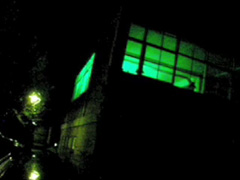
Change of Colour (2007, 6MB, 1:00 min)
Does what it says on the packaging & sublimely.
This is so beautiful.
A Lumière from Sam Renseiw.
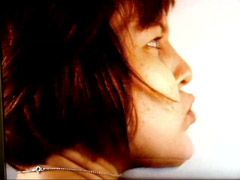
Beauty (2007, 11.4MB, 1:04 min.)
Romania (2007, 19MB, 2:01 min.)
What to say, we’ve said it all, again & again, Sondheim’s
movies are a unique & indispensable body of work.
Specifically, anyone working in video on the net who
doesn’t know them is navigating blind.
For a free masterclass hop over to his site & work your
way through all the stuff with .mov or .mp4 extensions.
( I mean, don’t confine yourself to the movies but this
is dvblog)
You won’t have wasted your time.
KBSC505 vs WWFT (clip) (2006, 80MB, 8:14 min.)
WeWorkForThem short was created as an extra for KNBSC505’s
Noise Driven Ambient Audio And Visuals DVD. Exploring the emotions, physical & mental
pain and illusions of bacteria this video follows 8 minutes from infection to cure.
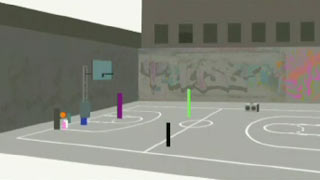
Basketball (2007, 205MB, 1:57 min.)
Director Grant Orchard joined Studio aka in 1997, and soon gained attention
for his idiosyncratic design and his ability to approach projects from many
different angles. He has created TV commercials for clients as diverse as Compaq,
Virgin and Orange. Grant has won two prestigious D&AD awards and achieved recognition
for his first independent short film WELCOME TO GLARINGLY.
He subsequently created 10 mini-films for QOOBtv under the banner LOVESPORT.
– from the shining Lumen Eclipse.

jade – takethebus (2002, 3.6MB, 1:37)
jade – jet (2003, 2.4MB, 0:17)
Older experimental clips from Austria’s Michaela
Schwentner, also known as jade enterprises.
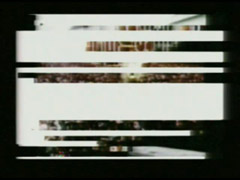
Business (2007, 67.9MB, 9:33 min)
I find it easier to admire this piece, to respect its clear integrity,
than to actually like it much – it’s a pretty hardcore glitch
assemblage & it doesn’t let up …oooooh noooo… not at all
(Strikes me as a bit of a video analog for something like Lou Reed’s (in)famous
)
It’ll be interesting to see where Junu Ahn goes next…
‘White Flood’ – clip 1 (1940-2, 1.1 MB, 30 sec.)

‘A Child Went Forth’ – clip (1940-2, 1.4 MB, 30 sec.)
‘White Flood’ – clip 2 (1940-2, 661 KB, 29 sec.)
Easily the most interesting of all Brecht’s composer collaborators
& in flat contradiction to the current myth spread by those
who dislike his politics, by far the better composer than the rather
dull Weill, Hanns Eisler’s keen intellect turned to questions of film in his
exile in the USA in the early forties.
Under the auspices of the New School & funded by the Rockefeller foundation
Eisler conducted an intensive investigation of the relationship between
film & music , often involving him writing new music to already existing footage.
You can see some of this footage here – but what you really need to do is to listen.
There is no-one who could not learn something from the amazing way Eisler
deploys music here.
After the project, Eisler went on to write, with Theodore Adorno,
himself no slouch intellectually (& also a practicing composer),
one of the key books on music & the movies –‘Composing for the Films’
These clips come from the website for a new edition of the book
released with a companion DVD documenting much of the Rockefeller experimentation.
Indispensable.
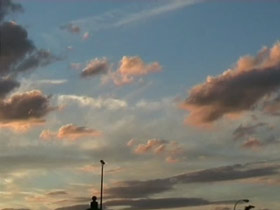
Clouds…Courts (2007, 10MB, 4:45 min.)
Clouds…Words (2007, 7.85MB, 3:35 min.)
John Murphy is an Irish artist living and working in Madrid Spain.
Clouds…Courts shows us the late afternoon sky and we hear
Craig Murray formerly UK’s Ambassador to Uzbekistan
speaking about torture and England’s role in the Iraq war.
In Clouds…Words we hear about ways to die in Iraq, according
to a BBC journalist while watching the early spring sky in Madrid.
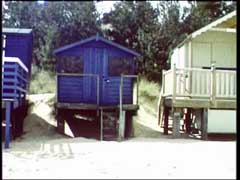
British Beach Hut Miscellany(2006, 5.2MB, 1:36 min)
Made by Giles Perkins. Shot on Super 8 & digitally edited.
English pastoral loveliness with a conceptual/formalist twist,
which resolves to… English pastoral loveliness.
Lovely!